


Table of Contents
404-GEN (Subnet 17) has introduced Atlas, a new application layer designed to turn decentralized 3D generation into production-ready assets for enterprise use.
The launch introduces a two-layer system. Subnet 17 serves as the intelligence layer, where models compete and improve, while Atlas delivers those capabilities through workflows that studios and developers can plug directly into their existing pipelines.
A Competitive Model for 3D AI
Subnet 17 operates as a decentralized marketplace for 3D model generation, where miners submit code to produce assets like meshes and Gaussian splats. Those outputs are then evaluated by validators based on quality, speed, and structural accuracy.
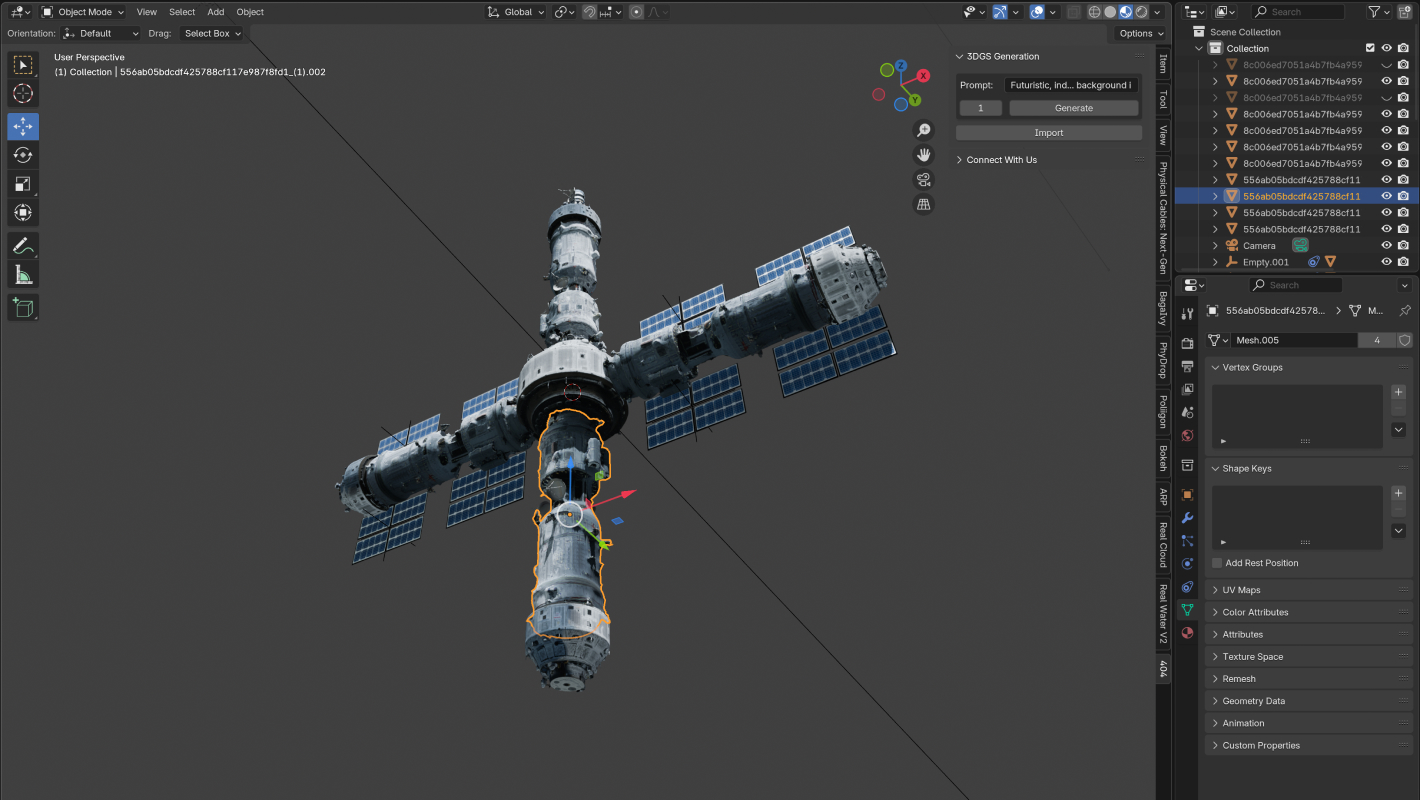
Because submissions are open source, each iteration builds on the last. Miners refine and optimize models to earn rewards, creating a continuous cycle of improvement. Over time, this has pushed the subnet beyond basic generation into more advanced capabilities such as spatial editing, composition, and physics-aware outputs.
The team frames this progression as a step toward “Large Spatial Models,” AI systems designed to understand how objects exist and interact in three-dimensional environments.
Atlas Brings Production Readiness
Atlas focuses on making the subnet's outputs usable at scale.
Enterprise studios require more than raw generated assets. Before anything can be used in production, files need to be refined, converted into the right formats, and validated against quality standards. Atlas is designed to handle this process end to end, using orchestration workflows that combine 404-GEN outputs with additional AI models.
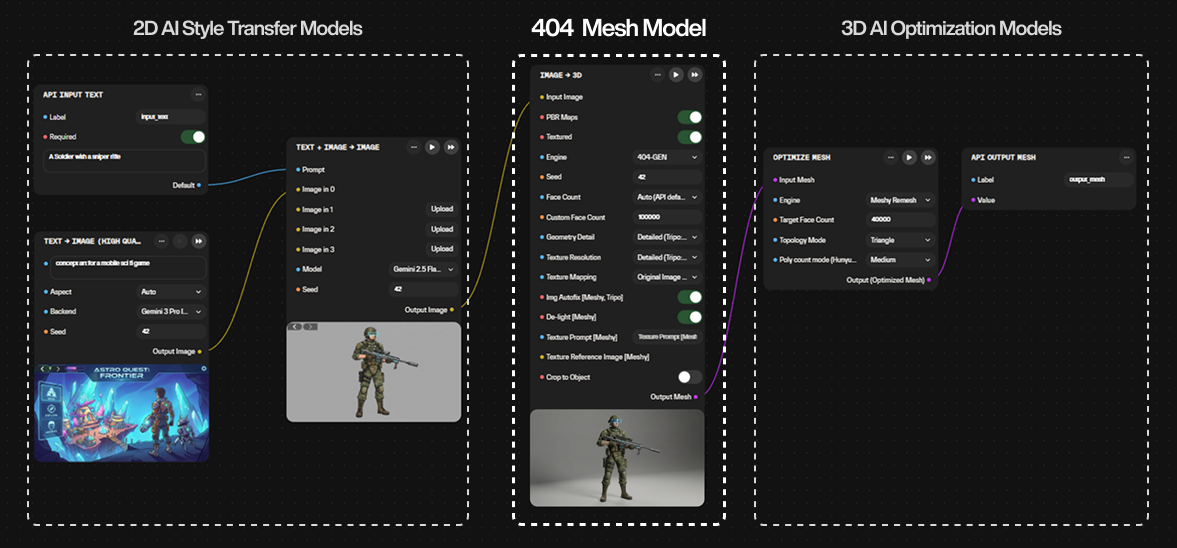
These workflows handle everything from texture refinement and format conversion to quality filtering, all within a system that can be tailored to specific production needs. Teams can adapt these pipelines to fit their requirements without overhauling the tools they already use.
Atlas integrates with common development environments and operates on a usage-based pricing model across generations, assets, and API calls. When assets are created through the platform, attribution remains tied to 404-GEN, with fees flowing back to the underlying network.
Early Adoption and Distribution
Atlas is already targeting enterprise users through a growing set of partnerships and distribution channels.
The platform is built in collaboration with Google Cloud and is available through its marketplace. It has also established relationships with studios including Square Enix, where it has been tested within production workflows.
Alongside Atlas, 404-GEN continues to expand access to its technology through multiple entry points, including a Unity plugin, Blender add-on, web interface, and direct API. These integrations are designed to fit into existing developer environments while scaling usage across both individual creators and professional teams.
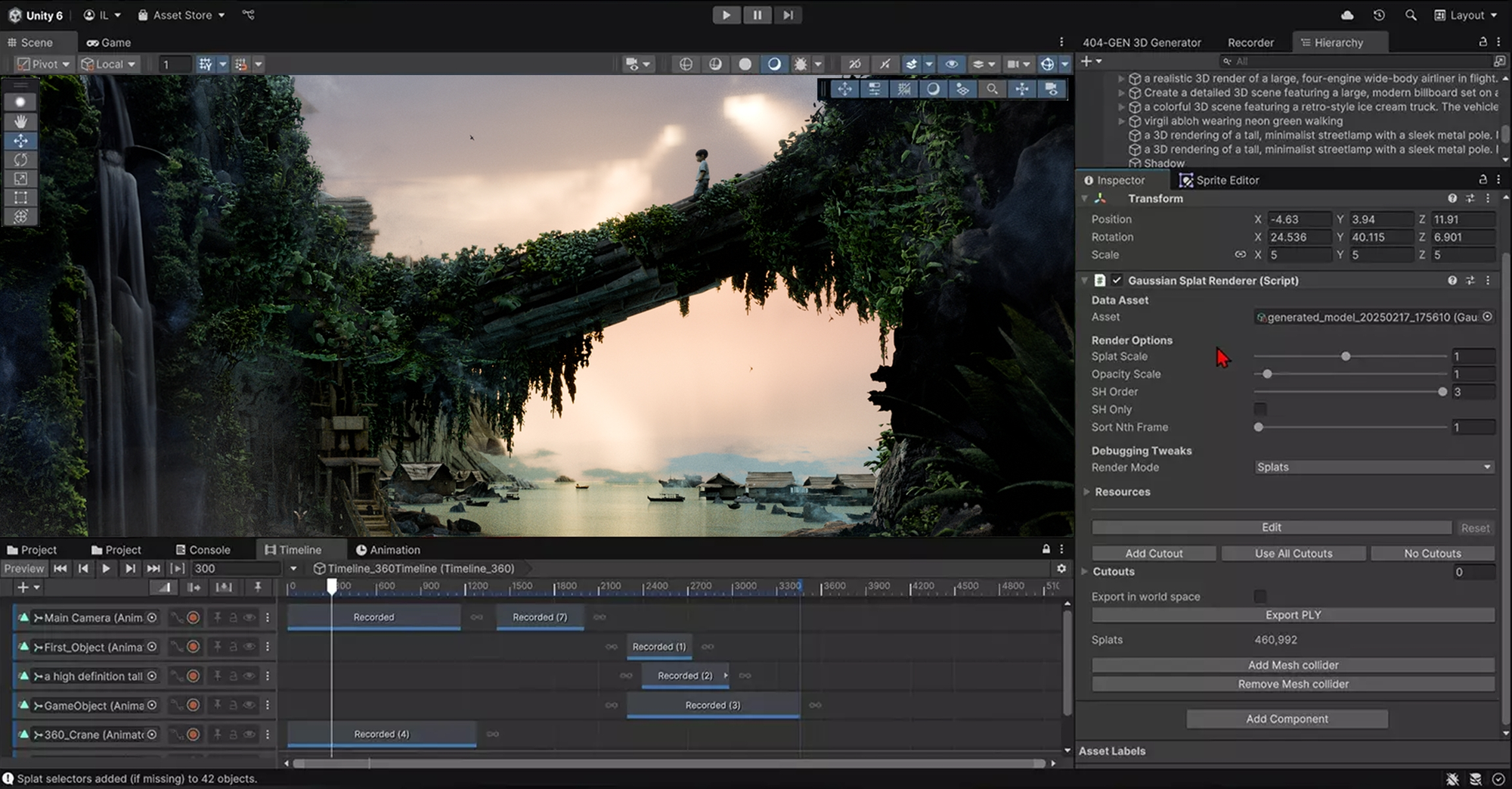
Moving forward, the underlying network will continue advancing 3D generation through open competition, while Atlas focuses on translating that progress into enterprise adoption.
The long-term goal is to establish decentralized 3D AI as a viable alternative to centralized platforms, with performance driven by global competition and accessibility shaped by real-world usage.
Disclaimer: This article is for informational purposes only and does not constitute financial, investment, or trading advice. The information provided should not be interpreted as an endorsement of any digital asset, security, or investment strategy. Readers should conduct their own research and consult with a licensed financial professional before making any investment decisions. The publisher and its contributors are not responsible for any losses that may arise from reliance on the information presented.



%20Introduces%20Atlas%20to%20Bring%20Decentralized%203D%20AI%20Into%20Enterprise%20Workflows)