

Table of Contents
Pollen Robotics, Hugging Face’s robotics team, has introduced a $149 Hoverboard base that gives its Reachy Mini desktop robot two wheels, alongside NFC-equipped hats that change its personality and a mobile app for smartphone setup and control.
The Reachy Mini update adds movement around a room to a robot built for conversation, expressive gestures, and AI experimentation. Owners steer the Hoverboard from their phones while watching a live feed from the robot’s camera. The $35 NFC Accessory Pack provides a separate way to trigger characters and custom software by attaching a hat.
The two accessories have different hardware requirements. The Hoverboard works only with Reachy Mini Wireless, while the hats support both Wireless and Lite. Pollen expects the first orders for both accessory packs to dispatch at the end of January 2027.
Phone-Controlled Wheels for Reachy Mini Wireless
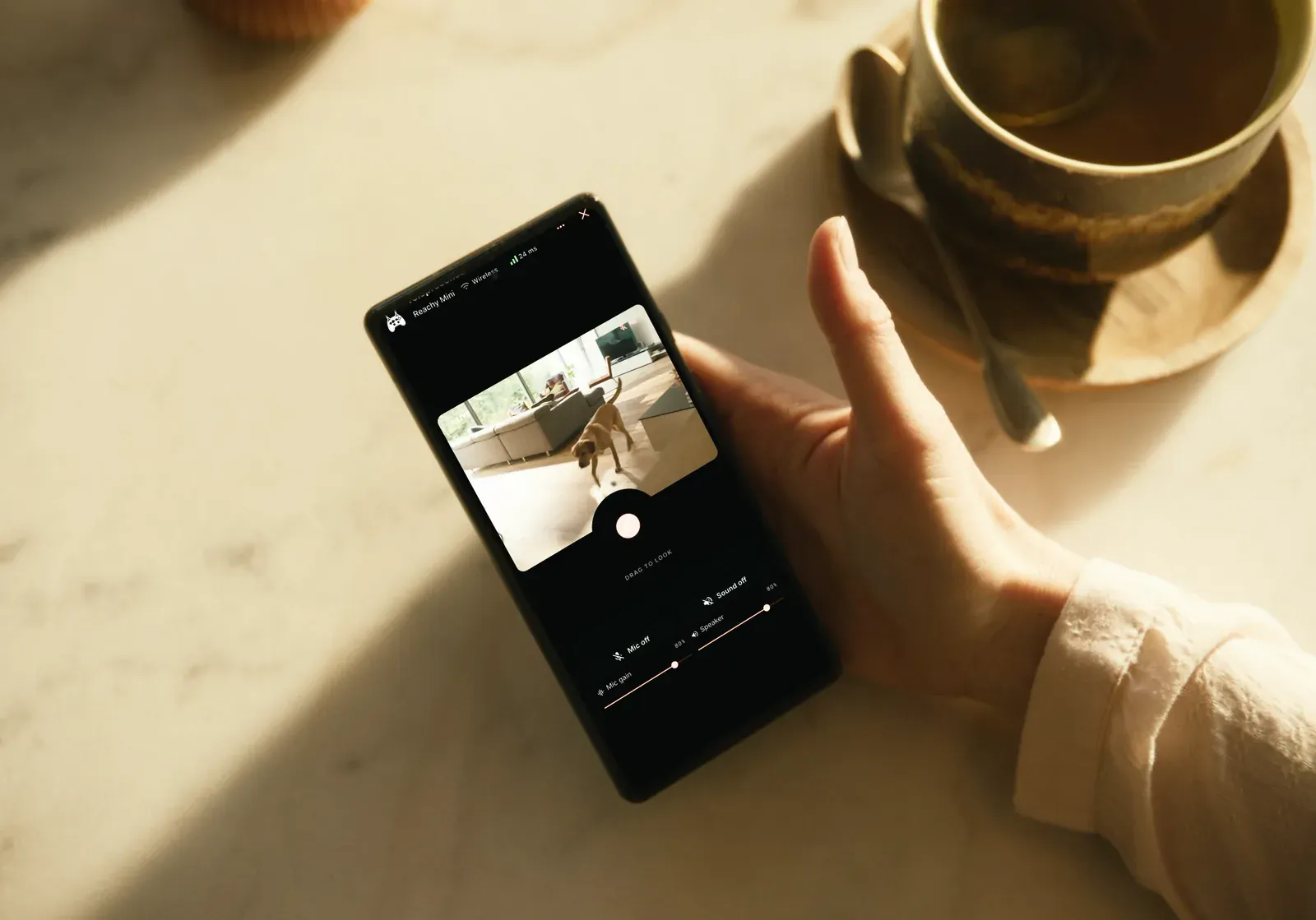
The Hoverboard arrives fully assembled. Users place Reachy Mini onto the base, secure it with a locking mechanism, and operate it through the Reachy Mini app. Dual on-screen joysticks control the wheels and the robot’s head, with live camera feedback providing the view for driving.
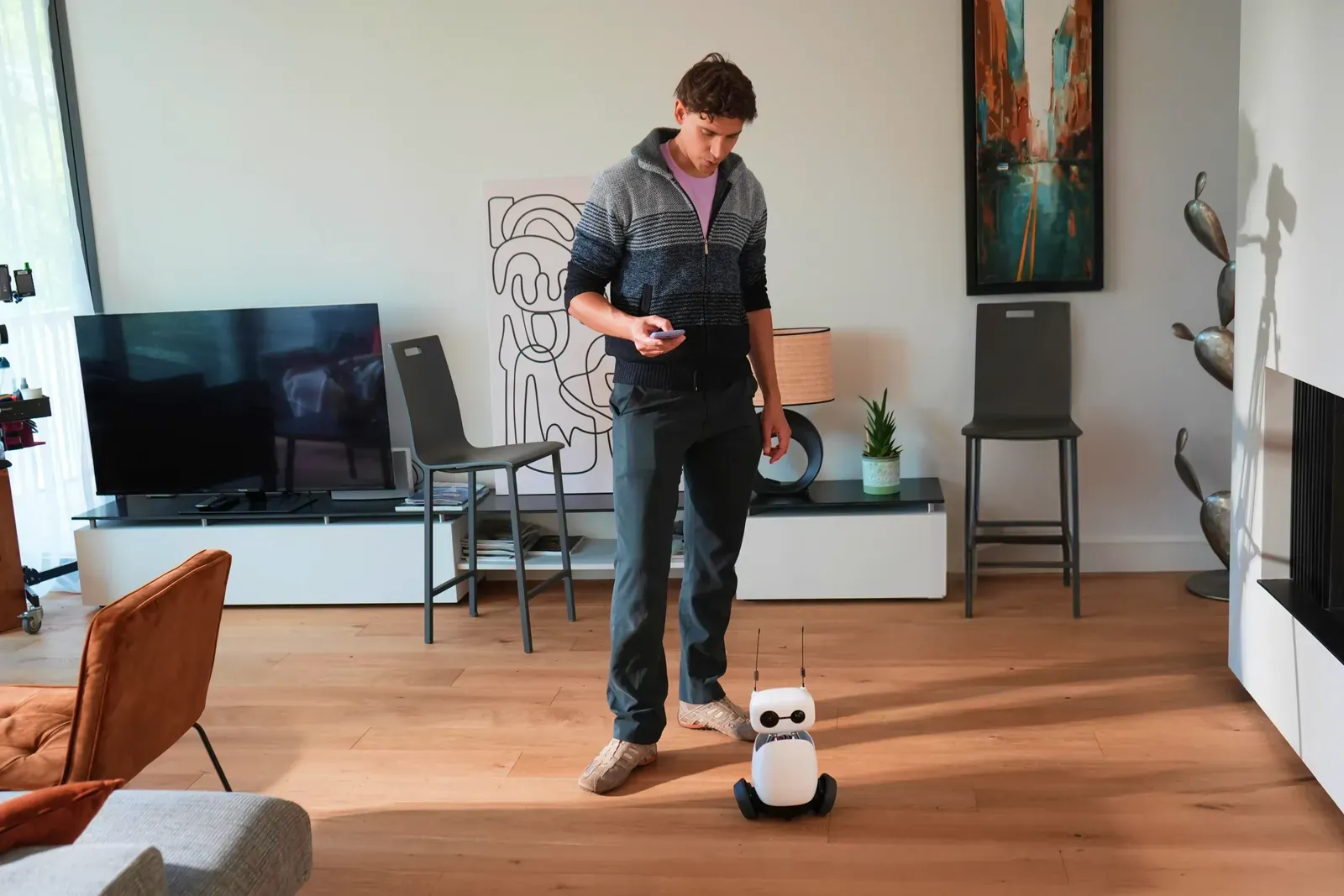
That combines locomotion with the head movements and camera already built into Reachy Mini. A user can turn the robot’s view while maneuvering the base, rather than moving a stationary robot by hand to look elsewhere in the room.
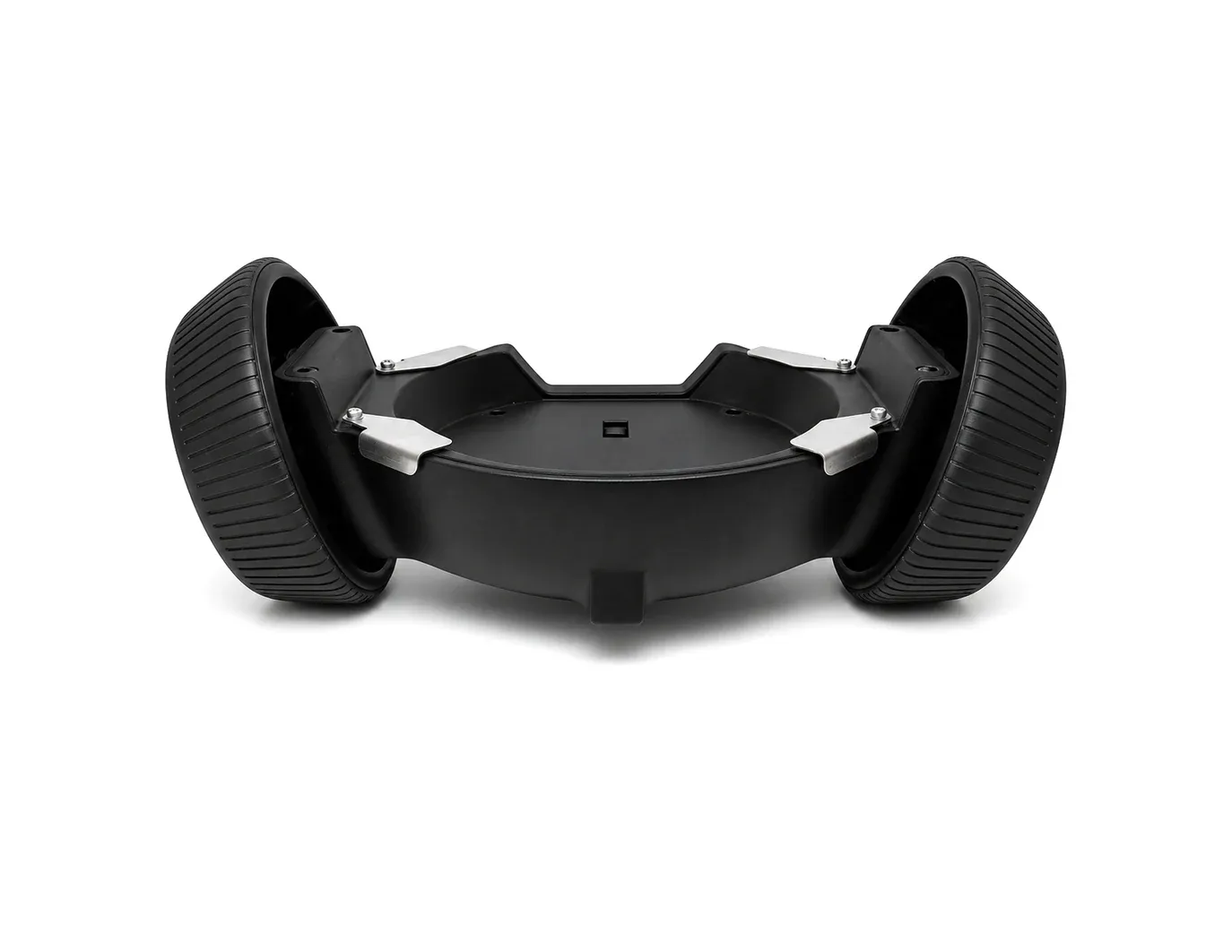
The base includes two motorized wheels with soft tires, an integrated battery and electronics, and Bluetooth, Wi-Fi, and USB-C connectivity. Anti-tip supports stabilize it when powered off, and it sits down when it stops.
Compatibility differs between the two Reachy Mini versions. The $499 Wireless model has a Raspberry Pi CM4 computer and battery built in. The $399 Lite model connects over USB to a Mac, Windows, or Linux computer that handles its processing. Both have a camera, four microphones, a speaker, and the same body and motion capabilities, but only Wireless supports the wheeled base. The robot is sold separately from the Hoverboard.
NFC Hats Connect Physical Accessories to Software
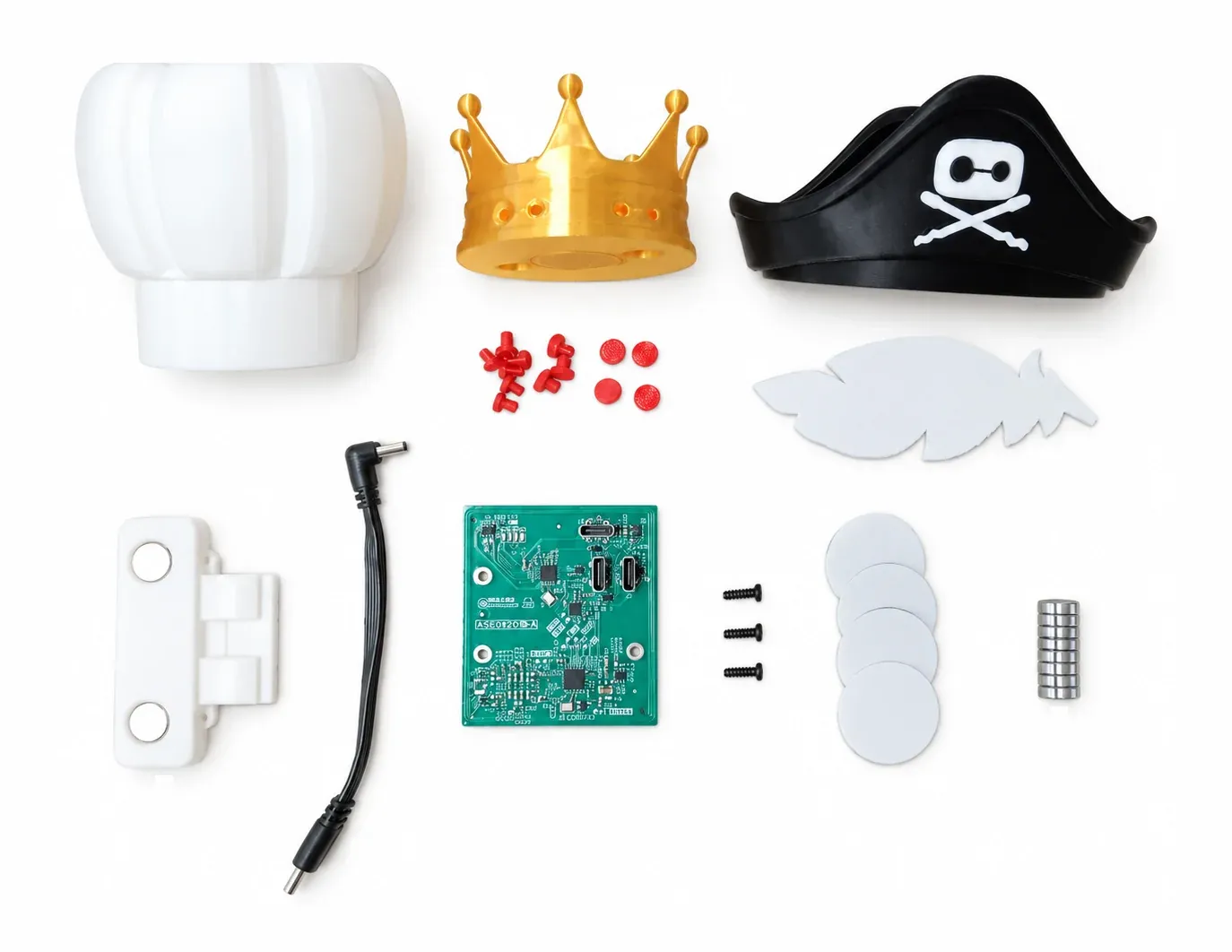
The NFC Accessory Pack uses a small reader installed inside Reachy Mini’s head to recognize tagged accessories. Magnets hold each hat in place, while its near-field communication tag identifies the accessory and triggers the corresponding character in the conversation app.
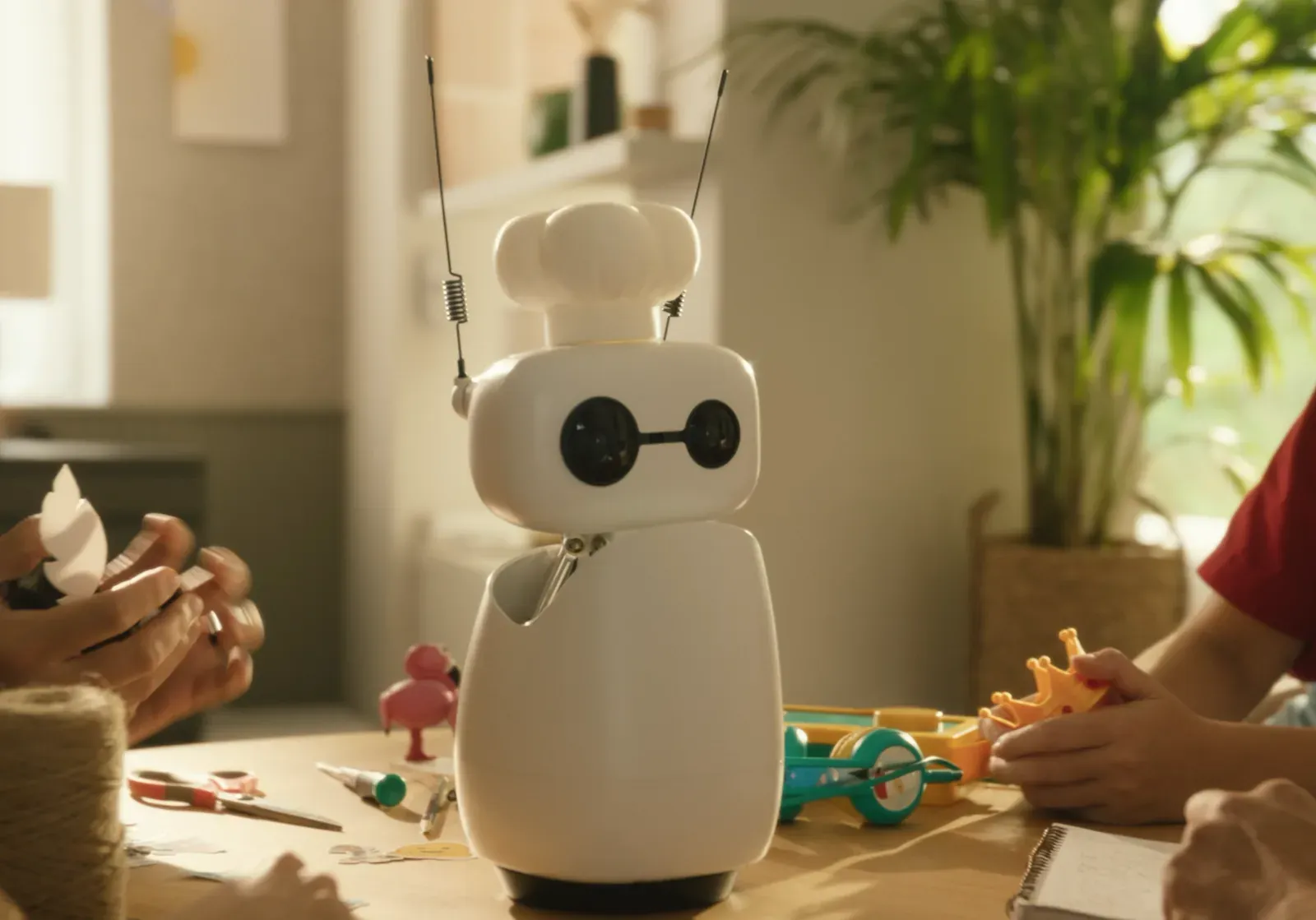
The pack includes a chef hat, a crown with gems, and a pirate hat with a feather. Owners install the NFC module themselves using the supplied board, mount, cable, and screws. The pack also contains four additional NFC tags and eight magnets for making custom accessories.
The tags can be linked to a new personality or an owner’s code, so the system extends beyond the three included characters. Developers can use accessory recognition as an input for their own apps and interactions, turning a physical change to the robot into a software action.
Mobile Setup and Community-Built Apps
Pollen’s Reachy Mini platform now offers a mobile app for setting up and using the robot from a smartphone, with links for iOS and Android. Wireless owners can use that phone-based workflow without a separate computer; Lite retains its requirement for a connected host computer.
Pollen lists more than 500 community apps with one-click installation, spanning games, generative art, teleoperation, and vision. Examples include Telepresence for controlling the robot and viewing its camera, Emotions for playing expressive behaviors, and Marionette for recording and replaying movements from a phone. A separate move library contains more than 400 shareable motions. Pollen puts the community at more than 14,000 makers.
For owners building new experiences, an AI-assisted app creator accepts a description in chat, generates code, and previews it on the physical robot. Apps can then be added to the catalogue without using a terminal. This gives users a route from trying existing behaviors to creating their own.
Reachy Mini’s interaction-focused additions sit alongside Pollen and Hugging Face’s $399 Microduck robot, which is designed for reinforcement-learning experiments and transferring trained behaviors from simulation to hardware.
For new Reachy Mini buyers, the robot itself remains a DIY kit. Pollen estimates about two and a half hours for assembly, with tools included and no soldering required. The Hoverboard removes an additional assembly step for mobility, while the NFC pack requires the separate reader installation before its hats can activate characters.