
Table of Contents
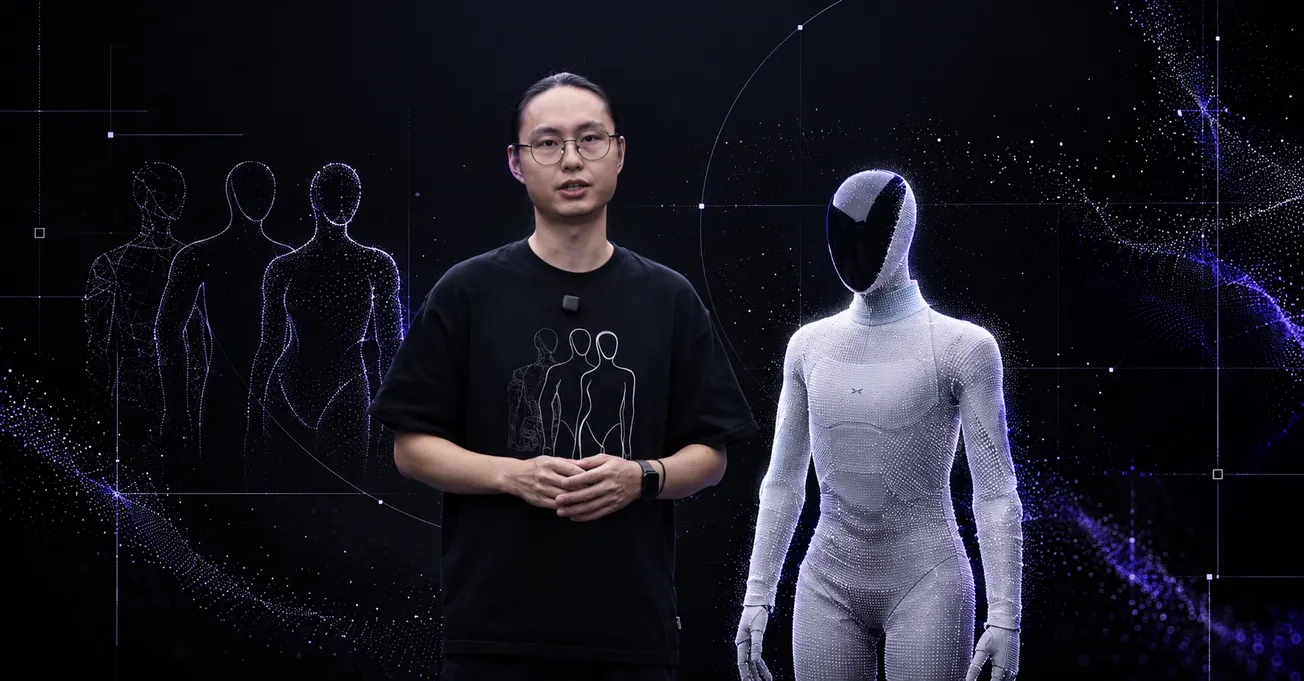
XPENG has posted a lab demonstration of IRON, its general-purpose humanoid robot, showing the machine turning toward speakers, recognizing people by name, switching languages, and answering product-style questions.
The demo was a controlled R&D test from the XPENG Robotics Anthropomorphic Lab, focusing on whether IRON could behave like a natural social participant.
XPENG's real-world interaction test
XPENG’s near-term plan for IRON is not home deployment. Earlier this month, the company said the robot had walked off a newly commissioned production line in Guangzhou, with mass production targeted by the end of 2026 and initial commercial rollouts planned for XPENG stores and campuses before broader China and overseas deliveries in 2027.
 Tristan Hillerich
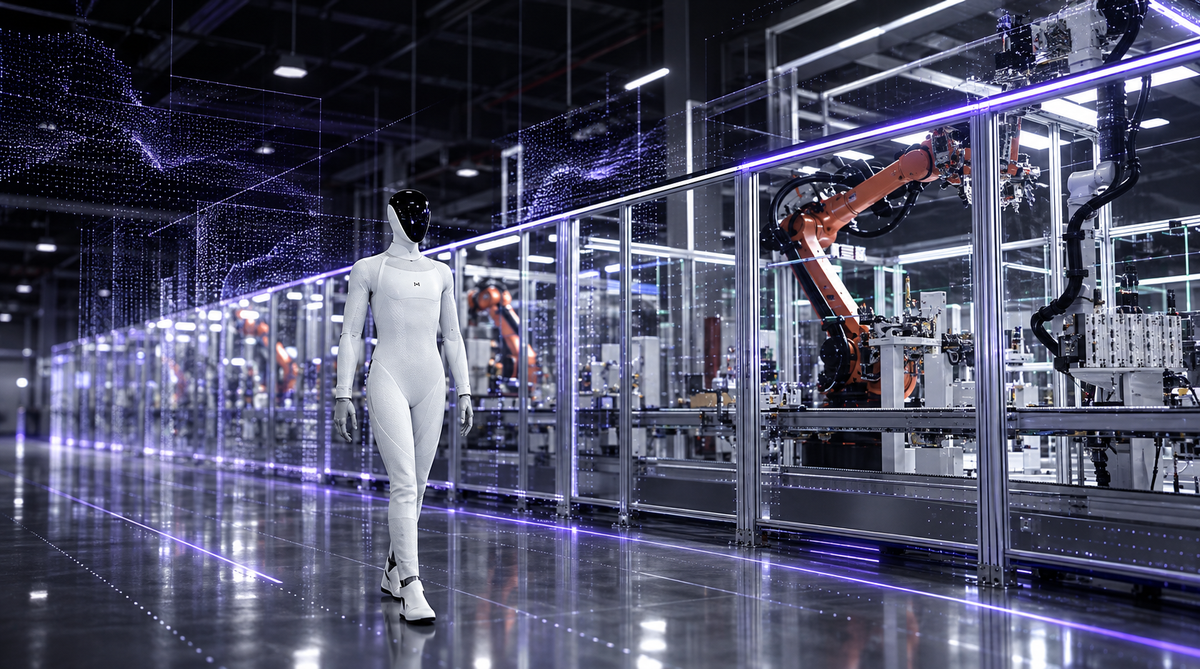
The new clip is the next part of that story. After showing that IRON can be built on an automated line and walk away from it, XPENG is now trying to show that the robot can meet people, remember them, orient itself during conversation, and answer questions in a service environment.
XPENG Tests IRON’s Social Interaction Skills
The demonstration centers on four capabilities: autonomous orientation, dynamic identity memory, multilingual switching, and what XPENG calls multi-intelligence Q&A.
Autonomous orientation is the most visible. IRON does not stand rigidly while people speak around it. In the video, the robot turns its head, adjusts at the waist, and sometimes rotates its body toward the person talking. Those sorts of social behaviors/body language allow IRON to “express respect more naturally” during communication.
It is central to the showroom use case, demonstrated in the video through a car salesman scenario. A robot that works as a greeter, guide, or sales assistant needs to do more than identify an object or repeat a scripted answer. It needs to make the interaction feel directed at the person in front of it. In retail and hospitality settings, facing the speaker, tracking attention, and responding at conversational distance are basic parts of the job.
The second capability is identity memory. IRON addresses people by name and recalls details from earlier in the exchange. In one sequence, it greets “Xiao Bai” and congratulates the person on getting a license. In another, a newly introduced person is identified as “Xiao Lü,” with the robot expected to keep identities straight as people move around it.
Language Switching and Product Q&A Point to Store Deployment
The demo also shows Chinese and English language switching. Multilingual conversation is less a novelty than a deployment requirement for a robot meant to operate in company stores and eventually international markets. If IRON is meant to work in XPENG showrooms, campuses, and customer-facing spaces, it has to handle visitors who do not all speak the same language.
The Q&A portion of the demo pushes the robot further toward a sales-support role. IRON answers product-style questions, including one about a vehicle trunk with enough space for a family’s camping gear. In the demo it works like a knowledgeable floor assistant, connecting a human conversation to company product information.
XPENG says IRON is powered by three in-house Turing AI chips, delivering up to 2,250 TOPS of effective computing power. In its production-line announcement, the company said this allows its Physical AI foundation model to run directly on the robot, supporting low-latency inference, data security, and complex task execution without remote operation.
The robot also has 76 degrees of freedom across the body, including 21 in each hand, along with a fully enclosed flexible lattice structure designed to balance appearance and safety.
XPENG’s Showroom-First Bet
XPENG’s showroom-first approach is more modest than the most ambitious humanoid narratives, but it may be more commercially realistic in the near term. A store robot does not need to unload pallets, cook meals, or navigate every part of a home. It needs to greet visitors, answer predictable questions, guide people through a space, and represent a brand without creating a safety problem.
That narrower scope gives XPENG a place to test IRON under real customer conditions while limiting the complexity of the environment. Stores and campuses are still unpredictable, but they are more controllable than homes, warehouses, or city streets. They also give the company a direct feedback loop: customer reactions, failure cases, language issues, and identity-recognition mistakes can all feed future updates.
Furthermore, this approach could generate brand trust and familiarity for XPENG robots, strengthening the company's long-term market share positioning.
If XPENG keeps its current timeline, IRON’s next important test will come in actual XPENG locations.