
Table of Contents
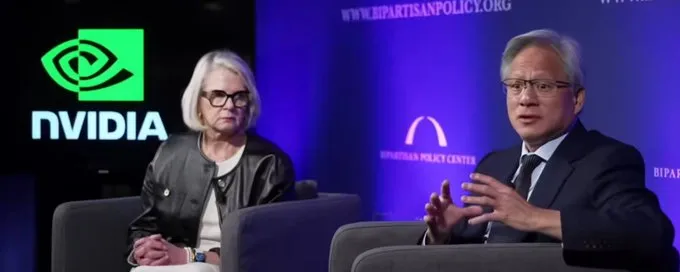
Jensen Huang, CEO of NVIDIA, has lit up the Bittensor world with comments he made on a recent panel, during which he outlined a vision where excess energy and compute are transformed into artificial intelligence models that can be transported and used anywhere.
“Transfer that energy, compress it into an artificial intelligence model. Take that model all over the place to use it."
Grayscale and others (@here4impact, @goodproponent, @YVR_Trader, and @SubnetSummerT, to name a few) pointed out that Huang was describing Bittensor, without realizing it.
"Transfer that energy, compress it into an artificial intelligence model. Take that model all over the place to use it."
— Grayscale (@Grayscale) January 7, 2026
Bittensor $TAO is real and available now.https://t.co/0ZQetWC5g3
Huang’s framing casts AI models as a new form of value that can absorb energy and computation and then be reused, exchanged, or deployed globally. Instead of intelligence being locked inside centralized labs or hyperscale data centers, the idea implies portability, composability, and reuse.
That is precisely the design goal of Bittensor, an open-source network that coordinates machine learning development through market incentives. On Bittensor, independent participants train and contribute AI models, which are then evaluated and ranked by the network. Those who provide the most useful intelligence are rewarded in $TAO.
Just like Huang outlined, Bittensor has formed an economy where intelligence itself has become the unit of account, produced from raw energy and compute, and distributed through a decentralized system.
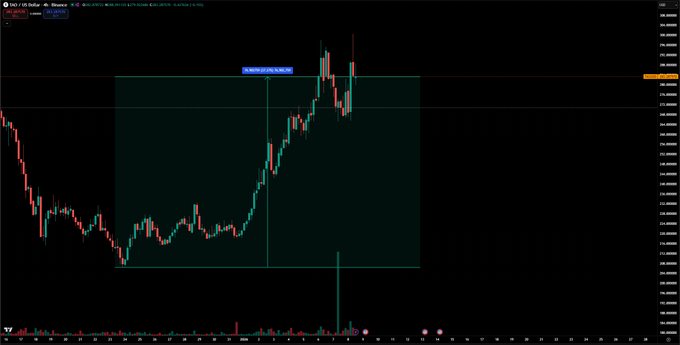
Huang’s vision has given the Bittensor thesis fresh momentum amid a $TAO upswing that's seen the token rise over 30% since the low on December 23rd.
Disclaimer: This article is for informational purposes only and does not constitute financial, investment, or trading advice. The information provided should not be interpreted as an endorsement of any digital asset, security, or investment strategy. Readers should conduct their own research and consult with a licensed financial professional before making any investment decisions. The publisher and its contributors are not responsible for any losses that may arise from reliance on the information presented.