
Table of Contents
Kodama has raised $7 million to expand forestry robotics that let operators run heavy logging equipment remotely while progressively automating repeatable work. Konvoy Ventures and Breakwater Ventures co-led the financing, bringing the company's total funding to $14 million.
Machines equipped with Kodama's technology have moved more than 100,000 tons of timber across multiple southeastern U.S. states over the past six months. The company plans to use the capital to expand commercial deployments, deepen partnerships with equipment manufacturers, and develop further autonomy capabilities for off-road environments.
Other investors in the round include Blue Forest Asset Management, NYA Ventures, Breakthrough Energy Ventures, Congruent Ventures, Dangerous Ventures, and M1C.
Retrofitting the Logging Fleet
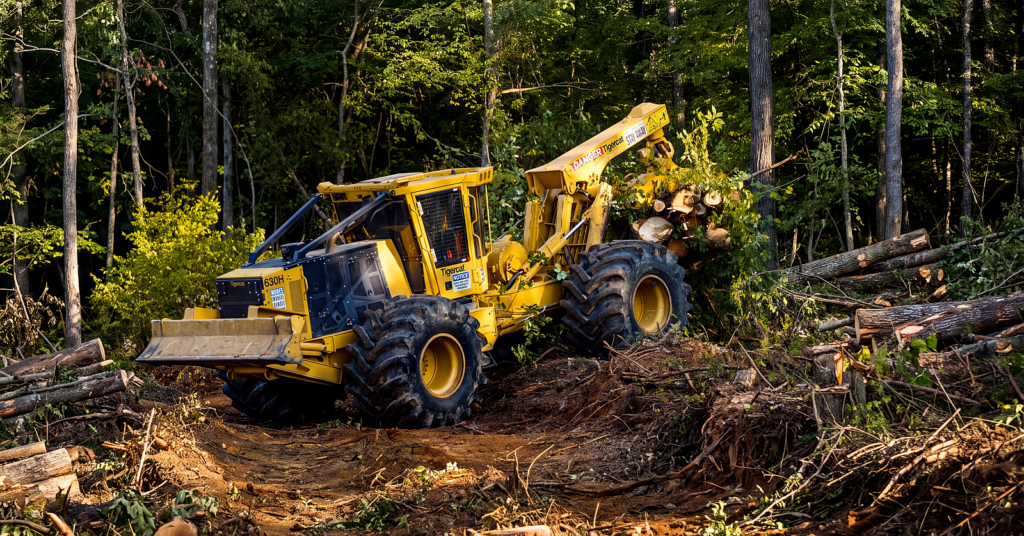
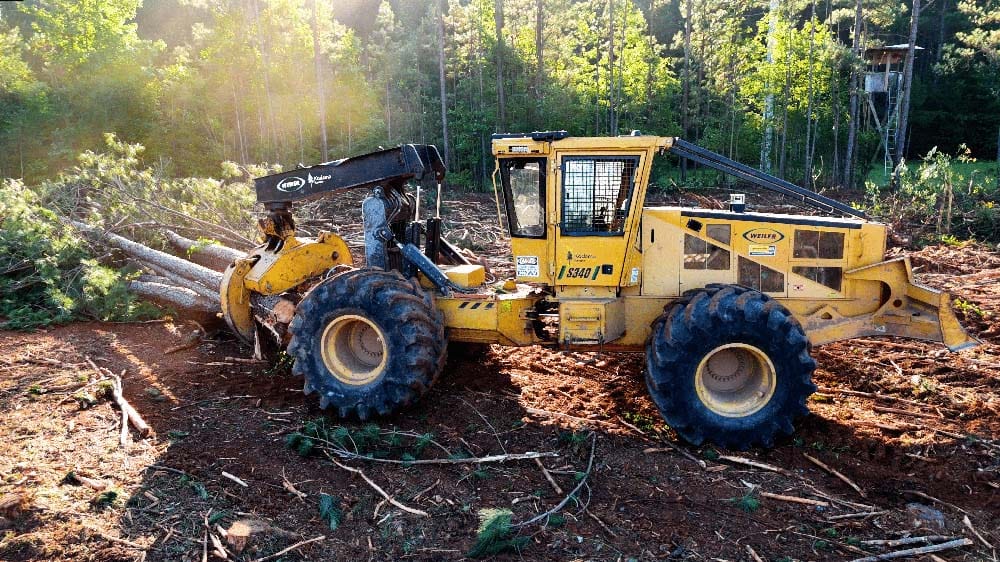
Kodama's RS1 system targets skidders, the machines that grip felled trees with a grapple and drag them to a landing for loading onto trucks. Rather than requiring contractors to replace their fleets, Kodama integrates remote-operation and autonomy technology into existing forestry equipment.
CEO and co-founder Merritt Jenkins told AgFunderNews that its hardware stack includes NVIDIA compute, eight cameras, two LiDAR sensors, Starlink, and GPS. Retrofitting a skidder takes one to one and a half days, he said, and the company has integrated with two of the largest forestry-equipment manufacturers.
The operating model combines supervised autonomy with teleoperation, with machines handling repeatable tasks while experienced operators remotely manage complex work and exceptions. Jenkins said Kodama began with teleoperation and has been adding autonomous capabilities incrementally.
That sequence also produces training material from working machines. Jenkins told The Robot Report that each day of remote operation generates about a terabyte of training data. He said working directly with equipment manufacturers lets Kodama draw on sensors and fault-detection systems already installed on the machines.
More Operating Hours, Without the Commute
Kodama's immediate business case centers on keeping equipment working when contractors struggle to recruit and retain operators. Logging crews can start before dawn at sites an hour or more from workers' homes, followed by long shifts driving over stumps, rocks, and ruts. Moving the operator out of the cab removes that commute and the physical strain of riding in the machine.
“The number one issue is labor reliability,” Jenkins told AgFunderNews. He said Kodama's system matches the per-hour productivity of a manually operated machine in its own benchmarking. Operators receive similar pay to in-cab workers, but lower workers' compensation and transportation costs reduce the company's total employment expense, he said.
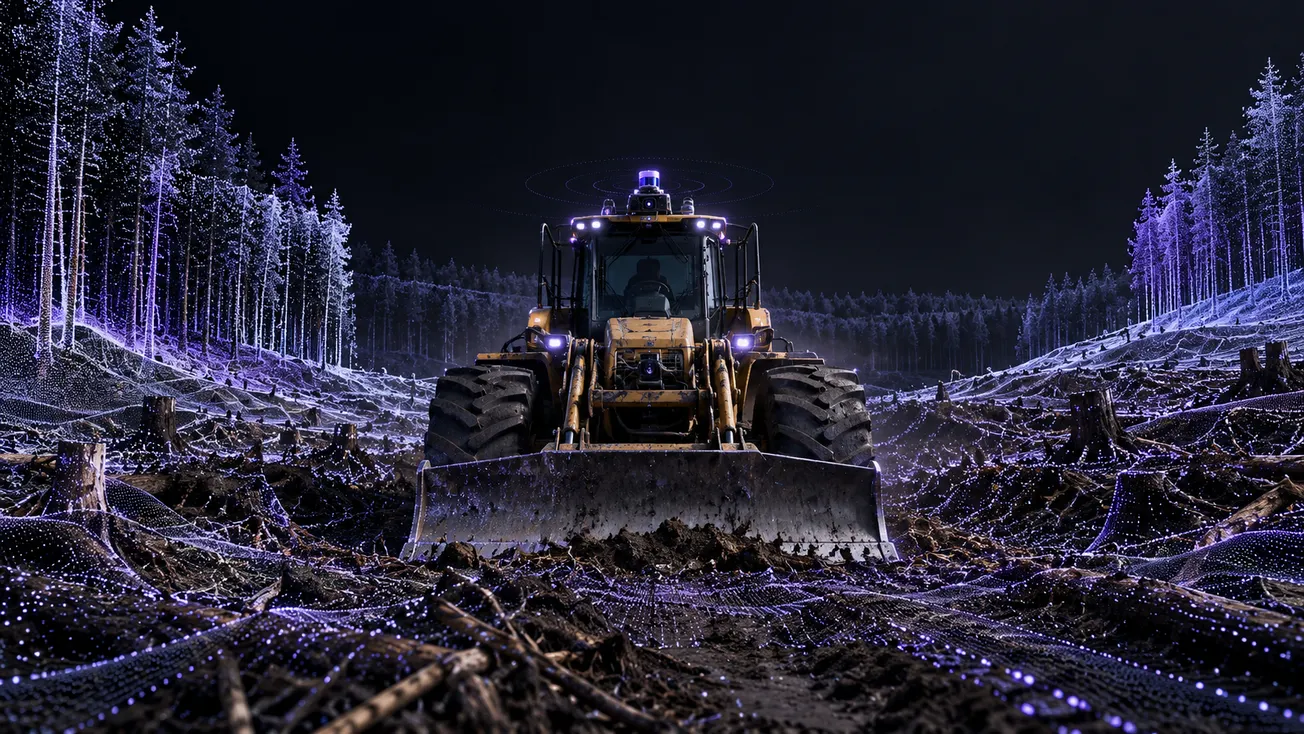
Kodama reported running its technology for 10 to 14 hours a day on job sites to The Robot Report. Jenkins separately told AgFunderNews that the company is preparing for 20-hour daily operations, including nighttime work. LiDAR measures surroundings using laser light, allowing it to collect spatial data after dark.
Building Toward Multi-Machine Operation
Contractors pay a daily or monthly rate under Kodama's robotics-as-a-service model. The diesel-powered machines still require people on the ground for refueling and greasing; remote operation changes who drives them while those maintenance needs remain.
Operating data can serve timberland owners as well as the robotics system. During forest thinning, Kodama collects high-resolution LiDAR maps beneath the canopy. Jenkins said that data captures measurements including tree density, trunk diameter, and basal area, the cross-sectional area of tree trunks per unit of land, used to assess how densely a forest is stocked.
The company's current focus is enabling one operator to control multiple machines. It also plans to extend its technology beyond skidders to cutters and loaders, bringing additional stages of the logging workflow into its remote-operation and autonomy platform.