

Skip to content

Lium (SN 51): The Compute Backbone of Bittensor

What is Lium (SN51)? Explore how Bittensor’s decentralized GPU marketplace is solving AI compute shortages with affordable GPU rentals, real revenue growth, and scalable infrastructure.

2026 guide to Lium (SN51), the Bittensor decentralized GPU compute marketplace for AI infrastructure

Table of Contents

Every AI application running on Bittensor needs one thing before anything else: raw compute. Without GPUs, every other subnet is a whitepaper.

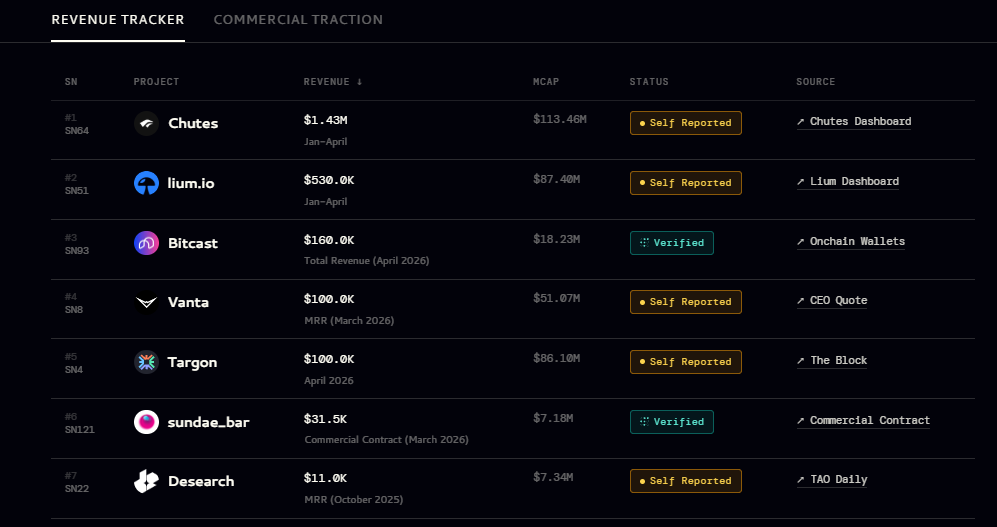
In meeting that need, Lium (SN51) has seen revenue surge in the past month, now hitting close to $20,000 per day with $530k earned YTD, putting it in second place behind Chutes.
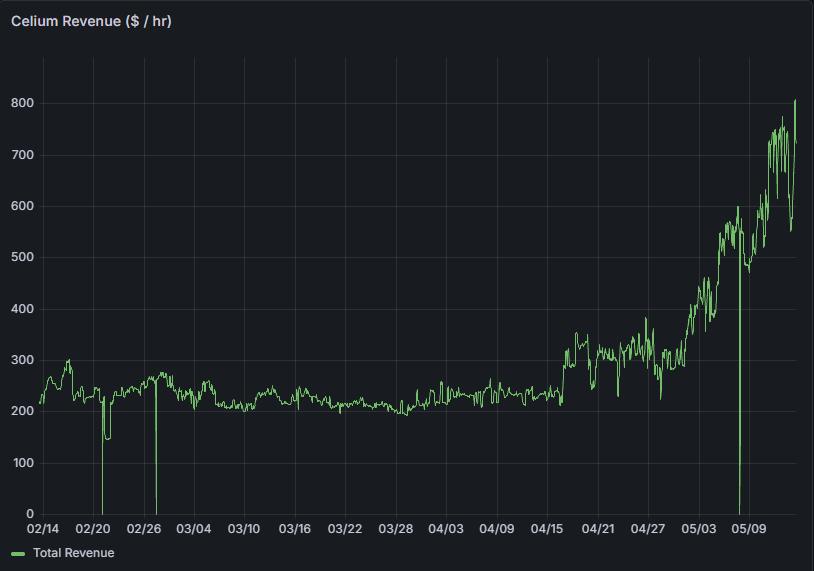
Celium Rev/Hour | Source: Grafana
Subnet Revenue Tracker | Source: TAO Institute

More importantly, as global AI demand accelerates, Lium sits at the intersection of one of the largest infrastructure shortages in modern technology, priming it for continued growth.

In this guide, we’ll explain why compute scarcity may become one of the defining constraints of the AI economy, how Lium is building a decentralized marketplace to address it, why its economic model has propelled SN51 to the top of Bittensor emissions, and what its growth could mean for the broader Bittensor ecosystem.

The Problem: The World Is Running Out of Compute

Former OpenAI researcher Leopold Aschenbrenner’s Situational Awareness predicted that, by 2028, the largest AI training clusters would require roughly 10 million H100-equivalent GPUs, consume power equivalent to a small U.S. state, and cost hundreds of billions of dollars to assemble.

By 2030, total annual AI investment is projected to reach $8 trillion, with electricity demands exceeding 20% of current U.S. production. These numbers were widely mocked when published, but are looking considerably less unrealistic with every passing quarter.

The binding bottleneck for AI progress is physical compute: the availability of GPUs, the power to run them, and the infrastructure to connect them at scale. In part, because of this:

Already in today's state of affairs, the world needs more compute than the three dominant cloud providers can supply, and millions of GPUs sit idle in data centers, offices, and mining facilities with no efficient way to reach the people who need them.

Furthermore, if you need GPU access, you go to AWS, Google Cloud, or Microsoft Azure. You sign a contract, accept their pricing, and trust their utilization metrics without any mechanism to verify them independently. The same companies controlling the supply set the price, and they have no structural reason to change either. For an AI startup running nightly fine-tunes or a researcher needing short-burst GPU hours with no long-term commitment, the cost and the opacity compound together against a backdrop of accelerating demand and a supply chain three companies control.

So we have a compute shortage and a suboptimal market for getting it. That's the gap Lium is built for.

A Decentralized GPU Marketplace Built on Bittensor

Lium is a decentralized GPU compute marketplace operating as Subnet 51 within the Bittensor network, connecting GPU owners to those who need affordable compute for AI and other heavy workloads. The platform is permissionless and open to anyone: anyone can add compute, anyone can rent it, no KYC required.

In the marketplace, renters pay for compute with crypto, and validators on the subnet measure miners’ performance to ensure fair payout of TAO rewards based on useful work delivered, removing the need for any centralized server or escrow. The blockchain coordinates matchmaking and reward distribution automatically. GPU rentals on Lium cost approximately 90% less than traditional cloud providers because the intermediary and its overhead are removed from the pricing equation entirely.

How Lium Works

Lium’s architecture comprises three participating roles: miners who provide GPU resources to the network, validators who verify hardware specifications and performance, and renters who access computational resources through the web interface.

Miners are GPU owners who register their hardware on Subnet 51 and run Lium’s miner software. Continuously benchmarked and scored on GPU type, bandwidth, and uptime, higher-performance nodes earn greater rewards. An H100, for example, earns more than a consumer GPU because the network scores it higher, so the incentive structure self-selects for quality hardware.

Validators sit between miners and renters, and their role is what separates Lium from a simple peer-to-peer rental board. Validators enforce that miners deliver the promised compute and can slash or reduce rewards for poor performance or fraud. That way, when you rent a 40GB A100 on Lium, a validator has cryptographically confirmed you are receiving what you paid for.

Without this verification layer, GPU providers would have full access to rental containers and could inspect their contents, exfiltrate sensitive data including model weights and private keys, or intercept network traffic in ways invisible to validators and renters. Lium’s Confidential Virtual Machine layer, powered by Intel TDX, encrypts all VM memory at the hardware level. Think of it as a sealed room inside the provider’s machine: they can power it on, but they cannot see through the walls. Any modification to the VM image or boot environment changes the hardware measurements, making tampering detectable.

Renters access the entire system through a straightforward web interface. They can browse available GPUs, select by model and price, deploy a pod, and monitor usage through the dashboard. Notably, the interface abstracts away the on-chain mechanics, allowing a developer who has never used a TAO wallet to rent an H100 and pay by credit card.

Web Interface at Lium

The Collateral Mechanism: Why Reliability Is Enforced

The structural failure mode of every decentralized compute network before Lium is the same: anyone can plug in a GPU, but there’s no enforceable consequence for taking it offline mid-job.

Lium addresses this directly: miners must stake collateral to ensure GPU reliability, and downtime results in forfeiture. Smart contracts handle the slashing automatically on-chain through Bittensor’s EVM module, with no arbitration required and no dispute window a bad actor can exploit. Miners who cannot maintain uptime lose their stake and exit. Those who remain run reliable hardware, so the network becomes more trustworthy as it scales rather than less.

The Token Structure Behind the Staking Incentive

Of the 4.93 million SN51 tokens ever issued, 1.04 million have already been permanently burned.

That is 21% of total issuance removed from circulation before the network has reached anything close to full adoption. Circulating supply now sits at 3.90 million tokens, 18.55% of the 21 million hard cap, with 1.81 million of those already staked and off the market.

Lium founder Pierre (Fish) designed the incentive structure specifically to balance rewarding miners while keeping GPU prices competitive for renters. In practice, as rental demand grows, revenue grows, the burn rate accelerates, and circulating supply contracts against a fixed ceiling of 21 million.

Strengthening Bittensor’s AI Compute Layer

At a time when the global AI industry is competing for limited compute resources, Lium is showing what decentralized infrastructure can look like when product demand begins to materialize. With revenue approaching $20,000 per day, more than $530,000 earned year to date, and a growing base of GPU providers and renters, Subnet 51 has emerged as one of the clearest examples of real economic activity taking shape inside Bittensor.

That matters beyond Lium itself. Every application built on Bittensor, from model training to inference and autonomous agents, ultimately depends on access to compute. If subnets are the intelligence layer of the network, then compute providers are the physical foundation beneath them, and a successful marketplace for sourcing affordable, verifiable GPUs strengthens the broader ecosystem by reducing one of its largest structural constraints.

Looking ahead, Lium appears well positioned for continued growth as demand for AI infrastructure accelerates, hyperscalers remain supply constrained, and GPU access becomes increasingly costly for startups, researchers, and independent developers.

FAQs

What is Lium (SN51)?

Lium, formerly known as Celium, is a decentralized GPU compute marketplace built on Bittensor as Subnet 51 (SN51). It allows anyone to rent or supply GPU resources for AI training, inference, machine learning, and other compute-intensive workloads without relying on centralized cloud providers like AWS, Google Cloud, or Microsoft Azure.

How does Lium work?

Lium connects GPU owners (miners) with users who need compute (renters) through a decentralized marketplace. Miners contribute hardware to the network, validators verify GPU performance and uptime, and renters can browse available GPUs through Lium’s interface to launch workloads on demand. Payments and incentives are coordinated through Bittensor’s blockchain infrastructure.

What can Lium GPUs be used for?

Lium GPUs can be used for AI model training, inference, fine-tuning large language models (LLMs), scientific computing, machine learning research, data processing, rendering, and other GPU-intensive tasks. The platform supports access to enterprise-grade hardware such as NVIDIA H100s and A100s.

Is Lium cheaper than AWS or traditional cloud providers?

According to Lium, GPU rentals on the platform can cost significantly less than traditional cloud providers because the marketplace removes centralized intermediaries and their overhead. By aggregating idle compute globally, Lium aims to provide more affordable access to high-performance GPUs while maintaining competitive performance.

What makes Lium different from AWS, Azure, or Google Cloud?

Unlike centralized cloud providers, Lium operates as a decentralized GPU marketplace where anyone can contribute hardware or rent compute. Pricing is determined by market dynamics rather than a single provider, and validators verify hardware performance to help ensure renters receive the compute resources they paid for.

How does Lium verify GPU performance?

Lium uses validators on Bittensor to benchmark GPU hardware and confirm miner reliability. Validators assess GPU specifications, uptime, bandwidth, and performance while reducing the risk of fraud or misrepresented hardware. Miners who fail to meet performance expectations may receive reduced rewards or face penalties.

What is confidential compute in Lium?

Lium incorporates confidential virtual machine technology powered by Intel TDX to improve renter privacy and security. This encrypts virtual machine memory at the hardware level, helping protect sensitive data, model weights, and workloads from GPU providers or malicious actors.

Can anyone rent GPUs on Lium?

Yes. Lium is permissionless and open to anyone. Users can browse available GPUs, choose hardware based on specifications and price, deploy workloads, and monitor performance through the platform’s interface without relying on a centralized cloud provider.

How can GPU owners earn rewards on Lium?

GPU owners can participate as miners by contributing hardware to Subnet 51 and running Lium’s mining software. Rewards are based on factors such as GPU type, uptime, bandwidth, and overall performance, with higher-performing hardware earning greater incentives.

Why is Lium important to the Bittensor ecosystem?

Lium addresses one of AI’s biggest bottlenecks: compute access. Since every AI subnet on Bittensor ultimately depends on GPU infrastructure to train or run models, Lium helps strengthen the ecosystem by providing a decentralized marketplace for affordable, verifiable compute.

What GPUs are available on Lium?

Lium supports a wide range of GPUs, including high-performance hardware such as NVIDIA H100s, A100s, AMD MI-series accelerators, and other enterprise-grade compute resources contributed by miners globally.

What is the future outlook for Lium?

Lium’s growth is closely tied to rising global demand for AI infrastructure. As GPU shortages persist and compute costs continue climbing, decentralized marketplaces capable of unlocking idle compute may become increasingly important. Lium is also exploring larger-scale distributed AI workloads, enhanced developer tooling, and continued expansion of its GPU marketplace.

Is Lium the same as Celium?

Yes. Lium is the new name for Celium, the decentralized GPU compute marketplace operating as Bittensor Subnet 51 (SN51). The platform continues to focus on affordable, permissionless GPU access for AI workloads.


Disclaimer: This article is for informational purposes only and does not constitute financial, investment, or trading advice. The information provided should not be interpreted as an endorsement of any digital asset, security, or investment strategy. Readers should conduct their own research and consult with a licensed financial professional before making any investment decisions. The publisher and its contributors are not responsible for any losses that may arise from reliance on the information presented.

Comments

Latest