


Table of Contents
OpenRoboto has launched Shift, a decentralized network for collecting first-person robotics training data through Bittensor Subnet 80.
The new product centers on egocentric workplace video: footage captured from a person’s point of view while doing real tasks in factories, kitchens, warehouses, retail spaces, assembly lines, and other physical environments. OpenRoboto said in its launch announcement that Shift extends SN80 beyond model competition and into the data collection layer that physical AI systems need to improve.
Shift is also introducing a new data track on Subnet 80. Part of the subnet’s emissions will be allocated to reward accepted recording hours, giving operators an incentive to collect useful work demonstrations rather than simply contribute model submissions.
OpenRoboto Shift launch video
How OpenRoboto Shift Works
Shift connects three parts of the robotics data pipeline: operators who collect footage, buyers who need proprietary datasets, and the OpenRoboto ecosystem that can later use approved data for model training.
Operators apply to collect data using OpenRoboto’s OR-S1 or OR-S2 head-mounted stereo capture devices. OR-S1 is listed at $699 per unit plus shipping, while OR-S2 is aimed at professional teams that need to contact OpenRoboto directly. Early tasks are opening first to organizations with five or more OR-S1 units and a steady supply of work scenes, while individuals can register interest as devices ship.
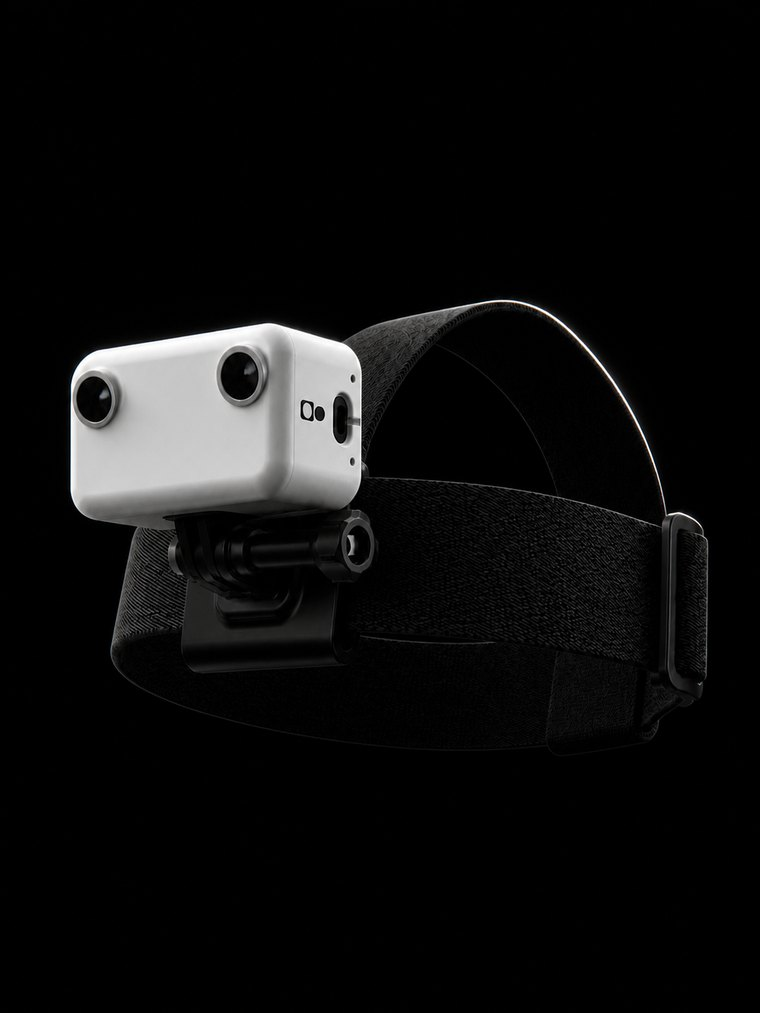

OpenRoboto's OR-S1 and OR-S2 devices
OpenRoboto is prioritizing structured environments first. The initial focus is on organizations that can reliably capture real workplace activity, before expanding to individuals and broader "long-tail" everyday scenes over time.
Buyers get time-limited exclusive access to purchased data. Once the agreed exclusivity period ends, OpenRoboto says the data will move into an Open Data Pool for researchers and SN80 miners. That design gives robotics companies a reason to pay for targeted datasets while still allowing accepted recordings to eventually strengthen the broader open training ecosystem.
Why Egocentric Data Matters for Robotics
The launch reflects a wider push in robotics toward first-person human demonstration data. In physical AI, the bottleneck is not only model architecture or compute. Robots also need large quantities of real-world examples showing how people manipulate objects, move through workspaces, and complete tasks under practical constraints.
In that regard, Shift can be thought of as a decentralized counterpart to Figure’s Index app, which collects crowdsourced physical-task recordings for robot training. OpenRoboto is now in the same data-scaling race as centralized robotics labs; the difference is that OpenRoboto is trying to route collection, incentives, and downstream training into a Bittensor subnet instead of keeping the full loop inside one private company.
 Tristan Hillerich

A New Data Layer for SN80
OpenRoboto already runs an open competition on Bittensor for improving robotics models. The system is a public model arena where participants fine-tune base models, submit weights on-chain, and compete against benchmarks, with the strongest challenger becoming the next base model.
Shift adds a complementary input to that process. Instead of only rewarding better models, SN80 can now help generate the data those models may train on.
The data loop on the Shift site moves from capture to analysis, annotation, training, and post-training. Recording remains traceable to its source, with provenance tracked across device identity, original analysis, quality review, and rights delivery. Robotics datasets can be difficult to evaluate once they are separated from information about who recorded them, where they came from, what rights apply, and whether they passed quality review.
If the system works as intended, operators earn for accepted hours, buyers get temporary proprietary value, and the Open Data Pool eventually gives miners and researchers more material for improving robotics policies. That creates a more complete feedback loop than a model leaderboard alone.
Shift is open to operators now, with OpenRoboto specifically asking organizations that can organize data collection in factories, kitchens, or other workplaces to apply. The project is also accepting interest from individuals ahead of broader device availability and future task expansion.