

Table of Contents
The Biological Computing Co. has launched Mischief 1, an image-to-video model that uses software developed from experiments with living neurons to make video generation faster and cheaper. Available on fal and OpenRouter, the model starts at $0.005 per second, putting a five-second clip at 2.5 cents.
The San Francisco company calls it the world's first publicly available neuron-derived AI video model. TBC says Mischief 1 generates video five times faster than its base model while matching its quality, with 80% lower inference costs. The public launch expands access to TBC's first commercial product beyond its earlier limited availability.
The biological component is in the research process, not the hardware serving each request. Customers generate videos using software running on conventional AI infrastructure; living cells remain in TBC's laboratory.
How Neuron Experiments Become Video Software
Mischief 1 builds on Wan 2.2, an open-weight video model, rather than replacing it with a new architecture.
TBC applies its optimization after training. Its lightweight software layer wraps around each diffusion transformer block and adds less than 0.1% to the underlying model's parameter count. Diffusion models generate imagery through a sequence of refinement steps; the transformer blocks process the visual information used in that generation process. TBC's approach targets the computation inside an existing model rather than requiring customers to adopt biological hardware.
The discovery process begins by translating an AI problem into electrical signals that neurons can process. Researchers measure the cells' responses, identify useful computational patterns, and translate those findings into proprietary code.
WIRED reported in September that TBC works with rat brain cells and human stem cells on multi-electrode arrays made by Swiss company 3Brain. Those arrays allow researchers to stimulate neurons electrically and record their activity. Ksendzovsky told the publication that images were a natural starting point because visual information could be mapped onto the electrodes' grid.
That work supplies a different route to inference optimization, the effort to reduce the computing needed to run a trained model. Established techniques include quantization, which uses lower-precision numbers, and distillation, which transfers capabilities into a smaller model. TBC instead seeks useful algorithms in measured biological activity.
The fivefold speed improvement and 80% cost reduction are TBC's comparisons against the base model. Its product page also shows a GPU benchmark example of 142 seconds for Wan 2.2 versus 12 seconds for Mischief 1, labeled as average times from TBC's testing. Those figures describe that comparison, rather than a fixed turnaround time for every API request.
Clip Formats, Pricing, and Creative Workflows
On fal's API, users supply a text prompt and a starting image to generate an MP4 clip. The endpoint offers three- or five-second durations, 480p or 720p landscape output, and 16 frames per second.
Developers can choose whether the service uses their original prompt or enhances it against the starting image before rendering. Image fitting can preserve the source's proportions with a center crop or stretch it to the output size. A seed option controls the rendering randomness; reproducible requests also require disabling prompt enhancement, because the rewrite itself is not seeded.
Its published pricing separates the two resolution tiers:
| Output Resolution | Price per Second | Five-Second Clip |
|---|---|---|
| 480p | $0.005 | $0.025 |
| 720p | $0.01 | $0.05 |
At the 480p rate, 100 five-second clips cost $2.50. TBC says Mischief 1 is the lowest-priced image-to-video model on both marketplaces.
The product is aimed at workflows where creators generate variations before committing to a finished shot: previsualization, mood reels, pitches, and advertising concepts. Wonder Studios tested it in its production workflow, and Ksendzovsky credited the studio with collaborating on the launch.
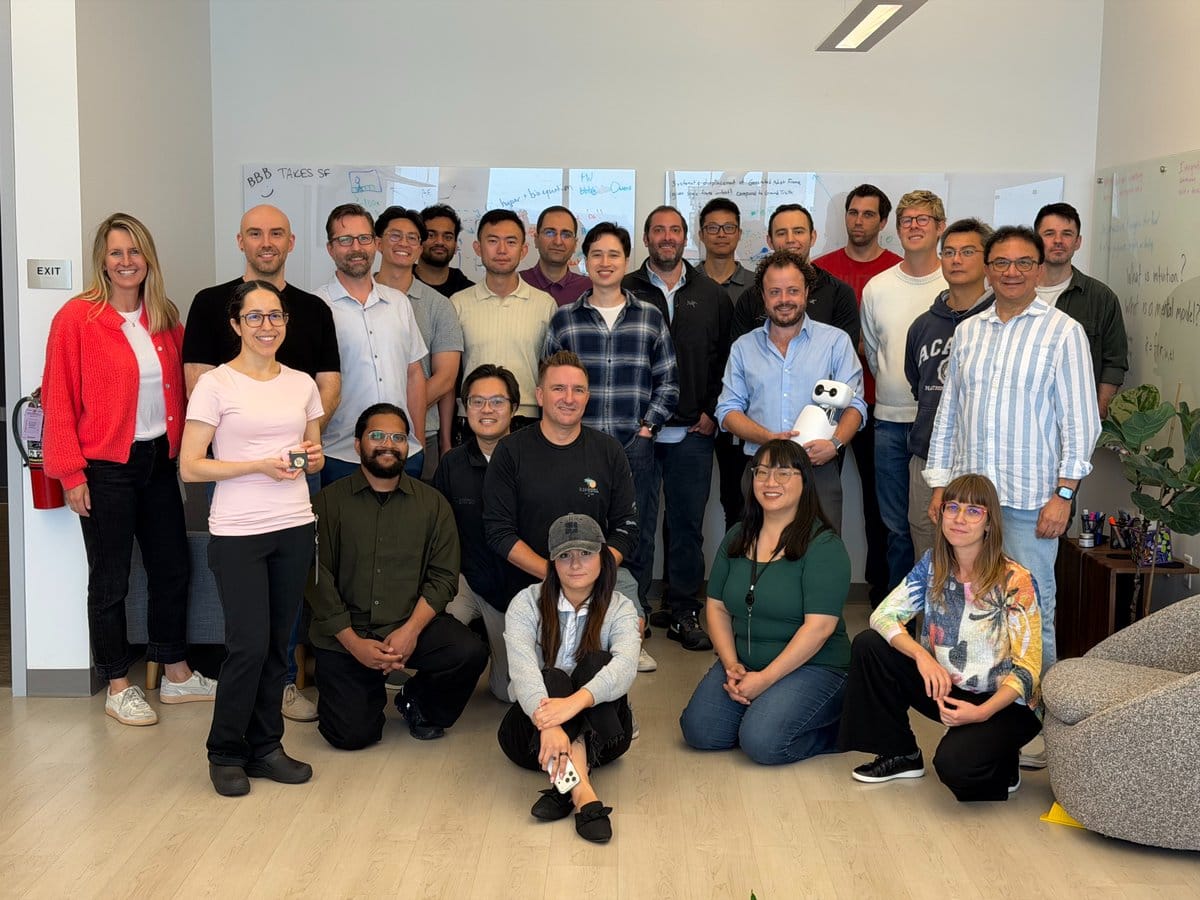
“Great storytelling comes from refining an idea until it's right, and that's usually the crunch point for time and budget,” Wonder Studios co-founder Justin Hackney said in TBC's launch release. He said the model's speed and cost allowed the studio to explore its work further within the same time and budget.
AWS Distribution and Additional Models
The marketplace release follows TBC's September collaboration with AWS. The companies plan to run TBC's optimized model on AWS Trainium, make it deployable through Amazon SageMaker AI, and distribute it through AWS Marketplace. Ksendzovsky said in his launch post that the Marketplace listing is coming soon.
TBC is also applying its discovery process to newer open-weight video models and says language-model and physical AI applications are in development. Its longer-term research plans include world models and systems in which neurons and silicon compute together.