Table of Contents
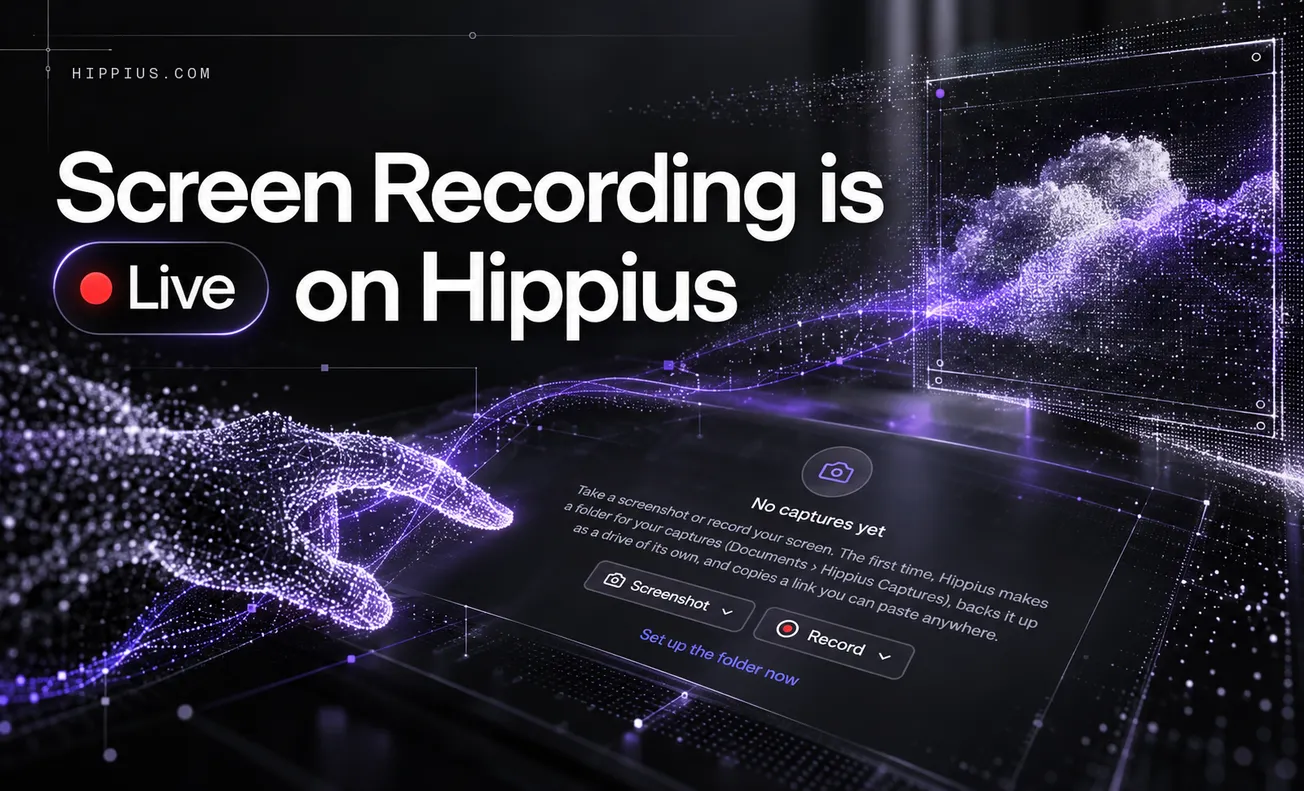
Hippius has launched a built-in encrypted screen recorder for Hippius Drive, expanding its Bittensor SN75 storage product beyond file storage and S3-compatible infrastructure into a common workplace sharing workflow.
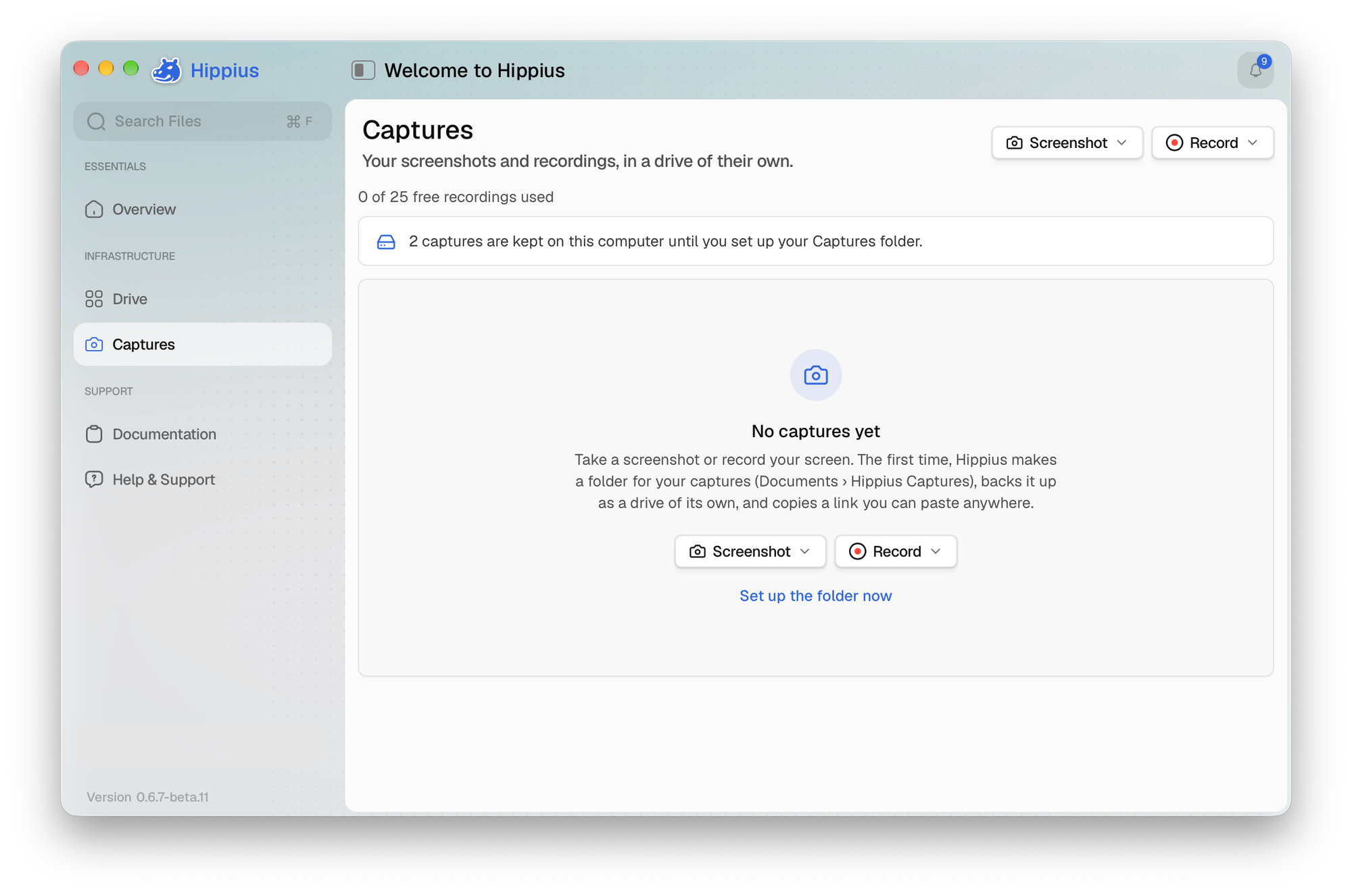
The Hippius screen recorder is available in the web console and in the desktop app for Mac, Windows, and Linux. It lets users take screenshots or record a selected area, single window, or full screen, with optional microphone audio, system audio, or both. Captures can be recorded in up to 4K, encrypted locally, and saved automatically to a Captures folder in Drive.
The recorder is Hippius's privacy-focused alternative to Loom-style screen sharing. Instead of treating recording as a separate hosted video product, Hippius is tying captures to its encrypted Drive model, where files are locked on the user’s device before upload and stored in the same environment as other Drive content.
Hippius Adds Screen Recording to Drive
The feature targets the quick visual updates that have become routine across product, engineering, support, sales, and operations teams. A user can record a software walkthrough, bug report, design review, or onboarding note, then share the result with a link.
In the browser, recording starts from the web console without a desktop install. In the desktop app, users can start a capture from the app itself, the menu bar, or a keyboard shortcut. Hippius also includes a countdown before recording begins, plus pause, resume, restart, and discard controls while recording.
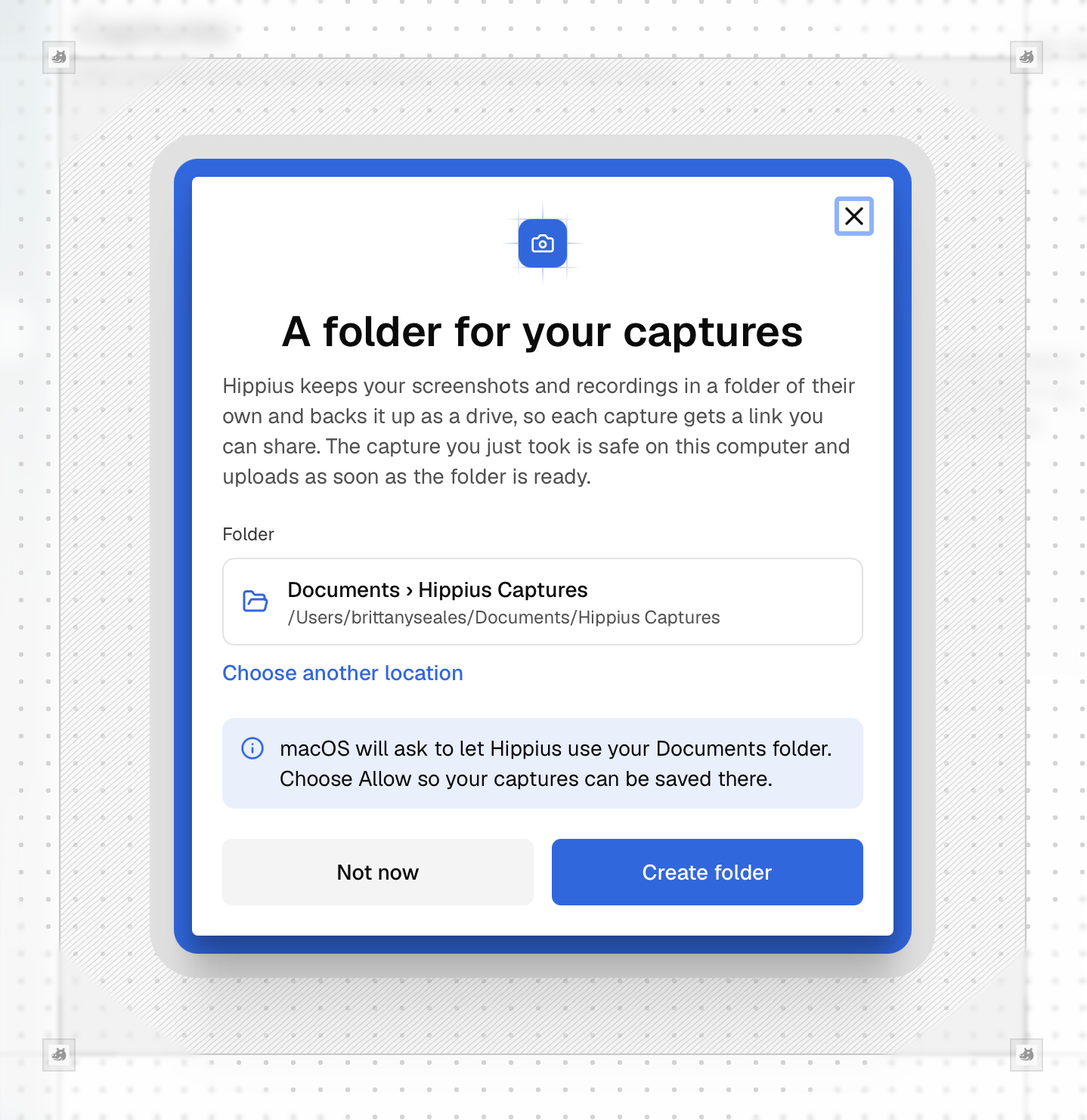
The capture options cover screenshots, screen recordings, and camera-based recording. Users can include a movable camera bubble on top of a screen recording, resize it, or use camera-only mode when a screen share is not needed. Hippius says paid plans have no video length or count limit beyond storage capacity, while the Free plan supports videos up to five minutes, up to 25 videos, unlimited screenshots, unlimited share links, and 10 GB of storage.
That puts the product in a category led by Loom, which Atlassian said was used by business users to record almost 5 million videos per month by the end of 2023 when it completed its acquisition of the company. Hippius is targeting the same general habit of fast recorded communication, but with storage ownership and encryption as the differentiator.
Why Encryption Is the Main Pitch
Screen recordings often contain more sensitive information than users intend to share: inbox previews, customer names, dashboard data, browser tabs, or notifications that appear during a take. Hippius builds its pitch around that privacy problem.
The company says every screenshot and screen recording is encrypted on the device before it leaves the user’s computer. The same zero-knowledge model used across Hippius Drive applies to captures, meaning Hippius stores the files but does not hold the key required to view them. In the company’s words, "Hippius stores your recordings, but can't watch them."
Screen recording normally combines two trust assumptions: users have to trust the capture tool with the recording itself, and they have to trust the hosting provider with every shared video link. Hippius is trying to collapse that workflow into encrypted Drive storage, where the recording is treated as another private file rather than as content managed by a separate video platform.
Sharing still follows the expected screen-recorder pattern. When a capture finishes, Hippius saves the file and copies a share link to the clipboard. Viewers do not need a Hippius account to watch. Links have no expiry by default, but users can add expiration dates, password protection, or turn off a link from Shared Links.
What It Means for Bittensor SN75
The screen recorder is also a demand-side story for Hippius.
The project has built SN75 into a distributed cloud platform with personal encrypted storage, S3-compatible object storage, confidential compute, and registry products. Screen recording brings that infrastructure into a more frequent, non-developer workflow.
Consumer and team products can create recurring storage demand for a Bittensor storage subnet, beyond developer buckets or one-off file uploads. A screen recorder generates new files as part of ordinary work, and those files get shared, kept, and revisited over time.
Hippius has also been pushing infrastructure economics around the same period, including S3 pricing built around no egress fees and unlimited requests, plus a one-click S3 migration tool. Another related Hippius post said the network is being used as the storage backend for Vidaio’s livestream archive.
Taken together, we see the project moving on two fronts: developer infrastructure for cloud storage migration, and user-facing applications that make encrypted storage part of everyday workflows.