

Table of Contents
Lightberry’s Lumi humanoid robots have received Conditional Approval from the U.S. Department of War, securing an exemption from the Federal Communications Commission’s restrictions on foreign-produced advanced robotic devices. The decision removes a national-security barrier to obtaining the equipment authorization needed to bring new robot models to the U.S. market.
The FCC’s Public Safety and Homeland Security Bureau identified Lightberry Holdings’ “Lumi Interactive mobile robots” among the devices exempted in Public Notice DA 26-1181. Lightberry is the first, and so far only, humanoid robot company to receive the approval.
The clearance ties the San Francisco startup to two commitments. It must replace Lumi’s sensors, onboard computer, and software with its own stack, and bring manufacturing to the United States. The exemption depends on continued compliance with that onshoring plan and updated vetting of its products.
How the FCC’s Robotics Restrictions Work
The FCC added foreign-produced advanced robotic devices to its Covered List on July 28, 2026, following a national-security determination by an executive branch interagency body. The category includes humanoids, autonomous mobile robots, and quadrupeds that meet the government’s technical definition.
Covered equipment cannot receive new FCC equipment authorization, which most electronic devices need before importation, marketing, or sale in the United States. The FCC’s guidance distinguishes new models from devices already authorized. Existing authorized models can continue to be imported and sold, and owners can keep using devices they lawfully purchased.
The rules also provide a route for individual devices or classes of devices to be exempted following a Department of War review. In Lumi’s case, the FCC found that Conditional Approval constituted “a specific determination” by the department “that such devices do not pose risks to U.S. national security.”
Lumi was one of several robotics products approved in the October 30 notice. The others came from ARAPL RaaS, ATI Motors, SunScout, Swap Robotics Canada, and OMRON, covering equipment including automated pallet trucks, forklifts, and mobile robotic platforms.
The FCC says failure to follow an approved onshoring plan, or discovery of a false statement or misrepresentation in an application, could terminate Conditional Approval and return the equipment to the Covered List. For the robotics approvals in this notice, the conditions apply unless another national-security determination supersedes them.
A Custom Stack and a U.S. Manufacturing Plan
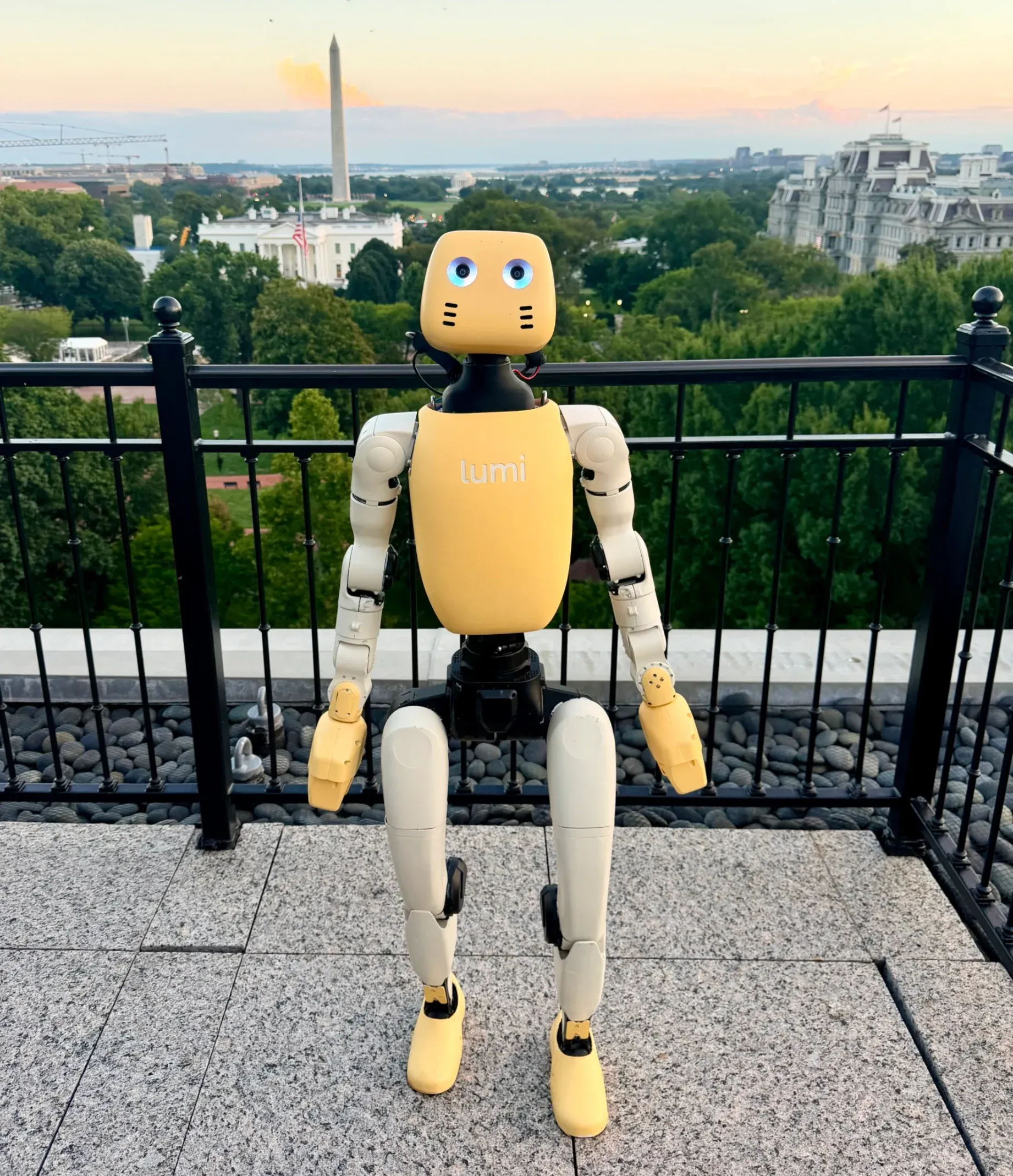
Lightberry’s approach combines a G1 base with custom hardware and software for interacting with people. The company says replacing the sensors, onboard computer, and software addresses privacy concerns raised during the Department of War’s review.
“A humanoid robot works right next to people, with cameras and microphones, so you need to know exactly what’s running inside it,” co-founder and CEO Ali Attar said in Lightberry’s announcement. “That’s why we replaced every sensor and all of the software on Lumi, and why we’re investing in American manufacturing.”
The company plans to begin U.S. manufacturing with Lumi’s body, head, and hands, with the rest of the robot to follow.
Under the FCC’s rules, a producer’s nationality does not determine whether a robot is foreign-produced. The definition instead follows domestic-end-product requirements: manufacturing in the United States and domestic components exceeding 65% of total component cost for deliveries from 2024 through 2028, rising to 75% starting in 2029. That makes the production plan relevant even for a company based in San Francisco.
Lumi’s Hardware and Business Use Cases
Lumi handles public-facing interaction. It holds conversations, guides visitors, tells stories, entertains groups, takes photos, and looks up information. Lightberry sells it directly to businesses with nontechnical teams and says it can be deployed without an in-house robotics team. Robot deployment companies and university research groups are also among its users.
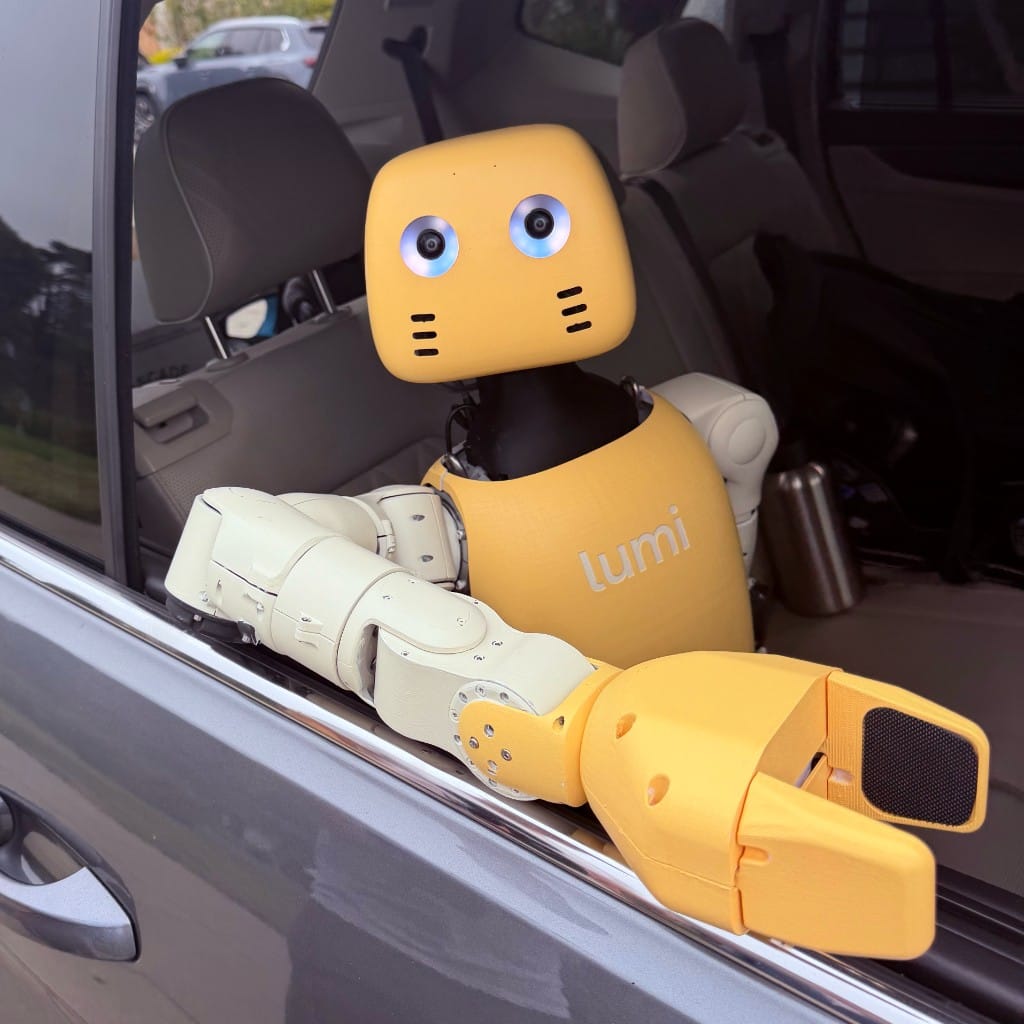
The yellow humanoid stands about 4 feet 2 inches tall and weighs approximately 40 kilograms. Its published specifications list 34 degrees of freedom overall and a 29-degree-of-freedom G1-compatible body. Degrees of freedom describe the independent movements available to a robot’s joints and mechanisms.
Onboard computing comes from a Jetson Thor system with 64 GiB of memory. Each eye has a 1920 × 1200 camera operating at 30 frames per second, alongside a beamforming microphone array that helps capture speech. A 421 Wh battery provides a stated 2.5 to 3.5 hours of operation.
Lumi runs Lightberry OS, and users can adjust its personality, voice, knowledge, or motion by talking to it. The Lightberry SDK lets developers connect their own tools and build additional behaviors. Compatibility with the Unitree G1 also gives robotics researchers a familiar underlying platform beneath Lightberry’s interaction-focused hardware and software.
Attar and Stephan Koenigstorfer founded the company in 2025. Its team combines artists with backgrounds at studios such as Pixar and Disney with engineers from companies including Google and General Electric.
Lumi Founder Edition units cost $39,990, with shipping planned for 2026 and reservations available through Lightberry.