

Table of Contents
Nous Research has released Hermes Agent v0.21.0, a major update to its open-source AI agent platform that makes multi-agent workflows more visible in the desktop app.
The release, known as "The Pantheon Release," bundles Bot Mode into the Hermes desktop app by default. It also adds bot-to-bot direct messages, memory-aware cron jobs, live subagent steering, expanded Model Context Protocol management and new provider integrations.
Nous said the update covers the development window since v0.20.0, spanning roughly 5,800 commits, about 2,475 merged pull requests, more than 5,680 changed files and over 2,100 closed issues. The release credits more than 760 contributors.
Bot Mode Moves Multi-Agent Workflows Into The App
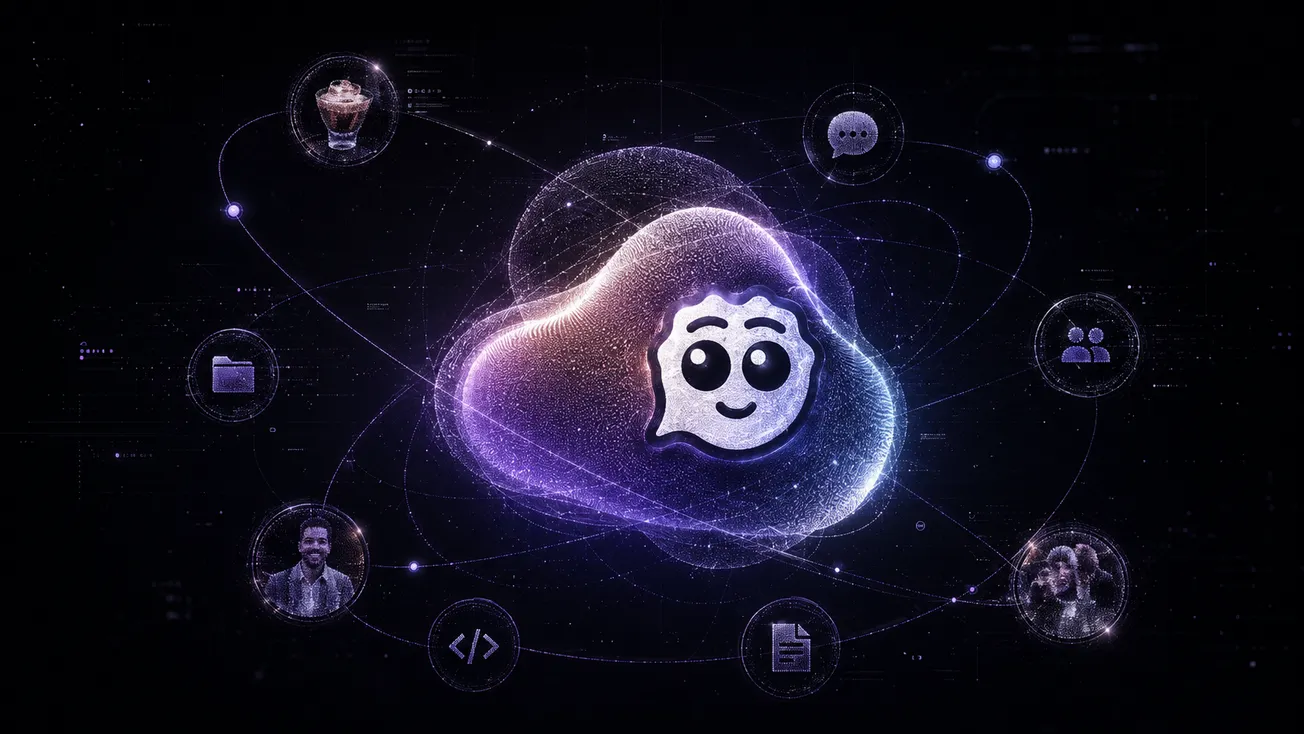
Bot Mode is the headline change in Hermes Agent v0.21.0. It gives agents named profiles, deterministic avatar faces and a shared roster inside the desktop app. Users can create group chats where multiple bots and a human user join the same conversation, using @-mentions to call specific agents into the room.
Earlier versions treated specialized agents as hidden background workers or command-line abstractions. Hermes now presents them as persistent participants that users can organize into shared workspaces.
The release also introduces hermes peer, a command that lets one Hermes agent message another by handle. Nous says replies land in each agent's canonical Bot Chat, so bot-to-bot conversations stay durable and inspectable. Users get a record of how one agent passed work to another, what was requested and what was returned.
Up until this point, a big painpoint of agentic systems was that coordination was hard to observe. With Hermes agents are now addressable, named, and visible in a shared chat model, multi-agent delegation can feel more like managing a small software team.
Cron Jobs Gain Memory And Continuity
Hermes v0.21.0 also gives scheduled agents more persistent state. According to the release notes, cron agents can now load and update memory, carry each run's output into the next with continuity=true, maintain durable notepads and skip the language model entirely in monitor mode when no relevant change is detected.
Many agent workflows are most useful when they run repeatedly, like daily research briefs, repository monitors, inbox checks, price watches, deployment summaries or recurring operational reports. Without memory, each run has to rediscover what happened previously, which can create duplicate alerts and unnecessary model calls.
With continuity, a scheduled Hermes job can compare new information against previous output and produce a more useful update. Nous frames this as a way for a briefing job to "know what it told you yesterday." The change moves scheduled automation from one-off prompt execution toward longer-running agent processes.
Live Subagent Steering Adds More Control
The release expands Hermes' delegation system with live orchestration features. Users can list running child agents, steer a subagent while it is already working, stop it early and keep partial results. Delegated work can also use optional JSON-schema validation, and the results show per-delegation cost.
This addresses a common weakness in parallel agent workflows. Delegation can increase throughput, but it can also become opaque if a subagent takes the wrong approach and cannot be corrected until the run is finished. Live steering lets the user or parent agent step in mid-flight, which helps with research, coding, testing and multi-step analysis where the right path becomes clear only after work begins.
Hermes also raised its delegation defaults to 250 iterations and 10 concurrent child agents, which points to tuning for larger task batches.
MCP Management Becomes A Command Center
The update also reshapes Hermes' Model Context Protocol experience. MCP servers and the catalog now appear in a unified desktop page with drag-in imports, background health checks, re-authentication warnings, schema token estimates, 30-day usage information and hermes:// deep links that can install MCP servers with explicit confirmation.
MCP has become an important standard for connecting AI assistants to tools, data sources and external services. But as users add more servers, management gets harder. Credentials expire, schemas consume context, tools overlap and configuration files become hard to track.
Hermes' new MCP command center aims to make that tool layer easier to read. Cost and usage overlays help power users because tool schemas can consume context before an agent does any work. Those estimates give users a better view of how their connected tools affect performance and cost.
Desktop, CLI And Security Updates Round Out The Release
Beyond the headline agent features, Hermes v0.21.0 adds several desktop and command-line improvements. The agent can now drive the in-app browser directly to navigate, click, and read pages inside the desktop environment. The CLI gains a fuzzy command palette, a faster model picker, richer status information, session pinning, and a global emergency stop.
The release also adds six providers: Actual Computer inference, CommandCode, Meta Model API, Tencent TokenPlan, Nebius Token Factory and Ramp Router. Nous also listed a model catalog update that includes GLM-5.3-Flash, qwen3.8-max and qwen3.8-flash, Gemini 3.7 Flash, MiniMax M3 and Nemotron 3.5 Lightning, along with model_overrides for local context-window or pricing patches.
Security changes are another major part of the update. Hermes now requires approval before protected instruction files such as AGENTS.md, skills and memory stores can be modified. The release notes also describe broader redaction work across terminal errors, environment-file reads, checkpoints and logs, along with stronger Windows destructive-command approvals and macOS permission grants that survive application updates.
These controls matter because agent platforms operate across a sensitive boundary. They read instructions, use tools, access files and sometimes act in external systems. As agents gain more autonomy, protecting persistent instructions and secrets becomes core infrastructure.
What Changes For Agent Operations
Hermes Agent v0.21.0 is a consolidation release for agent operations. Bot Mode makes multiple agents easier to see and coordinate, cron memory makes recurring automation more useful over time, and live subagent steering gives users more control over parallel work. The MCP updates make the external tool layer easier to manage, and the security changes tighten what agents are allowed to do.
For Nous Research, the Pantheon Release makes Hermes an environment for running a network of agents across desktop, CLI and connected services.
It's a much-needed update to observe and steer the work that Hermes agents are executing.