
Table of Contents
OpenAI will award 50,000 new grants through ChatGPT for Academic Researchers, giving recipients and up to two collaborators free ChatGPT Plus access. Applications open Monday, Nov. 23, with eligible applicants selected on a first-come, first-served basis rather than through the lottery used in the pilot.
The round can support up to 150,000 researchers. OpenAI has also doubled its overall program goal to 200,000 researchers worldwide, expanding an initiative that began in July and has enrolled 20,000 people across 33 countries.
Participants receive access to frontier models and training on using ChatGPT in their research
How the New Grants Work
The expansion changes both the selection process and the subscription tier. The pilot provided ChatGPT Pro, but OpenAI found that most participants' usage would have remained within ChatGPT Plus limits. New grants will therefore provide Plus access, allowing the company to extend the program to more research teams.
Each award covers a lead recipient and up to two collaborators. That makes the 50,000 figure a count of grants, not individual subscriptions, while the 200,000 figure is the target for the program as a whole. Researchers already on the waitlist who qualify will receive an email before applications open with instructions for activating their accounts.
OpenAI's eligibility guidance identifies research faculty and postdoctoral researchers at eligible academic institutions as the intended applicants. It requires an authored paper posted within the past three years on arXiv, bioRxiv, or ChemRxiv in an eligible field, along with plans to use ChatGPT for academic research.
Those fields include biological sciences, chemistry and materials, computer science, Earth and planetary sciences, engineering, mathematics, and physics. Institutional and country eligibility checks also apply.
What Scientists Did With ChatGPT
Alongside the expansion, OpenAI published Science at the Frontier: How Scientists Use ChatGPT, an Economic Research study examining 580,186 scientific messages from 1,819 pilot participants between Aug. 20 and Sept. 22. A subsequent survey gathered responses from 251 scientists.
Across eight research activities, surveyed participants estimated that work completed in one hour with AI available would have taken about 1.9 hours without it, at the same quality.
The usage analysis covered literature review, coding, evidence analysis, developing ideas, and communicating findings. To compare activities, the researchers calculated each scientist's share of scientific messages in each category, then averaged those shares so every scientist carried equal weight.
Developing research ideas was one common use. During the study, 68% of scientists sent at least three messages about ideation. Within those conversations, researchers sometimes brought a specific question, sometimes asked ChatGPT to refine an existing idea, and sometimes requested suggestions for new questions.
The study used automated classifiers to categorize activity. OpenAI's research team could see the resulting categories but did not read the underlying messages or ChatGPT responses. The analysis also tracked follow-up requests for clarification, checking, or revision, examining how scientists stayed involved after assigning work to the model.
OpenAI highlighted two examples from the broader pilot. Shuqi Li, a researcher at Brigham and Women's Hospital and Harvard Medical School, is exploring whether ChatGPT can connect laboratory and patient data to help identify tuberculosis drug targets and speed antibiotic development.
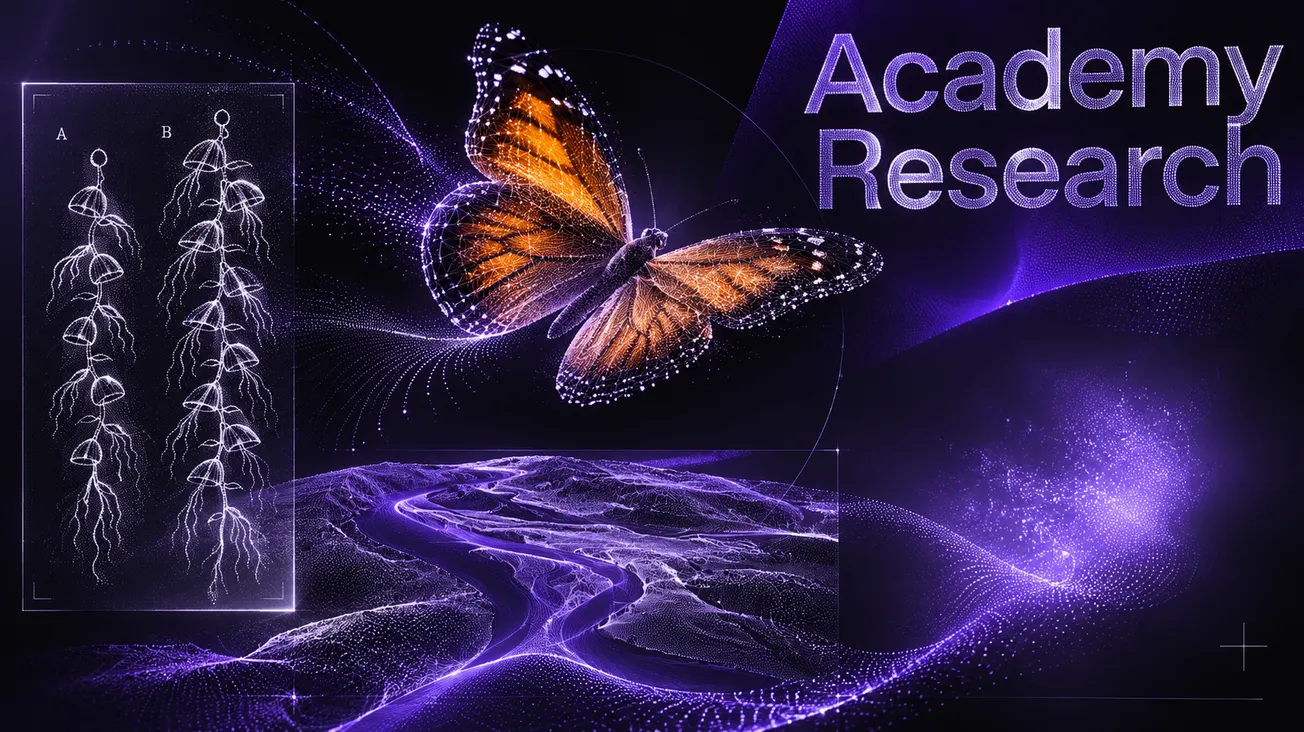
At the Florida Museum of Natural History, Arthur Porto and his team use AI tools to turn photographs of specimens into searchable databases. They also created a 3D butterfly model whose wing colors change as the viewer rotates it, reproducing an aspect of the specimen's appearance.
Other Routes for University Researchers
The grants sit alongside institution-wide and discipline-specific access programs. ChatGPT Edu lets universities provide access across their campus communities, combining research and teaching tools with administrative controls for managing users and workspaces.
For biology labs, the Rosalind Academic Plan offers eligible U.S. university laboratories up to 30 Business Standard seats at no cost for up to 12 months. It includes access to GPT-Rosalind, a specialized life sciences model connected to scientific tools and databases, subject to trusted-access approval.
OpenAI has also committed $5 million to a Simons Foundation initiative supporting mathematicians who examine and build on AI-produced results. The foundation will manage funding for workshops, conferences, and special programs.
Researchers seeking the new ChatGPT Plus grants can apply when the program opens Nov. 23 through the program's application page. The first 50,000 applicants who meet the eligibility requirements will receive access.