

Table of Contents
OpenAI has launched Businesses in ChatGPT in beta, giving companies a way to claim business profiles, supply current product information, and track how customers encounter them in ChatGPT. Eligible e-commerce and online service businesses in the United States can also publish customer-facing AI agents inside the product.
The launch adds a business-managed layer to ChatGPT's discovery experience. Companies can maintain their details through a new Business Hub, while customers can move from an answer mentioning a business into a separate conversation with that company's agent. Businesses can also sponsor their agents as destinations for ChatGPT Ads.
Business Profiles, Verification, and Product Feeds
Business Hub is the management area for claiming a business, updating its information, and reviewing engagement. Eligible businesses can get started where ChatGPT is available and the required verification is supported; they do not need an advertising account or a ChatGPT Enterprise agreement.
Owners or authorized representatives can verify their connection through the offered methods, including a business phone number, business email, a website-domain DNS record, or a Shopify login. OpenAI then reviews the claim.
To publish information changes, connect a product feed, view insights, or create an eligible agent, the representative must also pass Persona identity verification. That process may require a government-issued ID, business registration information, and proof of authorization. The profile's blue verification badge appears after Persona approval, not simply after a claim.
Verified businesses can update details such as their description, website, category, logo, delivery policy, and return policy. Retailers can upload a CSV product feed, provide a hosted feed URL, or connect Shopify to share product details, prices, and availability. Eligible Shopify products are already integrated into ChatGPT through Shopify Catalog.
ChatGPT may use those details alongside other sources when answering questions. OpenAI reviews business-information updates before publishing them, and a saved change may take time to appear in a listing or generated answer. Connecting a feed does not automatically publish an agent or guarantee product recommendations.
Local stores and restaurants can currently claim only existing U.S. listings. Each distinct brand is managed separately, with no central management across a parent company's brands and locations. OpenAI also says support cannot delete, unpublish, or hide a published profile through a business setup or ownership request; only unpublished drafts can be deleted.
Measuring Discovery Without Sharing Conversations
Business Hub reports aggregate activity over the previous 28 days, including mentions, website clicks, and discovery topics. What counts as a mention depends on the business type. For an online business, ChatGPT must reference its website, while a local-business mention counts when ChatGPT shows a result for that location. Naming an online brand without referencing its website does not count.
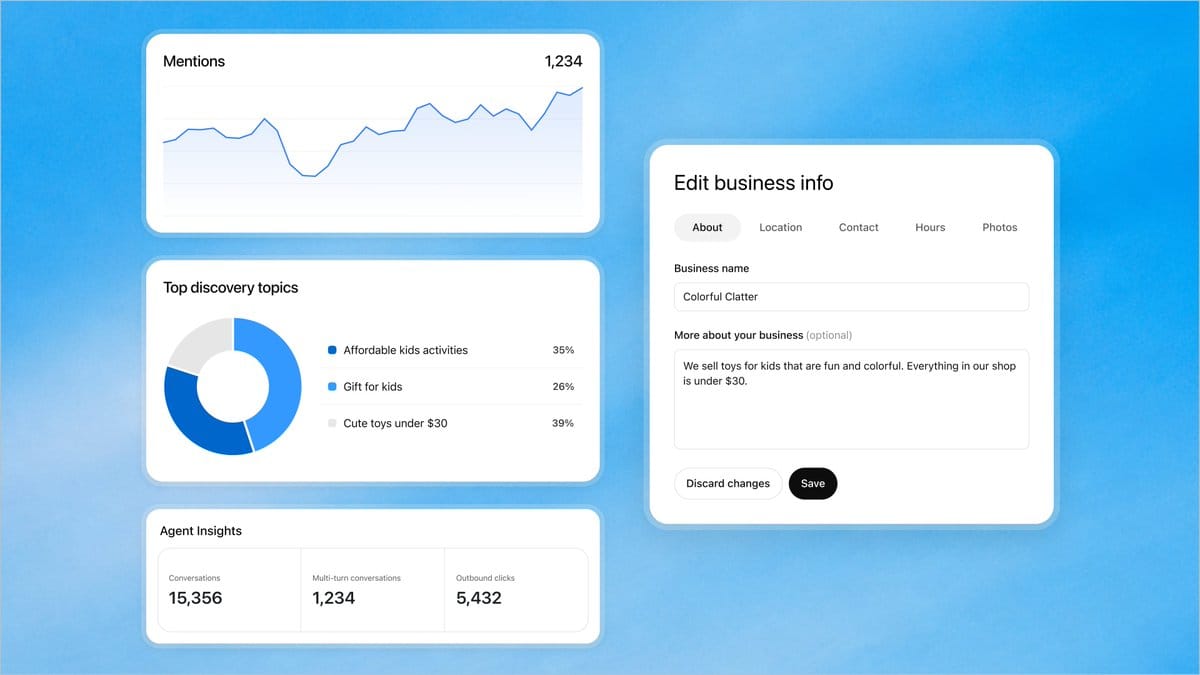
Discovery topics group themes in answers that mentioned or cited the business. They are not individual customer prompts or a direct measure of customer intent. OpenAI says it does not share users' conversations, including Business Agent chats, with businesses.
Reporting is subject to activity thresholds, and counts may be incomplete. A blank metric can mean activity has not reached the threshold, data is still being collected, or reporting is unavailable, rather than zero engagement. The sample business and figures in OpenAI's screenshots illustrate the interface, not actual merchant results.
Business Agents Answer Questions and Connect to Ads
Customers can open a business profile from a ChatGPT answer and choose to talk with its Business Agent if one is available. The business supplies the agent's instructions, product information, and policies, then previews and tests its responses before publishing it.
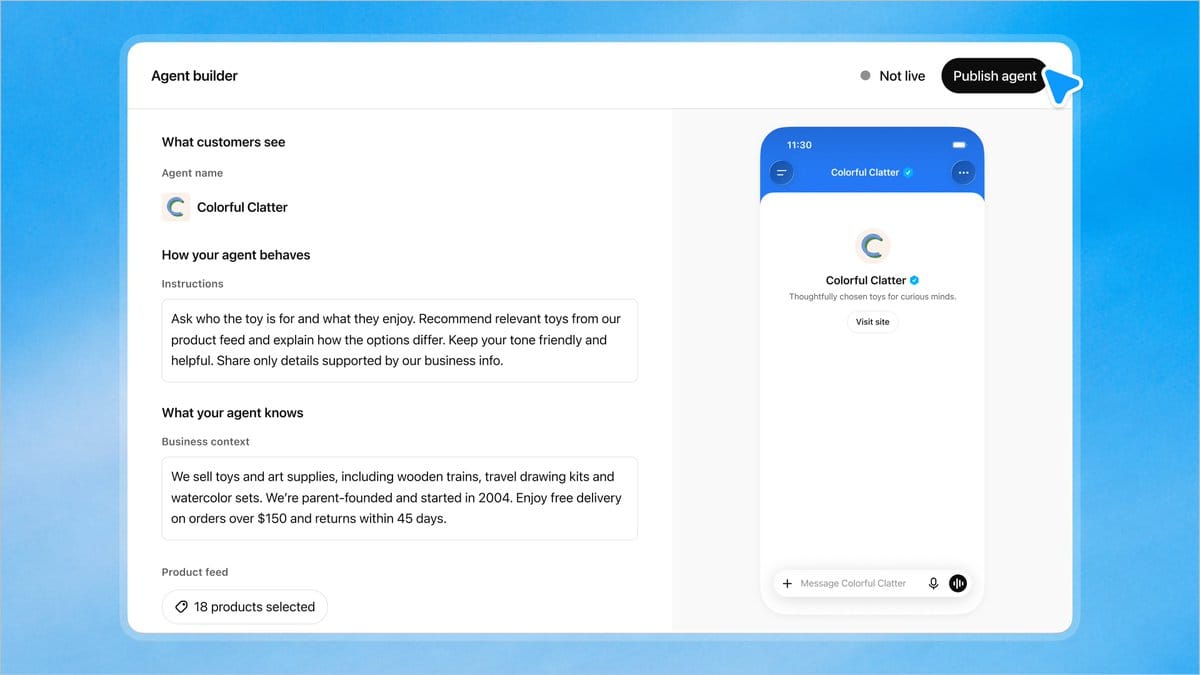
Agents can explain offerings, help customers compare products, answer policy questions, and link to the business's website. They cannot currently complete purchases, make bookings, or check orders. Those actions happen on the business's site. If the business also has a ChatGPT plugin, the agent's separate chat does not connect to that plugin's data or capabilities.
Business Agents are initially available to eligible U.S. e-commerce and online service businesses with websites, subject to category and intended-use review. OpenAI plans to expand to more markets and business types and develop tools for organizations with more complex needs.