Table of Contents
Key takeaways
- TAO is minted through block emissions rather than a pre-mine, so every token in existence was created by the network as a reward for work done on it.
- The blockchain produces a block about every 12 seconds, and after the December 2025 halving each block mints 0.5 TAO, which comes to roughly 3,600 TAO per day.
- Within each subnet the newly minted TAO is split on a fixed ratio, with 41% to miners, 41% to validators and their stakers, and 18% to the subnet owner.
- A flow-based model decides how much of the daily emission each subnet earns, so the subnets attracting the most staked TAO mint the most new supply.
- Under Dynamic TAO every subnet also mints its own alpha token, which means staking into a subnet exposes you to two separate issuance schedules at once.
No one printed a batch of TAO at launch and handed it to insiders.
Every token in circulation was minted by the network as payment for work, and that paints a picture of how you should read the rest of the token economy. When fresh supply only shows up as a reward, the rules about who earns it and how fast it lands end up mattering more than almost anything else.
If you mine, validate, stake, or just hold the token and want to know where new TAO comes from, we dive into the whole path in this blog, from the block reward down to the individual subnet.
What Minting Means on Bittensor
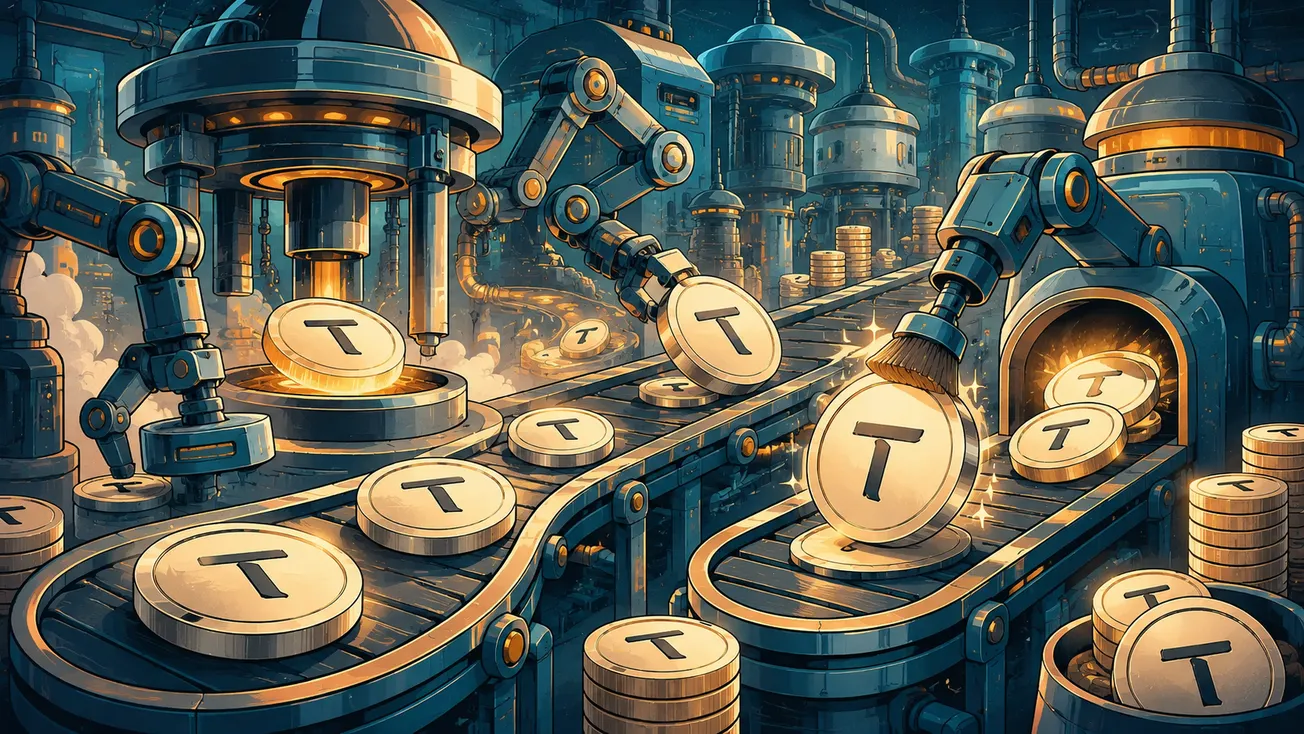
Minting just means creating new tokens and paying them out to the people running the network, and on Bittensor it runs nonstop, with the reward going to whoever contributes useful machine intelligence. There was no pre-mine and no venture allocation, so the chain did not open with a stash of tokens sitting around to be handed out. The supply has been built up block by block since 2021, and it keeps growing until it reaches the hard cap of 21 million TAO.
Each TAO also divides into a billion smaller units called rao, which is the denomination the chain uses under the hood, similar to the way a bitcoin breaks into 100 million satoshis. That detail matters for minting because rewards are calculated and paid in these tiny fractions before they add up to whole tokens.
The Block Reward and Daily Issuance
The Bittensor blockchain produces a new block about every 12 seconds, and each block mints a set amount of TAO. Before the first halving, that reward was one TAO per block, which worked out to a maximum of roughly 7,200 TAO minted per day when blocks arrived on schedule. The first halving arrived in December 2025 and cut the block reward to 0.5 TAO, dropping daily issuance to about 3,600 TAO.
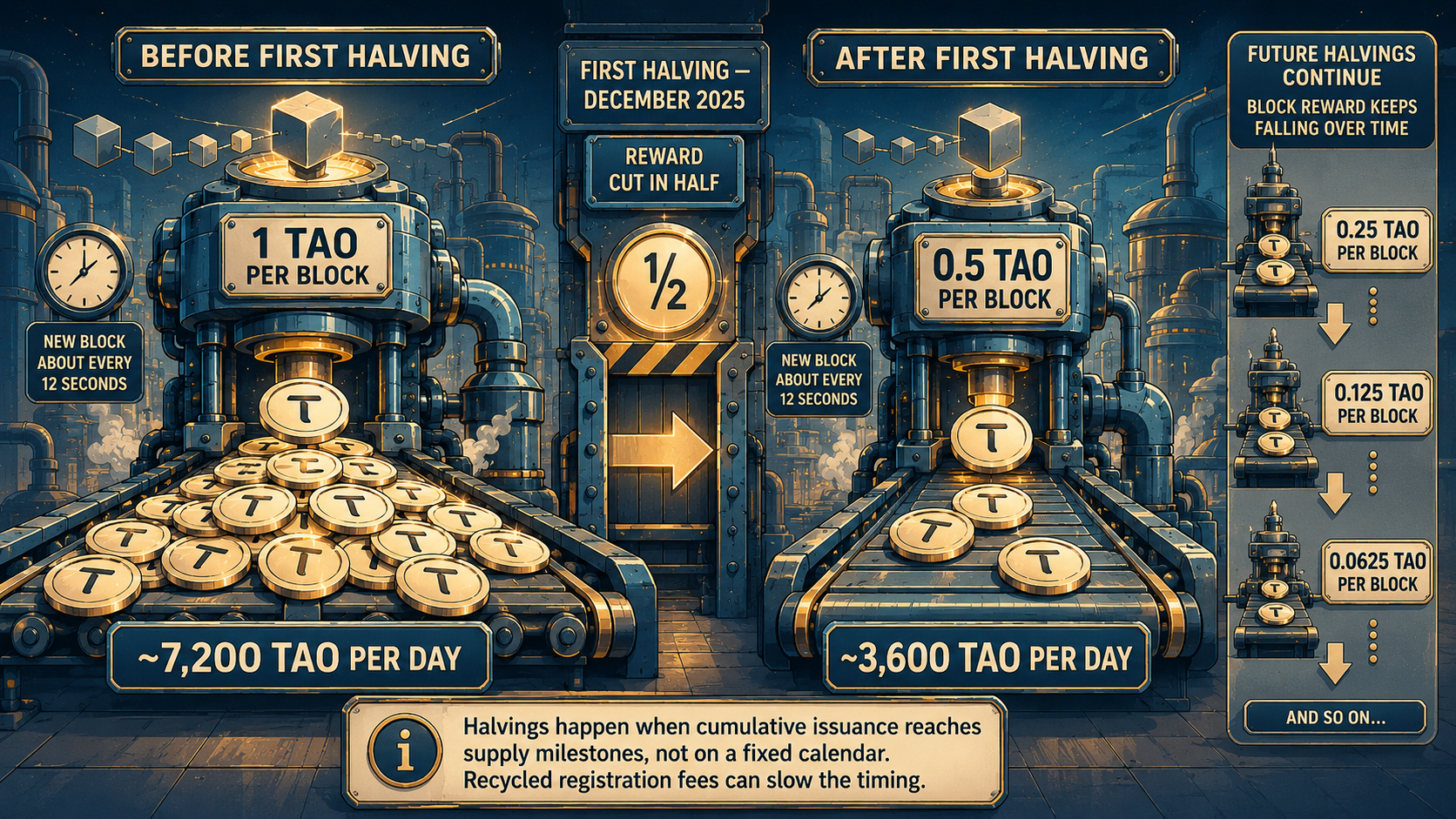
That rate is not fixed forever, since the network halves the block reward each time cumulative issuance crosses a preset supply milestone rather than on a strict calendar. Recycled registration fees return TAO to the emission pool and slow the march toward each threshold, so the exact timing of future halvings drifts, but the direction never changes. The amount minted per block only falls over time.
Where Each New TAO Goes
Minted TAO does not land in a single pool. Within each subnet the newly created TAO and the subnet's rewards are divided on a fixed ratio, with 41% going to miners, 41% to validators and their stakers, and 18% to the subnet owner. Miners earn their share by producing valuable outputs, validators earn theirs by scoring that work and are joined by the people who stake behind them, and the subnet owner takes a cut for creating and maintaining the market.
This split is what turns minting TAO into an incentive. New supply flows toward the participants doing measurable work, which is the same logic that drives Bitcoin miners, except Bittensor rewards useful intelligence instead of raw hashing.
How Subnets Compete for Emissions
The network does not mint the same amount for every subnet. As of November 2025, Bittensor moved to a flow-based model that decides how much of the total daily emission each subnet receives based on net TAO staking flows rather than token prices. When more TAO flows into a subnet through staking, that subnet earns a larger slice of the newly minted supply, and when capital flows out, its share shrinks.
The effect is a live competition for issuance. Subnets that attract conviction and capital mint more TAO for their participants, while weaker subnets mint less, which pushes builders and stakers toward the markets that are actually delivering value.
The Alpha Layer inside Subnets
The base TAO reward is only half the minting story under Dynamic TAO. Each subnet issues its own alpha token, and every alpha token carries its own 21 million cap and its own halving that mirrors the TAO design. When you stake TAO into a subnet you receive that subnet's alpha, and the rewards you earn inside that subnet accrue in alpha rather than in TAO.
You can learn more about dTAO in our beginner's guide here:
 Tristan Hillerich
So a participant staking into subnets is exposed to two minting schedules at once, the base TAO emission that is uniform across the whole network and the alpha emission of whatever subnets they hold. The base layer is predictable and shared, while each alpha token has its own supply curve, its own demand, and its own market behavior, which is the part people miss when they stop at the 21 million headline.
Frequently Asked Questions
How Is New TAO Created?
New TAO is minted through block emissions, with the network creating a set amount of TAO in each block and distributing it as a reward to miners, validators, stakers, and subnet owners. There was no pre-mine, so all supply comes from this process.
How Much TAO Is Minted Each Day?
Before the first halving the network minted about 7,200 TAO per day at one TAO per roughly 12-second block. After the December 2025 halving that fell to about 3,600 TAO per day at 0.5 TAO per block.
Who Receives Newly Minted TAO?
Within each subnet the emission is split 41% to miners, 41% to validators and their stakers, and 18% to the subnet owner.
How Does the Network Decide Which Subnets Mint the Most?
A flow-based model allocates the daily emission according to net TAO staking flows, so subnets that attract more staked TAO earn a larger share of new issuance.
Do Subnets Mint Their Own Tokens Too?
Yes. Under Dynamic TAO each subnet mints its own alpha token with its own 21 million cap and halving. Staking TAO into a subnet earns that subnet's alpha, so subnet participants are exposed to both the base TAO schedule and the alpha schedule.
Will TAO Be Minted Forever?
No. Minting continues at a halving rate until the full 21 million cap is reached, which current projections place near the year 2140, after which no new TAO is created.