
Table of Contents
ICON, the Austin construction robotics company, has raised $200 million in a Series D round to move its Titan robotic construction system into production and expand across more U.S. markets.
The financing was co-led by Baillie Gifford and funds managed by BlackRock, with participation from Capital Factory, CAZ Investments, Moderne Ventures, Moonshots Capital, Norwest, Overmatch, The Syndicate, Tiger Global, and others, according to ICON’s newsroom announcement and a GlobeNewswire-distributed release.
ICON said the new capital will support manufacturing and deployment of Titan at its Austin factory, the opening of a large-scale research and development facility in Austin, further work on next-generation construction systems including Titan and Olympus, and expansion across Texas, Florida, Washington, D.C., and additional U.S. markets.
Titan Moves From Field Validation to Production
The raise centers on Titan, ICON’s multi-story robotic construction system. The company says the system prints homes and other structures using FormCrete, its proprietary 3D-printing material, as part of a vertically integrated stack that combines robotics, software, materials, and building design.
ICON claims Titan can cut the build time of an average home by six weeks at 40% lower cost than the national average, based on internal cost modeling compared with the National Association of Home Builders Annual Report. It also says FormCrete walls are engineered for winds above 175 mph, compared with 40 mph for traditional stick-frame construction, and a fire rating above two hours, compared with 0.5 hours for conventional construction.
ICON pairs robotic placement with materials and designs optimized for additive manufacturing, not just automating manual labor, which could change the economics compared with simply replacing a human crew with a machine on a conventional job site.
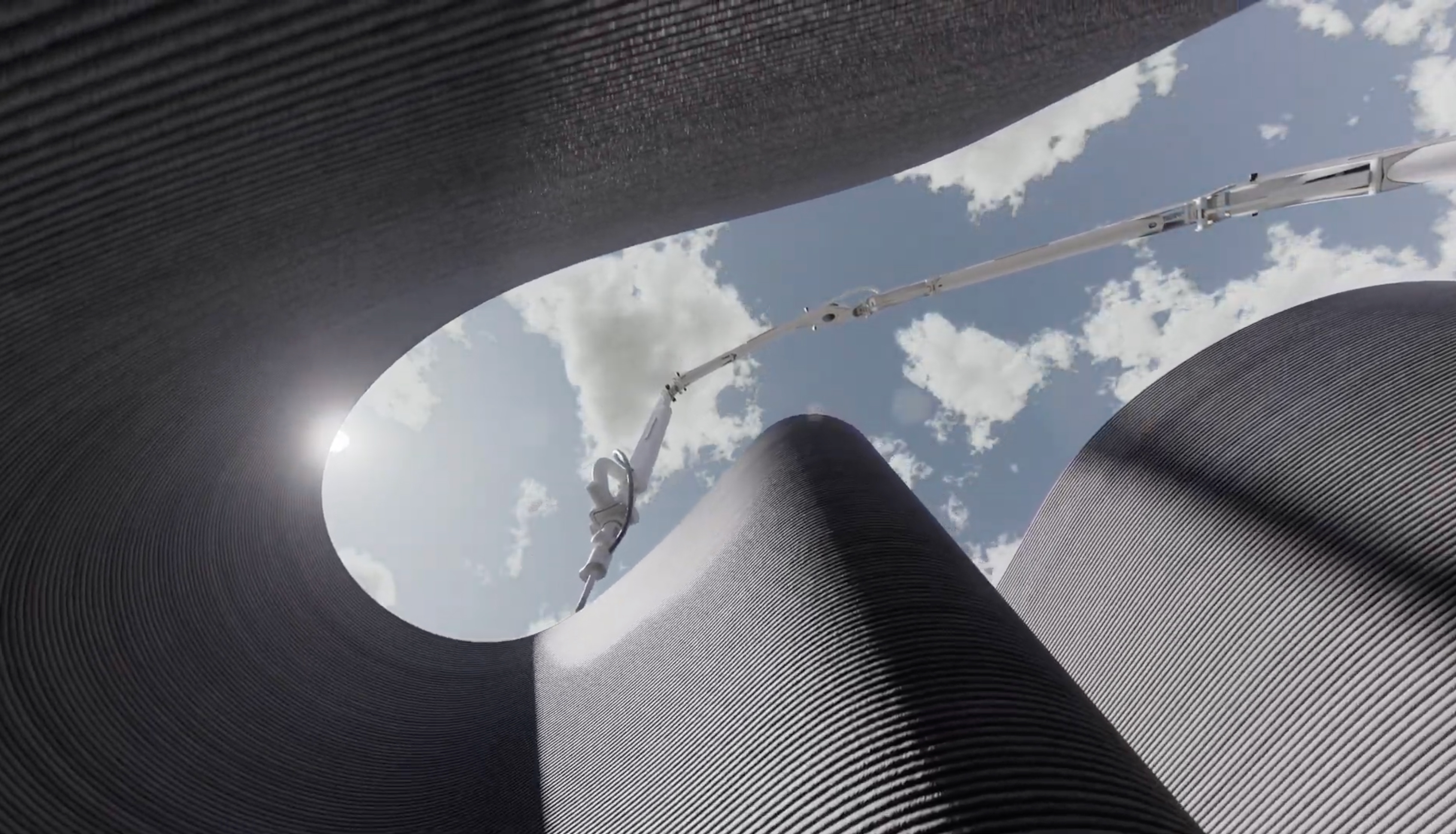
Jason Ballard, ICON’s co-founder and CEO, framed the round as a move from technical proof to broader deployment.
“Construction automation has crossed from potential into proven reality,” Ballard said. “This round puts that reality in builders' hands: more Titan systems deployed across the country, deeper capability in housing, commercial, and defense.”
A Robotics Company Built Around Real-World Construction Demand
ICON’s pitch comes against a difficult backdrop for the construction industry. The company describes construction as a $16 trillion global market that has changed slowly over the last several decades, while the U.S. remains roughly 4 million homes short of demand. It also cites workforce pressure, saying only 10% of U.S. construction workers are under 25 and 41% of the current workforce is expected to retire by 2031.
That combination makes construction an attractive but difficult automation market for robotics investors. Construction sites each have different terrain, sequencing, permitting requirements, labor flows, materials, and inspection constraints, so a construction robot has to do more than work in a controlled demonstration; it has to fit into a project’s budget, schedule, safety requirements, and contractor workflow.
Luke Ward, private companies investment manager at Baillie Gifford, said ICON’s system stood out because it works with the business realities of construction projects rather than against them.
“With it, builders can take on more work, owners can get better value for money, and communities can get more of what they need, sooner,” Ward said.
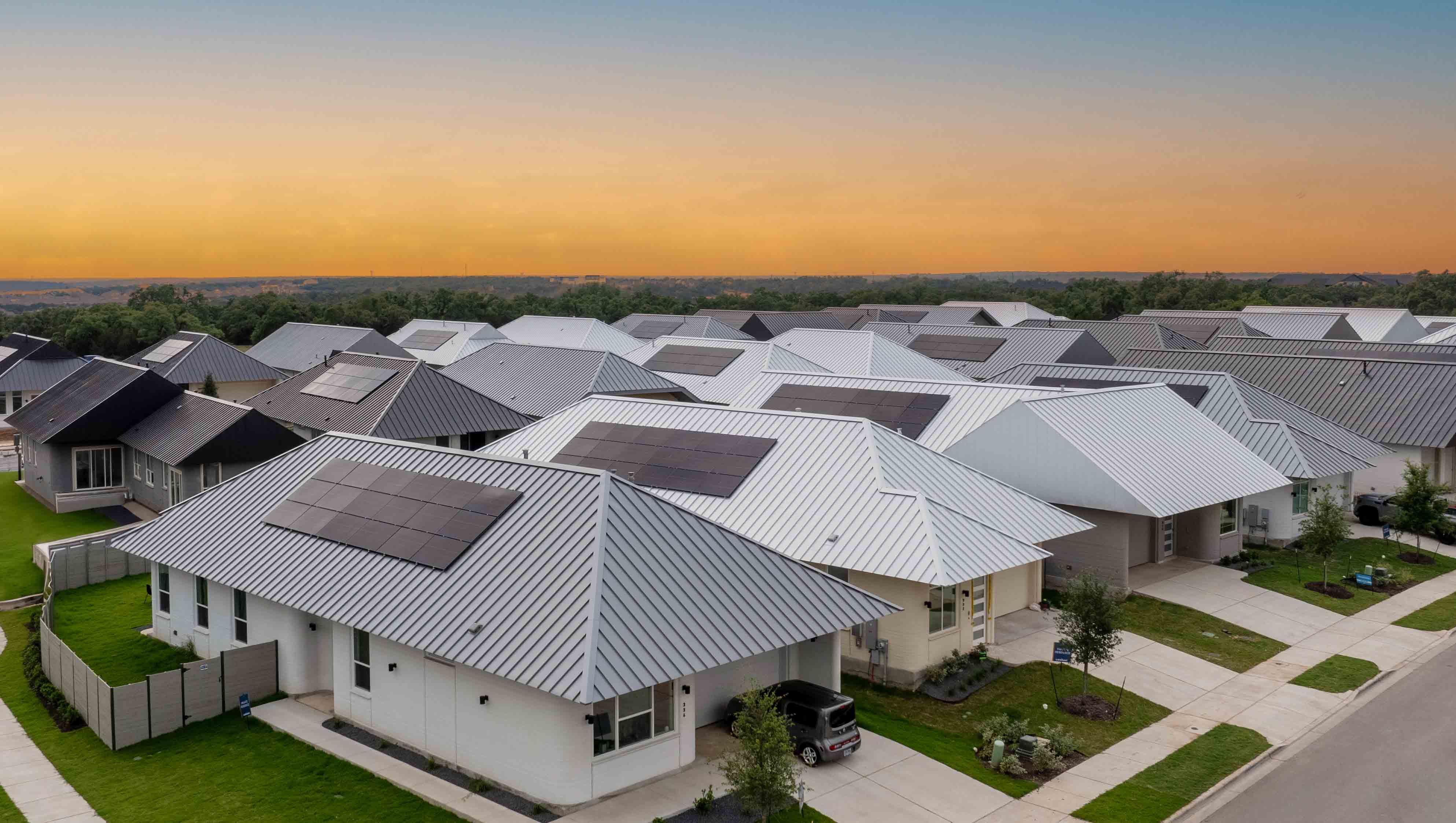
ICON says it has now built more than 270 homes and structures across five states and two countries. Its projects include Wolf Ranch in Georgetown, Texas, a Lennar-backed community the company describes as the world’s first and largest neighborhood of 3D-printed homes, and more than 100 homes for people experiencing homelessness through Community First! Village in Austin.
Defense, Space, and the Broader Robotics Stack
ICON now operates through three main business units: Build, Tech, and Prime. Build covers residential, commercial, and hospitality structures built with the company’s robotic systems and materials. Tech is the software and systems layer behind ICON’s construction platform. Prime focuses on defense and space.
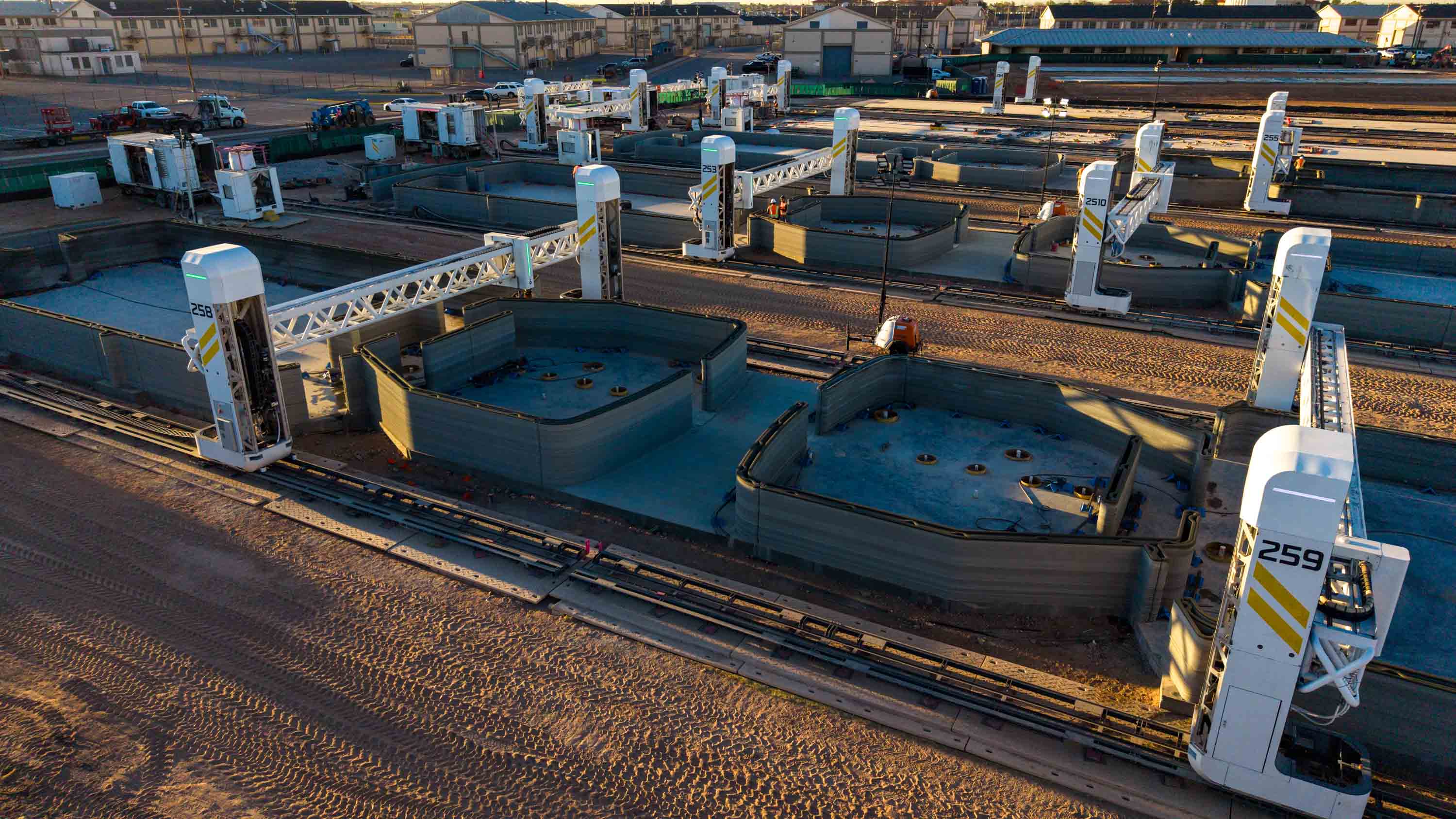
ICON says the Prime division has received more than $370 million in government contracts. In January 2026, the company broke ground on 10 barracks at Fort Bliss, which it describes as the largest deployment of robotic construction technology in Department of War history and the first additively manufactured structures to meet the Pentagon’s Unified Facilities Criteria.
ICON Prime is also continuing work on Project Olympus with NASA, a program focused on construction systems for the Moon. By including Olympus in the Series D use of funds, ICON extends its construction robotics stack across near-term building markets and more experimental off-world construction research.

The Round and the Physical-AI Funding Cycle
The ICON round adds another data point to the physical-AI funding cycle, but in a different category from the humanoid robotics companies that have drawn much of the sector’s attention. Instead of a general-purpose robot worker, ICON is building a specialized construction platform that combines machines, materials, software, and project delivery around a specific class of physical work.
The company is raising capital for deployed systems, government contracts, commercial construction projects, and a stated 2026 revenue growth trajectory, not just a lab prototype.
ICON says it is on pace for 4x revenue growth in 2026.