

Table of Contents
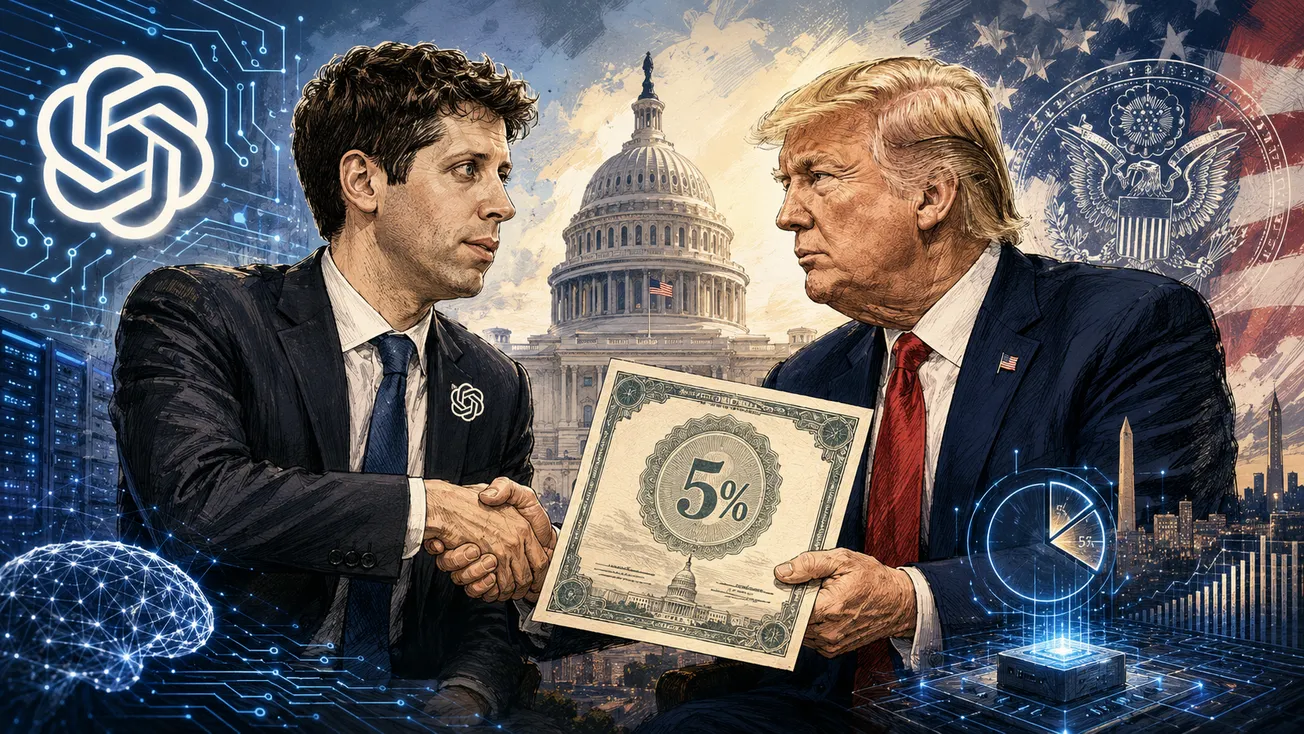
OpenAI has, as reported originally by the Financial Times, discussed giving the U.S. government a 5% stake in the company as the ChatGPT maker looks to ease rising political pressure in Washington.
At OpenAI’s reported $852 billion valuation, a 5% stake would be worth roughly $42.6 billion.
According to the reports, OpenAI CEO Sam Altman has argued that giving the public a financial interest in the company would be a way to share the upside of artificial intelligence more broadly. The proposed structure would reportedly involve a government-backed vehicle, potentially modeled on the Alaska Permanent Fund, that could hold equity in leading U.S. AI companies.
The idea would not be limited to OpenAI. Under the arrangement, other major U.S. AI developers could also be asked to contribute similar stakes. It remains unclear whether companies such as Anthropic, Google or Meta would support such a plan. Anthropic has not discussed giving the government a stake in the company, a source familiar with the matter told Reuters.
The proposal comes as the U.S. government is taking a more active role in AI oversight. Reuters reported that the Trump administration recently asked OpenAI to delay the wide release of GPT-5.6, while Anthropic temporarily disabled access to advanced models before later being cleared to restore access.
OpenAI has already floated a related policy idea. In an April policy document, the company proposed creating a “Public Wealth Fund” that would give citizens a stake in AI-driven economic growth and distribute returns directly to the public.
Supporters of the concept frame it as a way to prevent AI wealth from being captured entirely by private investors, employees and a small number of technology companies. But this story raises the uncomfortable question of whether the same government responsible for regulating frontier AI should also be a shareholder in the companies it oversees.
That concern is especially important for the open and decentralized AI movement. If the most powerful AI companies begin trading equity for political stability, the future of AI could become increasingly shaped by closed-door negotiations between governments and a handful of corporate labs. In that world, access to advanced models, release timing, safety policy, compute infrastructure and public benefit programs could become matters of state-aligned corporate strategy rather than open competition. It's anti-American.
Intelligence should not depend on permission from a few companies or political administrations. Open-source models, decentralized compute networks like Bittensor, and protocol-based AI markets offer the alternative path, where access and ownership are distributed across participants instead of concentrated between state power and corporate giants.
Disclaimer: This article is for informational purposes only and does not constitute financial, investment, or trading advice. The information provided should not be interpreted as an endorsement of any digital asset, security, or investment strategy. Readers should conduct their own research and consult with a licensed financial professional before making any investment decisions. The publisher and its contributors are not responsible for any losses that may arise from reliance on the information presented.