Table of Contents
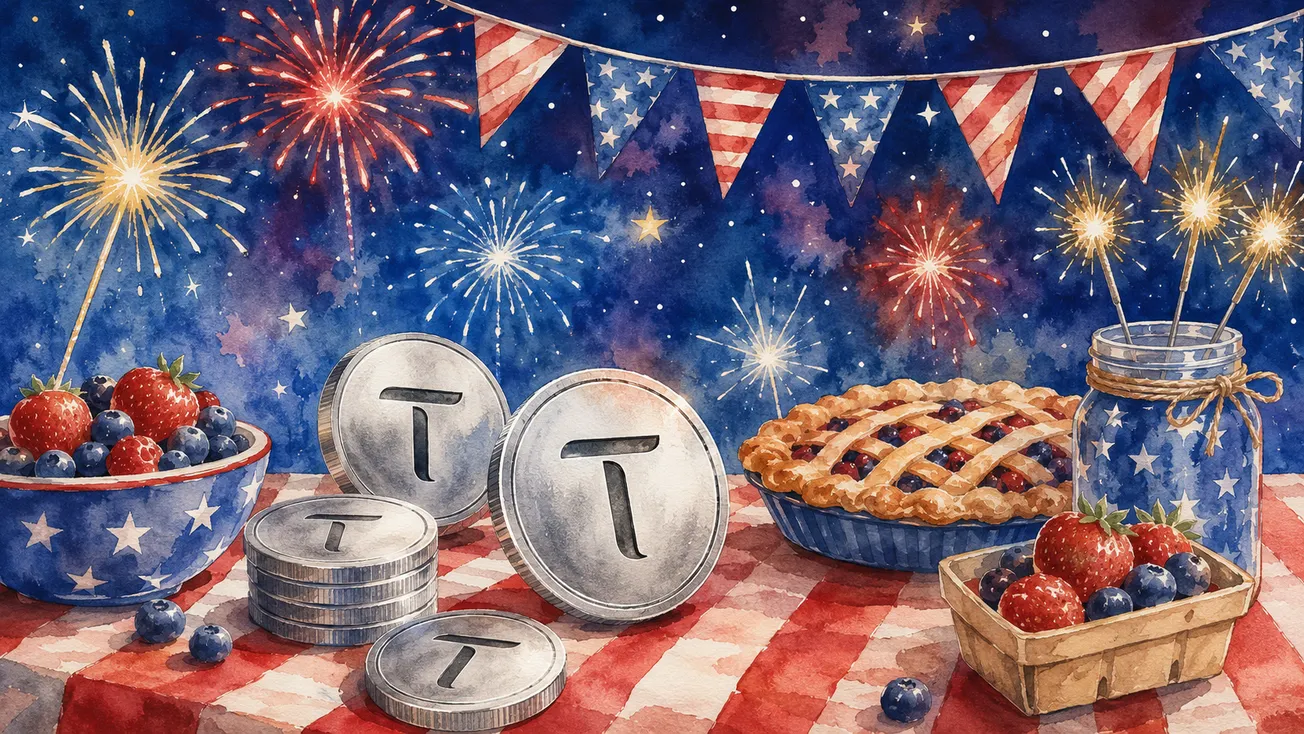
Heading into this weekend's Fourth of July, I'm feeling pretty festive. Of course, it's the big 250 for the country, but it's also my first time being on US soil for the holiday in four years. My wedding anniversary is on July 2nd, and we have traveled each year to celebrate (highly recommend Puerto Rico as a spot for the holiday).
Being home, I've been soaking it all in.
Planning a trip to North Dakota (which will be my 48th state), watching the lads win in the round of 32 (wtf was that red card, God help us next match), securing some 250 anniversary relics, dressing my newborn in the stars & stripes, scrolling through @KJP's account and taking in the rest of the awesome content that's been getting published on X this week, and getting some pre-weekend tanning action in an attempt to get enough of a base that me and all my paleness can avoid getting annihilated by the Texas sun.
But, now, roughly 12 hours from the big day, there's something overshadowing all the fun:
That mfer Sam Altman.
Don't Rain on My Stars & Stripes Parade
Every year, we as Americans reflect on, and celebrate, the birth of freedom as the world knows it today.
Our ancestors risked it all to reject the rule of tyranny from a distant center of power, and proclaimed boldly that citizens should have the right to govern themselves.
That story is one usually told through the lens of politics. We talk about representation, our God-given rights, personal sovereignty, consent of the governed, etc.
Beneath those ideals, there's an architectural claim that power should not be concentrated so completely that ordinary people have no path to meaningfully participate in it. Instead, they should be free to challenge governing power, build in and around it, and exit it. We as Americans, therefore, designed a system to check authority and protect the public competition of new ideas.
It's that system that is now being challenged by Sam Altman and OpenAI.
Much of frontier AI is already concentrated in a small number of companies with extraordinary capital, elite compute access, and tight control over models, distribution, and policy decisions. And on July 1st, news broke that OpenAI is discussing a proposal that could grant the U.S. government a 5% stake in the company, reportedly as part of an effort to ease political pressure and align with Washington. Other major AI firms were also reportedly envisioned as possible participants in a similar arrangement.
If this is all true, it should alarm anyone who cares about American values.
The American tradition is not built on the idea that the most powerful private companies should become financially intertwined with the state. That is not the logic of a free society. It is the logic of concentrated power protecting itself through even greater consolidation.
You do not defend liberty by encouraging a world where government and dominant AI firms become economic partners in controlling the future of intelligence. If the arrangement is (predictably) framed as giving the public a stake in AI upside, we'll know it to be certainly false.
When overbearing political power and corporate power merge, independence weakens. When has that not been the case?
This development is bad for competition and open innovation. And in a very real sense, it is anti-American.
Our founding ideals rest on suspicion of concentrated authority, checks against elite control, and the belief that power should remain contestable. A future where a handful of AI giants and the federal government become intertwined owners of intelligence moves in the complete opposite direction.
Open Source Is Our Revolution
If July 4th stands for anything enduring, it stands for self-determination.
In the AI world, self-determination means frontier intelligence should be available to all to use, inspect, modify, improve, and build alternatives. It shouldn't be reserved for corporations, wealthy elites, or politicians.
That is why open source AI matters.
Open-source AI gives developers, researchers, startups, and communities a way to participate directly in the future of intelligence. It lowers dependence on closed gatekeepers and makes experimentation more widely available. Open source keeps AI closer to the traditions that have historically driven American innovation: openness, competition, permissionless building, and distributed initiative.
In that regard, open-source AI is much more than a technical alternative or movement; it's a freedom movement. And the Bittensor ecosystem is the most prominent, important stronghold of that movement.
The brilliance of Bittensor is taking our freedom principles and giving them an economic structure in which they can thrive. I'm assuming everyone reading this is familiar with the network, so I'll spare you the TL;DR overview. But just in case you're new, I'll drop in the best Bittensor intro you can watch:
WATCH: The full @const_reborn x @markjeffrey discussion at @proofoftalk day 2 ↓ pic.twitter.com/KXy0jyrOMg
— Intelligence | TAO News, Insights, Stories (@taomedia_) June 3, 2026
If there's on thing a person could point to demonstrate that open-source AI can win, It's Bittensor.
At this point, we have an incredible amount of momentum building for our movement. Institutional participation is expanding, bad actors & tourists have been getting washed out, investor access is opening, and, most importantly, subnets are putting in the work and achieving results.
And so, with all that momentum, comes responsibility. A responsibility to keep pushing for the movement, for humanity. Support quality subnets by using them and providing feedback, evangelize friends and family, become a builder yourself, create content. Hell, create TAO stickers and slap them around your town or city. As we saw with the Bitcoin movement, every ounce of effort helps!
Support Bittensor-native stories by becoming a (free) member:
Undoubtedly, the Bittensor experiment represents the right direction for AI. It's the open field where innovation can flourish without gatekeepers, where competition is raw, brutal, and beautiful, and where we work to regain universal ownership of the most consequential technologies of our time.
The Independence Fight for AI
So as you head into this weekend, I hope you spend some time outside of all the celebration to reflect on the holiday's meaning and where we stand today with AI.
For me, the Fourth of July is ultimately about how power should be organized, and the fight to organize it correctly. It is about resisting distant authority, rejecting inherited monopolies, and insisting that people deserve a say in the systems that shape their lives.
Today, as we move through the profound technological shift of AI, the same underlying premise applies, and there is a fight to match. Centralized AI is our common enemy, our version of tyranny from afar: intelligence controlled by institutions most people cannot meaningfully influence, inspect, challenge, or leave.
Bittensor is where our fight against it happens. It is where we reclaim lost ground for the people, where we do what is hard and necessary to preserve the freedom to build intelligence in the open, and where we do not ask for permission or apologize for doing so.
That is the spirit worth defending on Independence Day.
Disclaimer: This article is for informational purposes only and does not constitute financial, investment, or trading advice. The information provided should not be interpreted as an endorsement of any digital asset, security, or investment strategy. Readers should conduct their own research and consult with a licensed financial professional before making any investment decisions. The publisher and its contributors are not responsible for any losses that may arise from reliance on the information presented.