Table of Contents
Tesla unveiled its next-generation Roadster at SpaceX's rocket testing facility in McGregor, Texas, demonstrating a new electric supercar lineup that includes a flight-capable version, along with compressed-air propulsion technology that enabled 0–60 mph acceleration in just 0.81 seconds.
Developed through a collaboration between Tesla and SpaceX engineers, the redesigned Roadster combines compressed-air thrusters with an active suction system that generates extraordinary, "beyond the limits of physics" levels of downforce. Tesla is offering three configurations, including a flight-capable, single-seat Rocket version.
The live demonstration featured multiple airborne maneuvers, including a midair flip, alongside a timed acceleration run.
Every stunt performed at the Roadster event
How Tesla Made the Roadster Fly
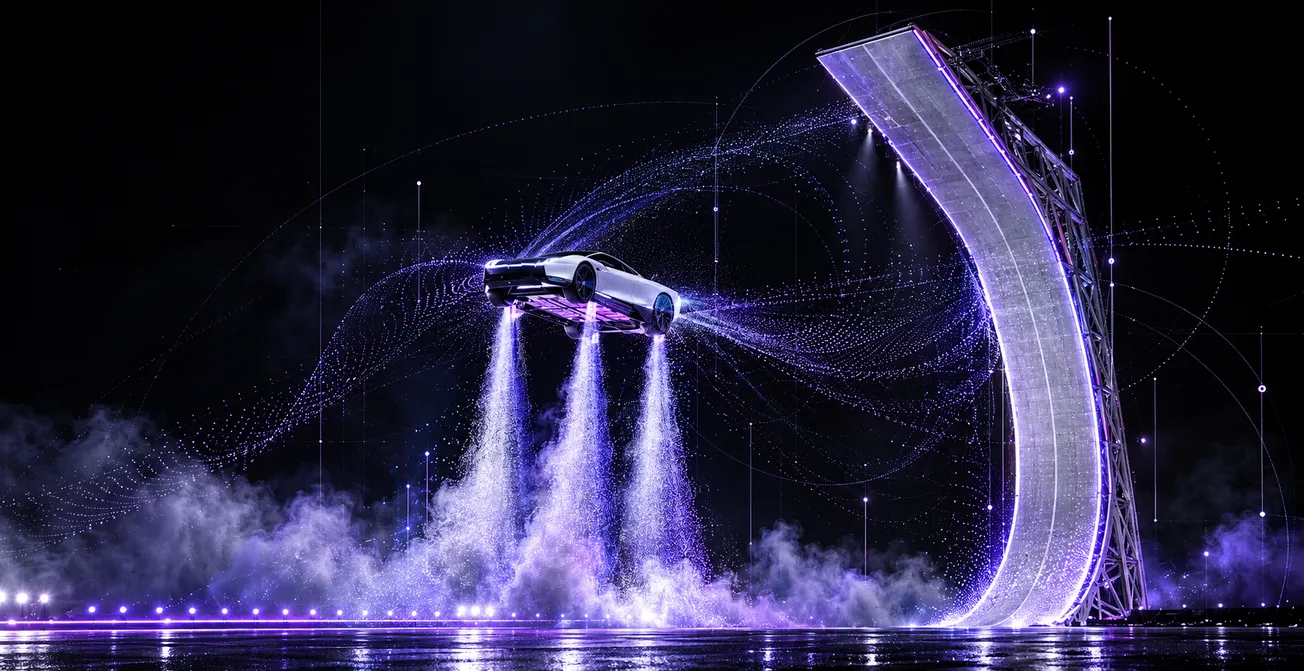
The centerpiece of the event was the Roadster's ability to leave the ground, maneuver through the air, and land using technology developed with SpaceX.
In the first demonstration, the car traveled upside down along a curved ramp before launching into the air and landing. A second, longer flight included an aerial rotation the team called a "kickflip," in which the car soared over a fleet of Tesla vehicles.
"Flying cars are real," said Tesla VP of Vehicle Engineering Lars Moravy following the first demonstration.
The system uses compressed-air thrusters to produce propulsion and control the vehicle's orientation in flight. Main thrusters positioned at the rear provide forward thrust, while smaller attitude-control thrusters allow the car to rotate and maneuver in the air.
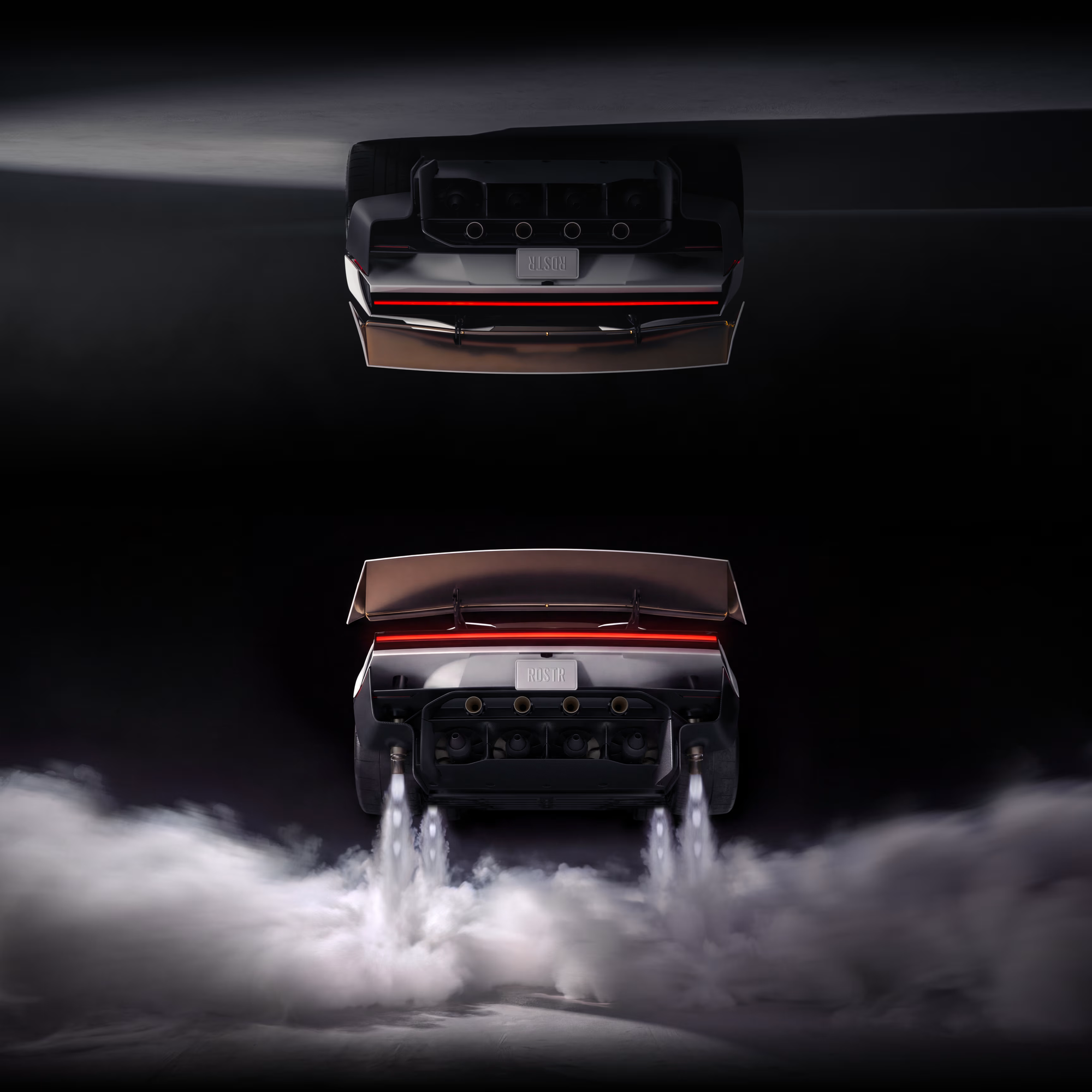
Tesla disclosed several specifications for the propulsion system:
- 10 thruster nozzles distributed around the vehicle
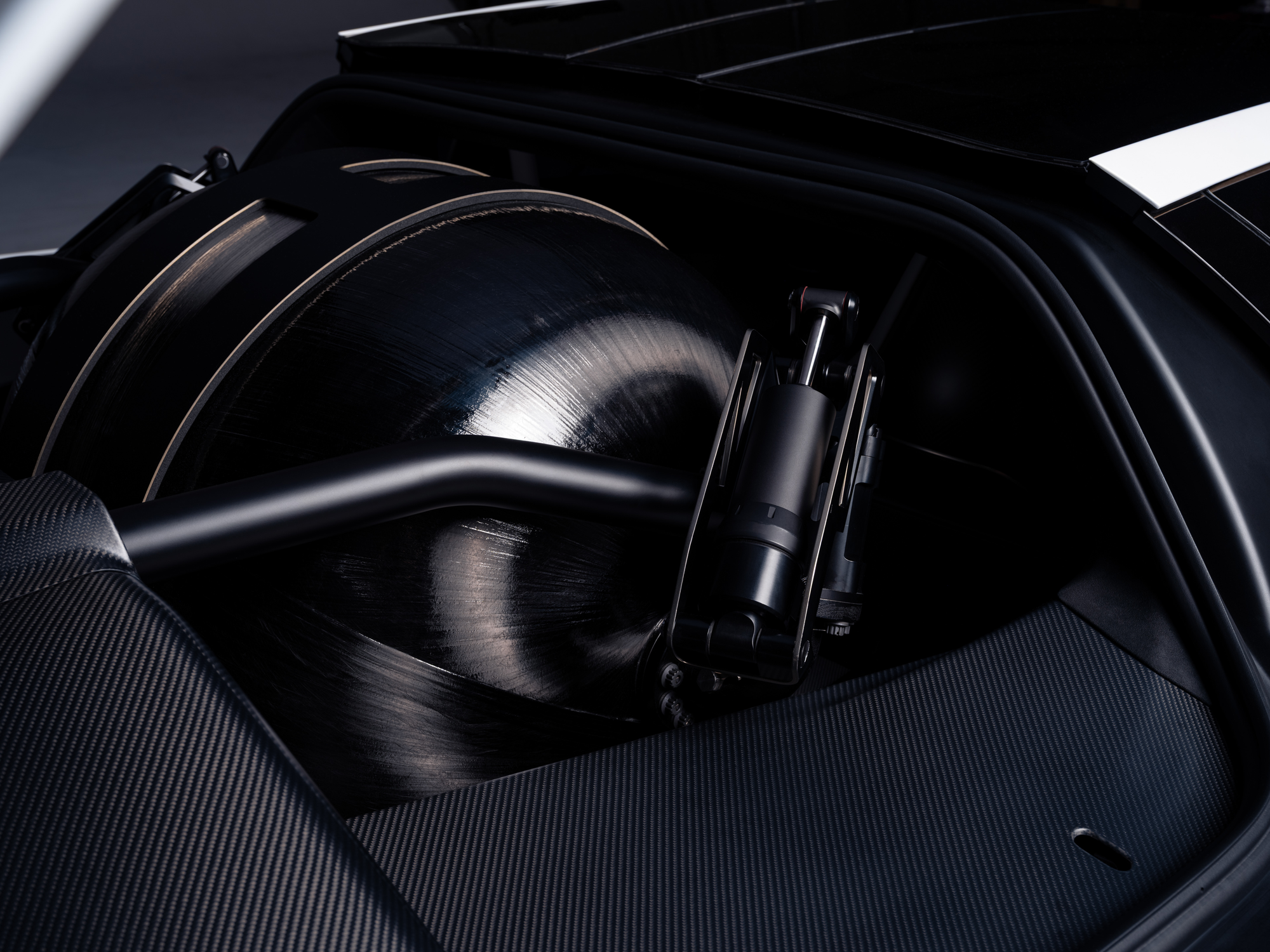
- Two carbon-overwrapped pressure vessels with a combined capacity of 600 liters
- Approximately 250 kilograms of compressed air stored in the system
- More than 80 kilonewtons of thrust generated by four rear thrusters
The rear thrusters expel air at supersonic speeds, producing visible shockwave patterns known as "Mach diamonds."
"There are cars, and then there’s one car that has Mach diamonds.” - Elon Musk
Unlike a conventional rocket, the Roadster does not need specialized fuel or propellant to operate its thrusters. It uses ultra-high-pressure compressed air, with an onboard system capable of replenishing the tanks.
Musk explained that the arrangement allows the car to perform aerial maneuvers using a propulsion system that can recharge itself between uses.
Suction System Enables Upside-Down Driving and Extreme Acceleration
The Roadster's ability to drive upside down comes from a separate fan-powered suction system mounted beneath the vehicle.
By removing air from underneath the chassis, the fans create a pressure difference that pulls the Roadster toward the driving surface. The system can generate up to two Gs of suction force, giving the car enough grip to remain attached to an inverted surface.
The same technology is designed to substantially improve performance on conventional roads and racetracks.
Tesla is targeting cornering forces exceeding two Gs, well beyond the limits of traction available from today's road tires.
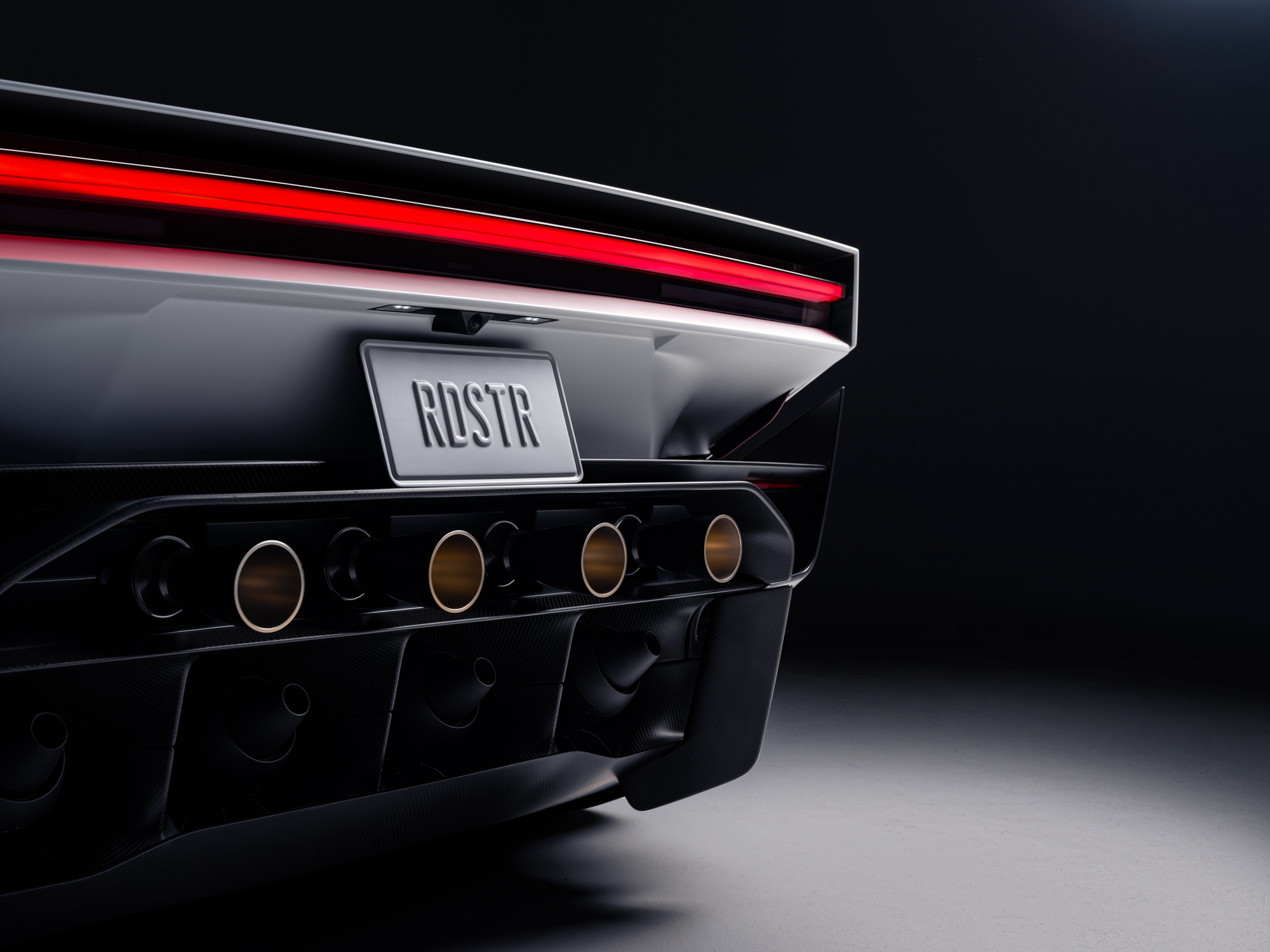
The car has two aerodynamic configurations: a high-downforce mode focused on grip and a low-drag mode designed for speed.
At low speeds, the fans actively pull the vehicle toward the road. At higher speeds, adjustable front and rear airflow channels increase the volume of air moving beneath the chassis. A rear wing with variable pitch automatically adjusts its angle to provide the downforce needed during cornering.
The combination of high traction and supplemental thrust also enables the Roadster's acceleration performance.
During the event, Tesla displayed a 0–60 mph time of 0.81 seconds, breaking the one-second threshold Musk had previously targeted.
Roadster 0-60 launch
Musk expects the production version to improve on that figure, explaining that the combination of greater thrust and lower vehicle mass provides room for further acceleration gains.
The team stated that the Roadster will be capable of speeds above 230 mph, but Musk challenged the engineering team to target Mach 0.5, or roughly 380 mph.
A Redesigned Roadster Built for Manual Driving
Beyond the flight demonstrations, Tesla revealed the Roadster's redesigned exterior and interior, drawing inspiration from aerospace engineering and aircraft such as the Lockheed SR-71 Blackbird.
The new two-seater features concealed headlights, a full-length taillight, and flush-mounted exterior surfaces that give the vehicle a minimalist design. Lightweight wheels with thin spokes are engineered to maintain structural strength during conventional driving.
Tesla also introduced two distinctive exterior finishes. Ano White incorporates aerospace-derived protection against ultraviolet exposure, cryogenic temperatures, electrostatic buildup, and corrosion. Gold Glazed tinted glass takes inspiration from the copper-coated visors used in astronaut helmets, complemented by subtle titanium accents.
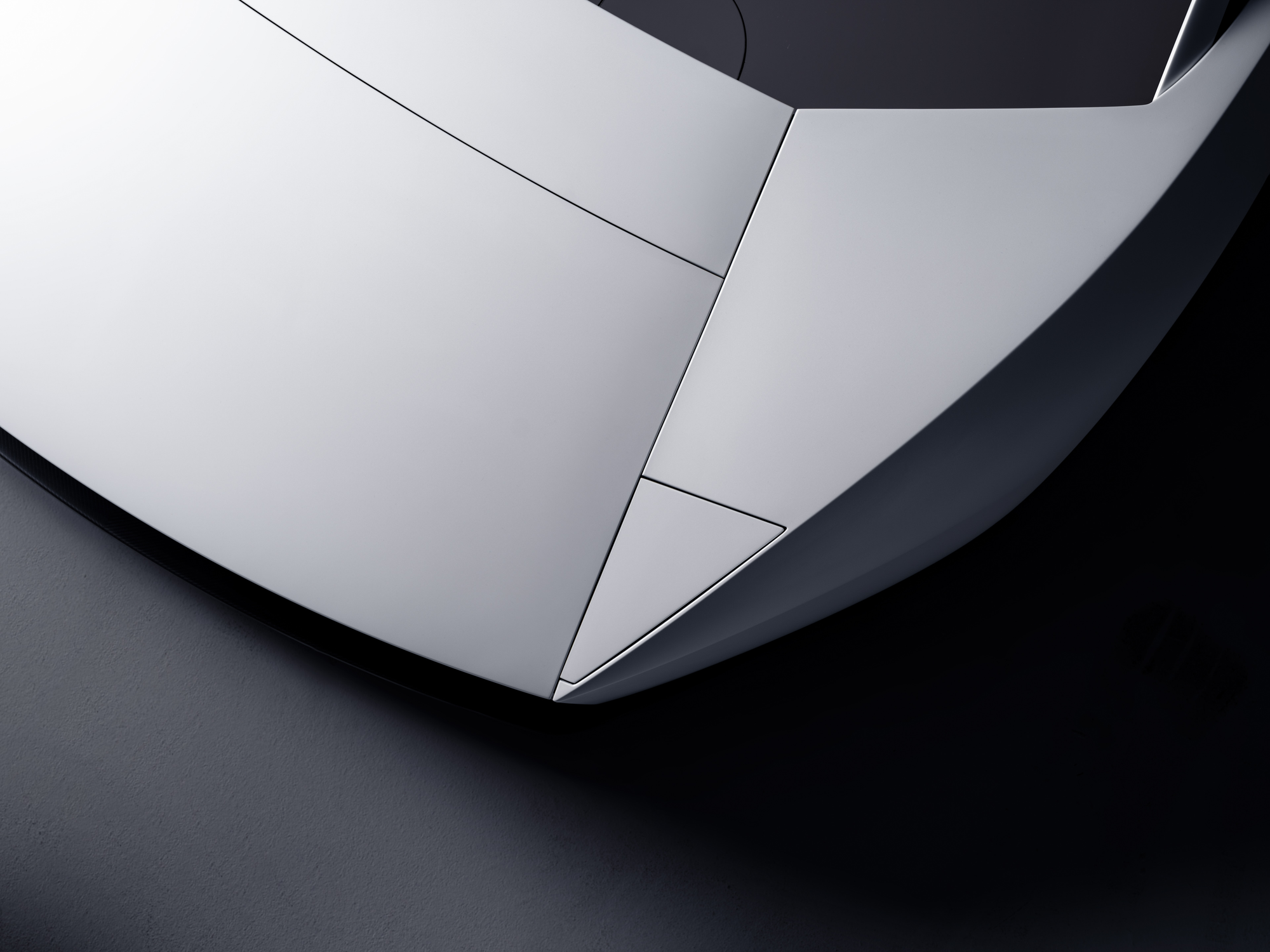
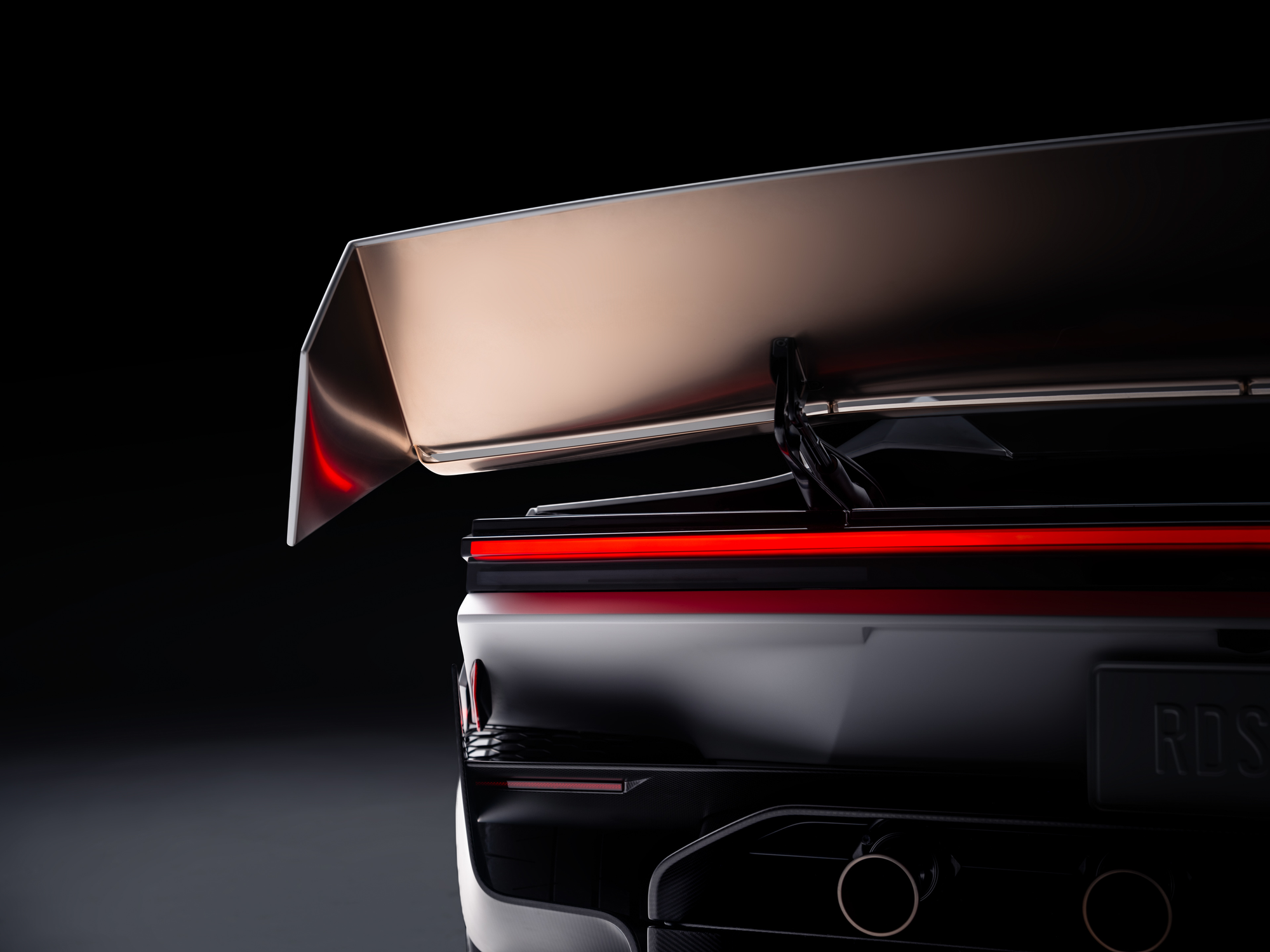
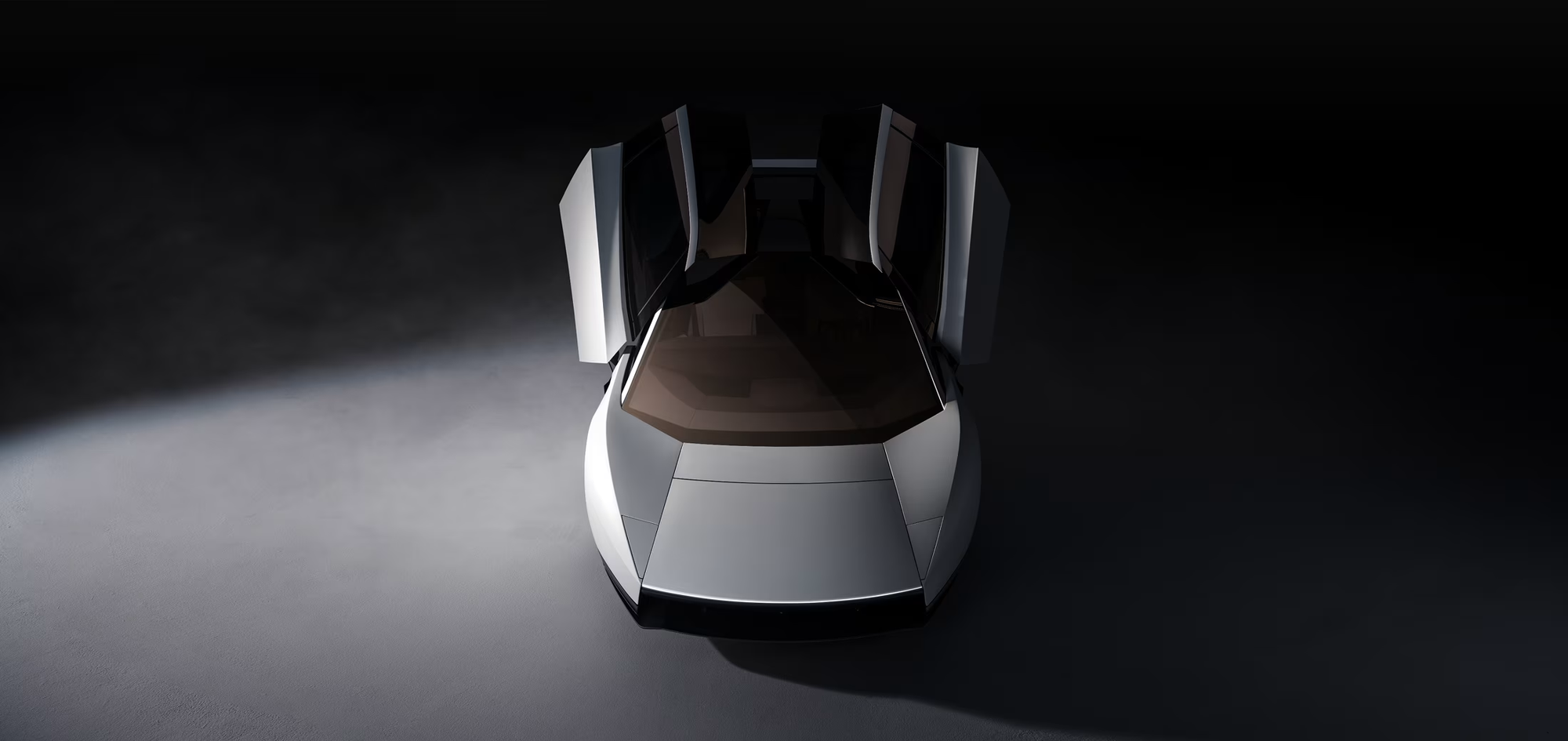
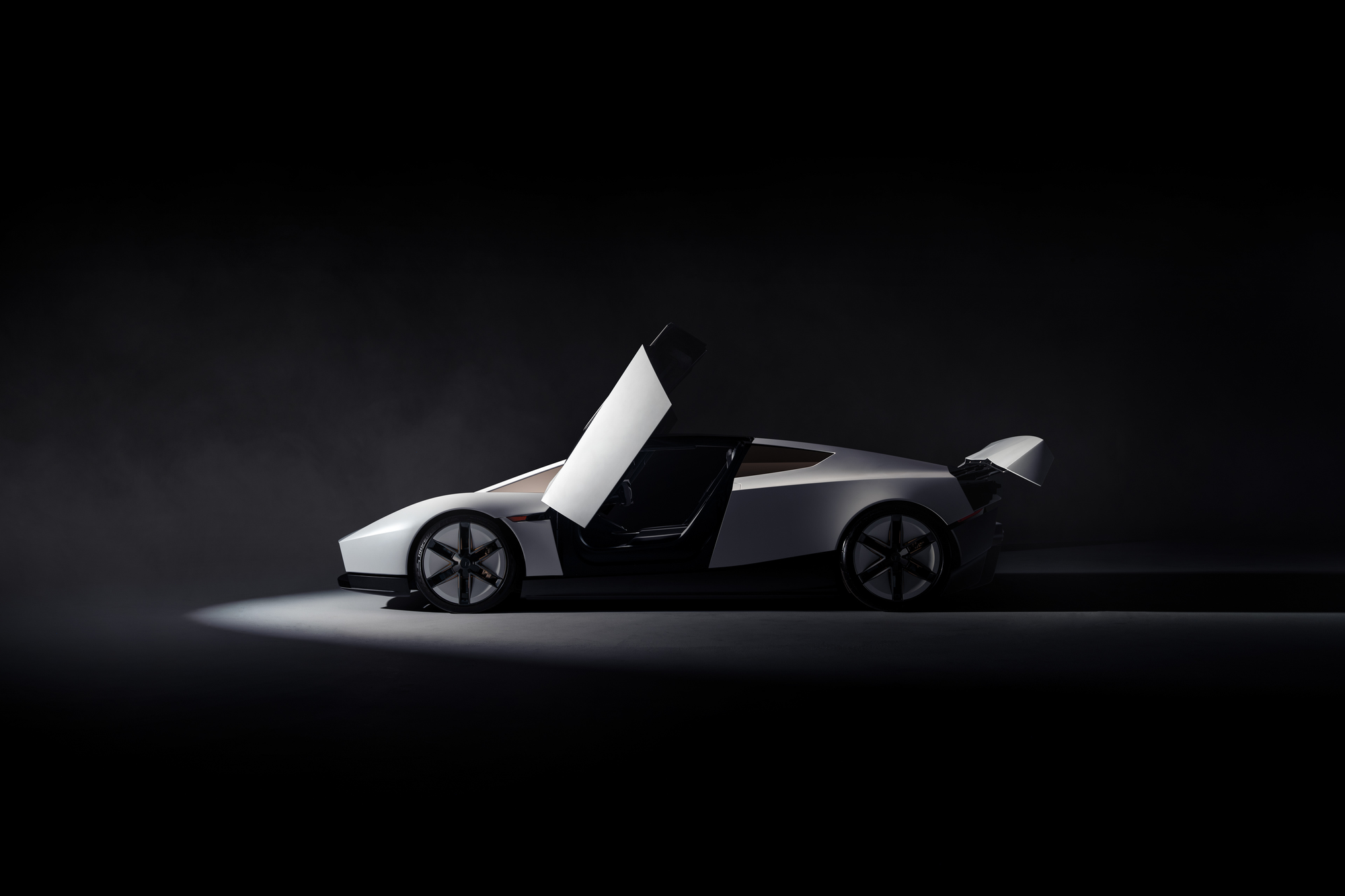
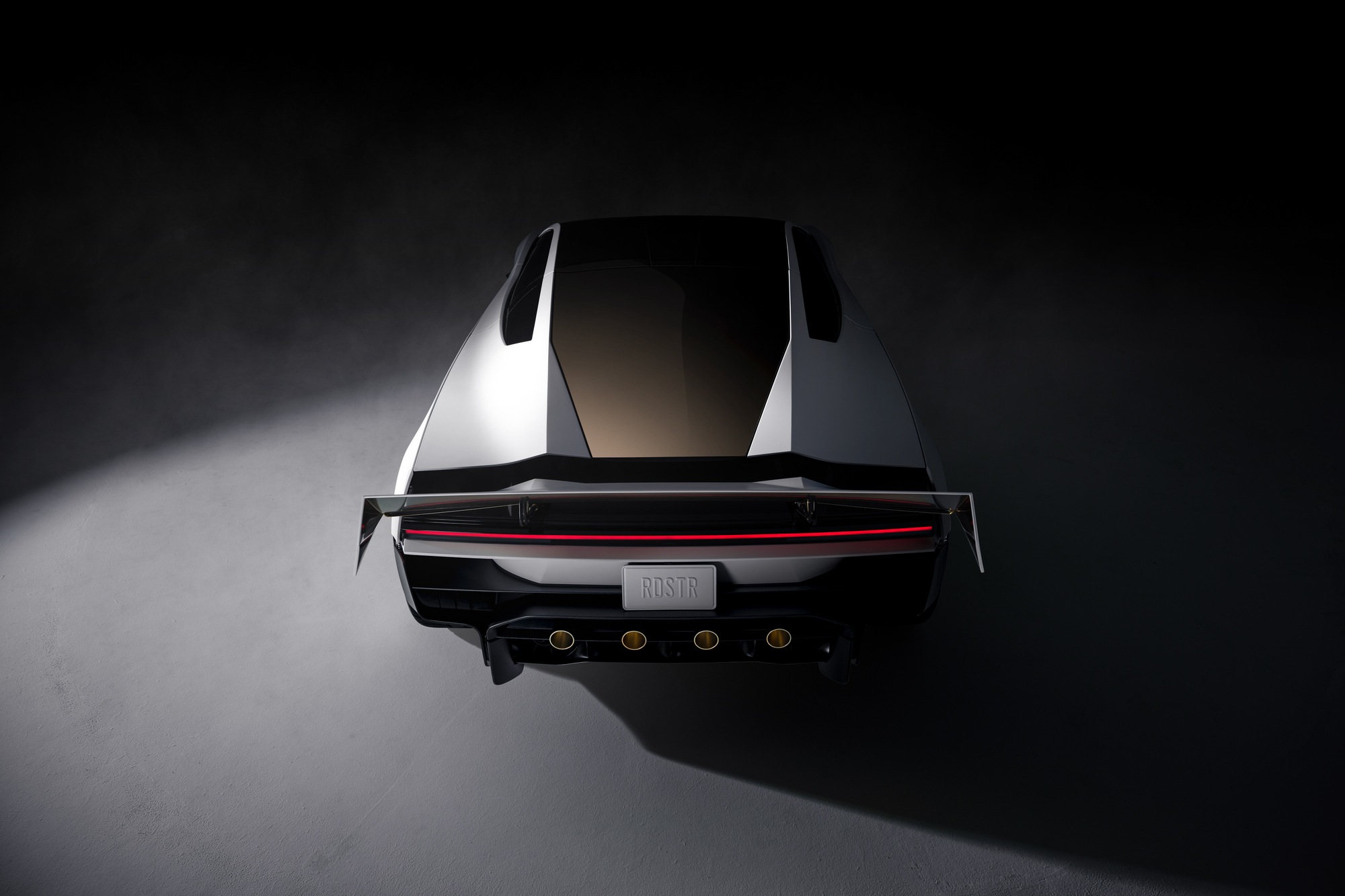
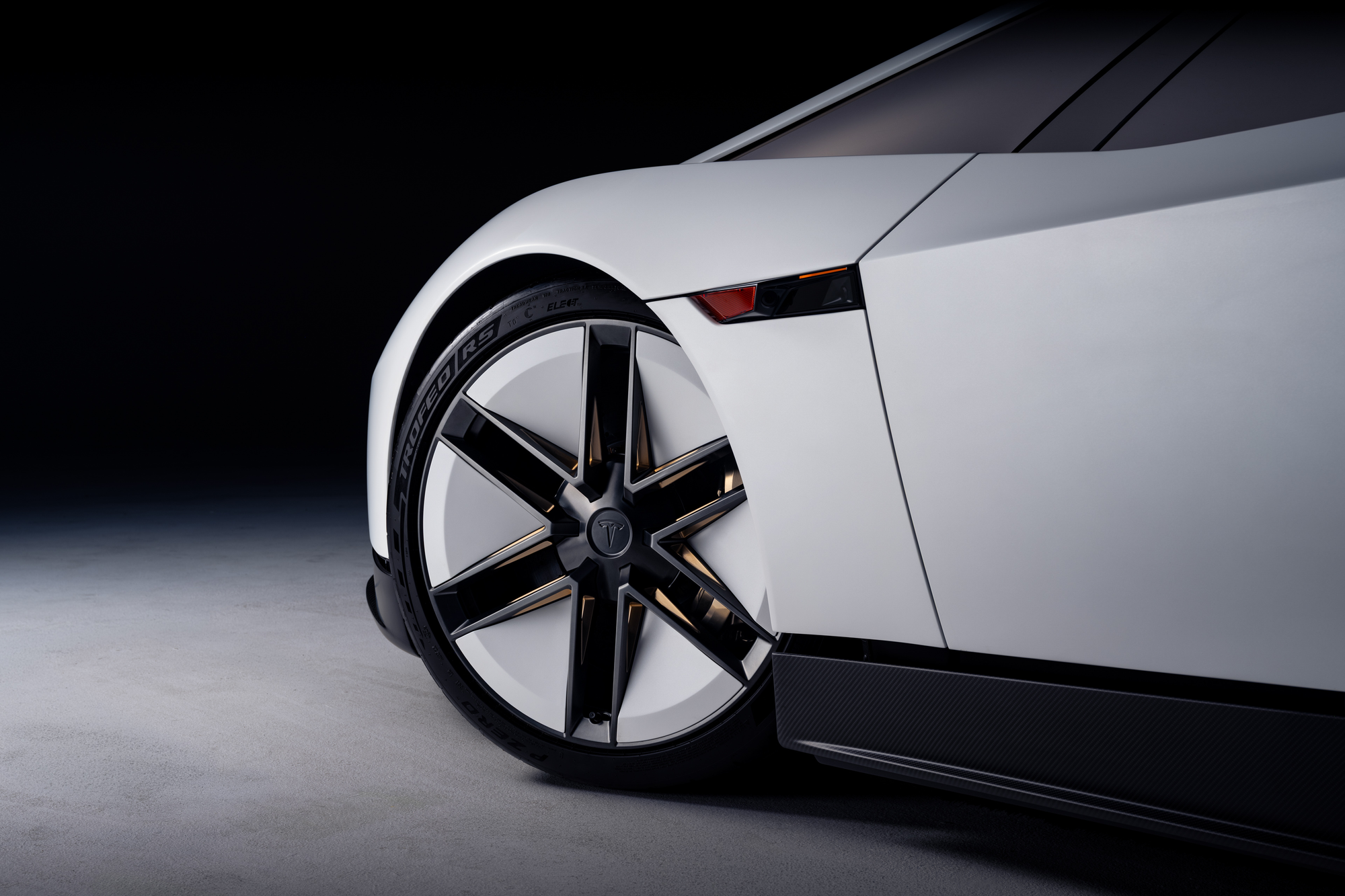
Roadster exterior
Inside, the Roadster features an Ultrawhite interior with gray microsuede detailing and seat bolsters designed to improve grip during aggressive driving.
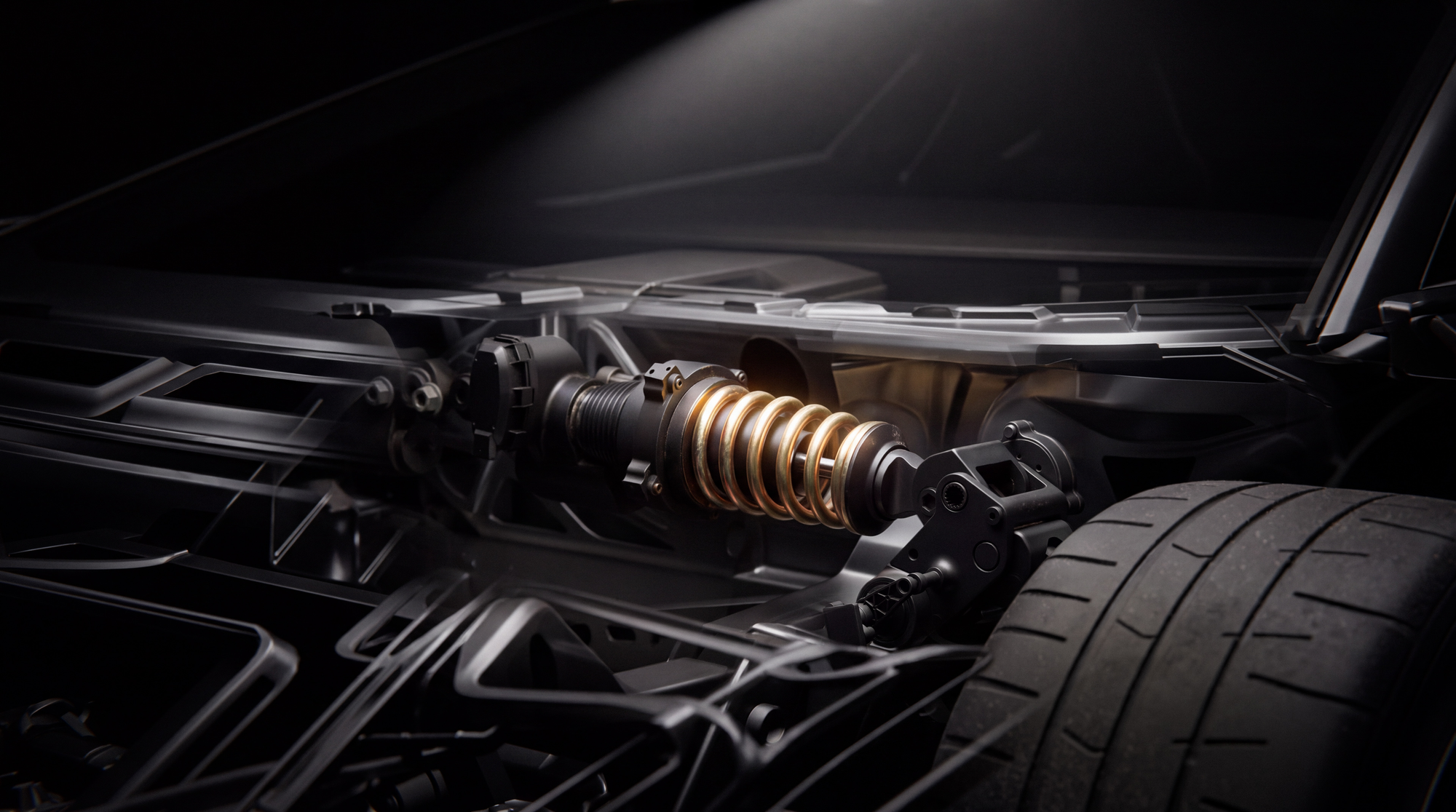
Weight reduction is a central part of the vehicle's engineering. The seats are molded directly into the chassis, with fixed seating positions and manual controls helping minimize mass. Magnesium, titanium, and carbon fiber are used throughout the vehicle to further reduce weight while maintaining structural strength.
The Roadster also features a steer-by-wire yoke, electronically controlled braking and throttle systems, and active aerodynamic components that automatically adjust to driving conditions.
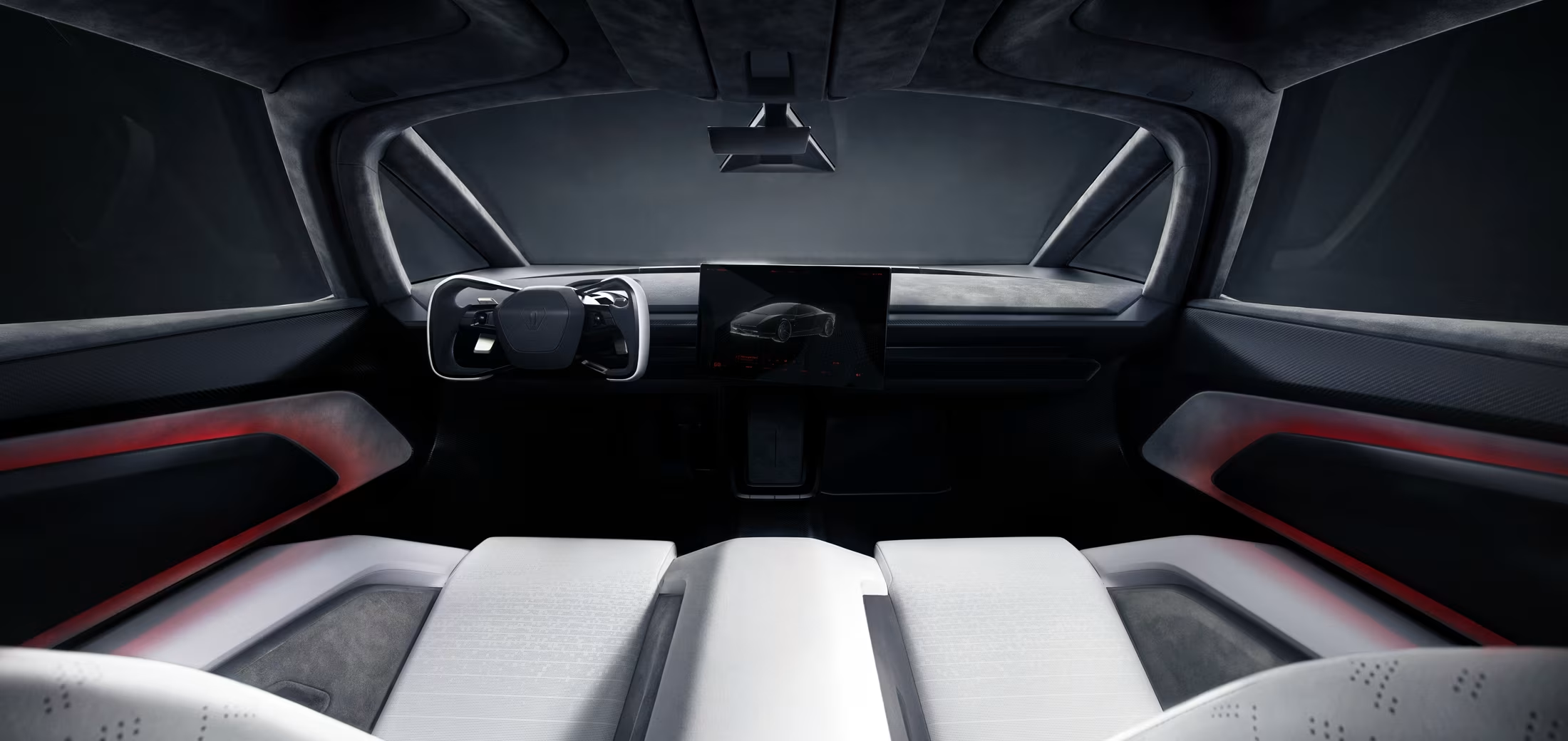
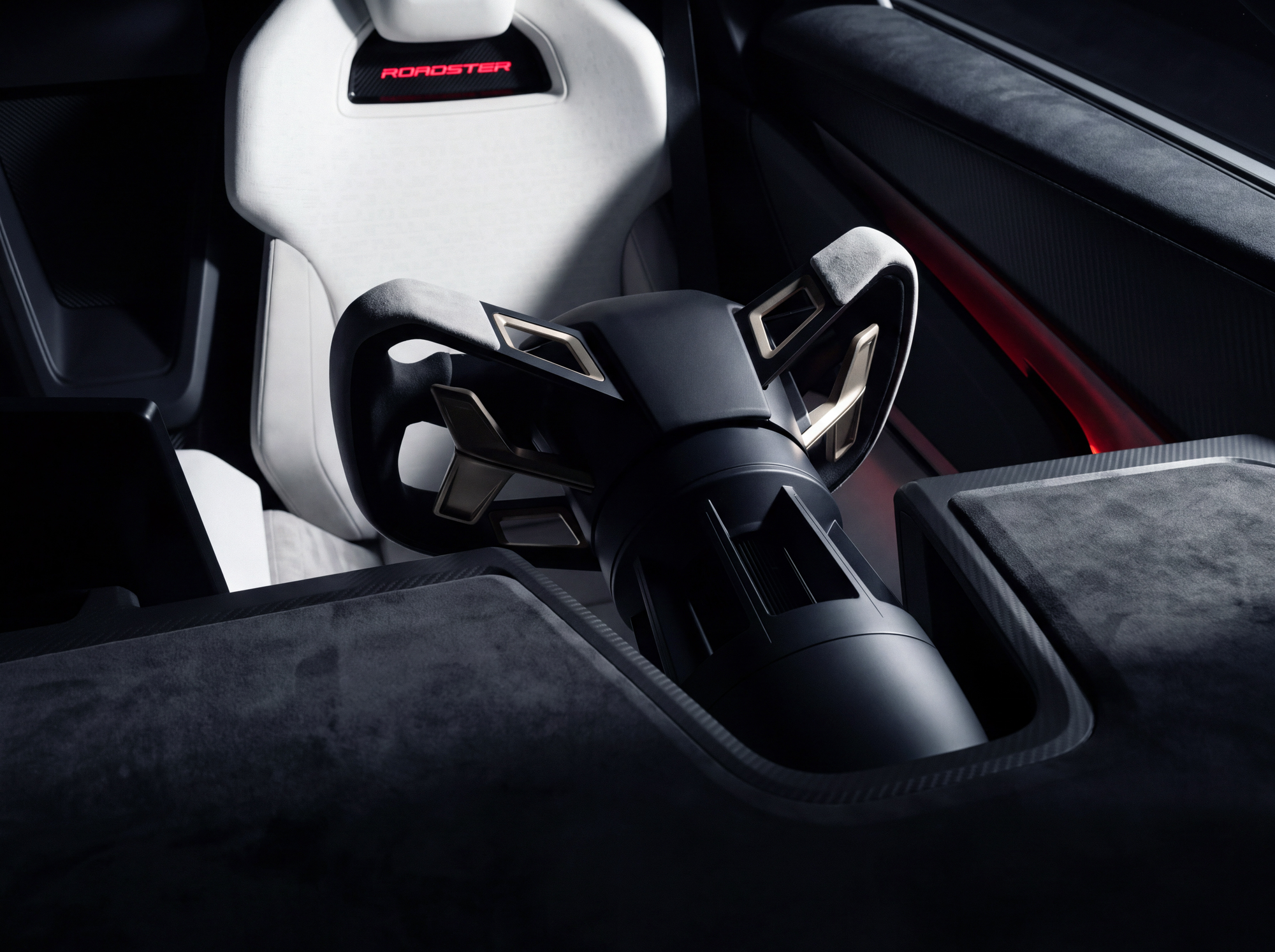
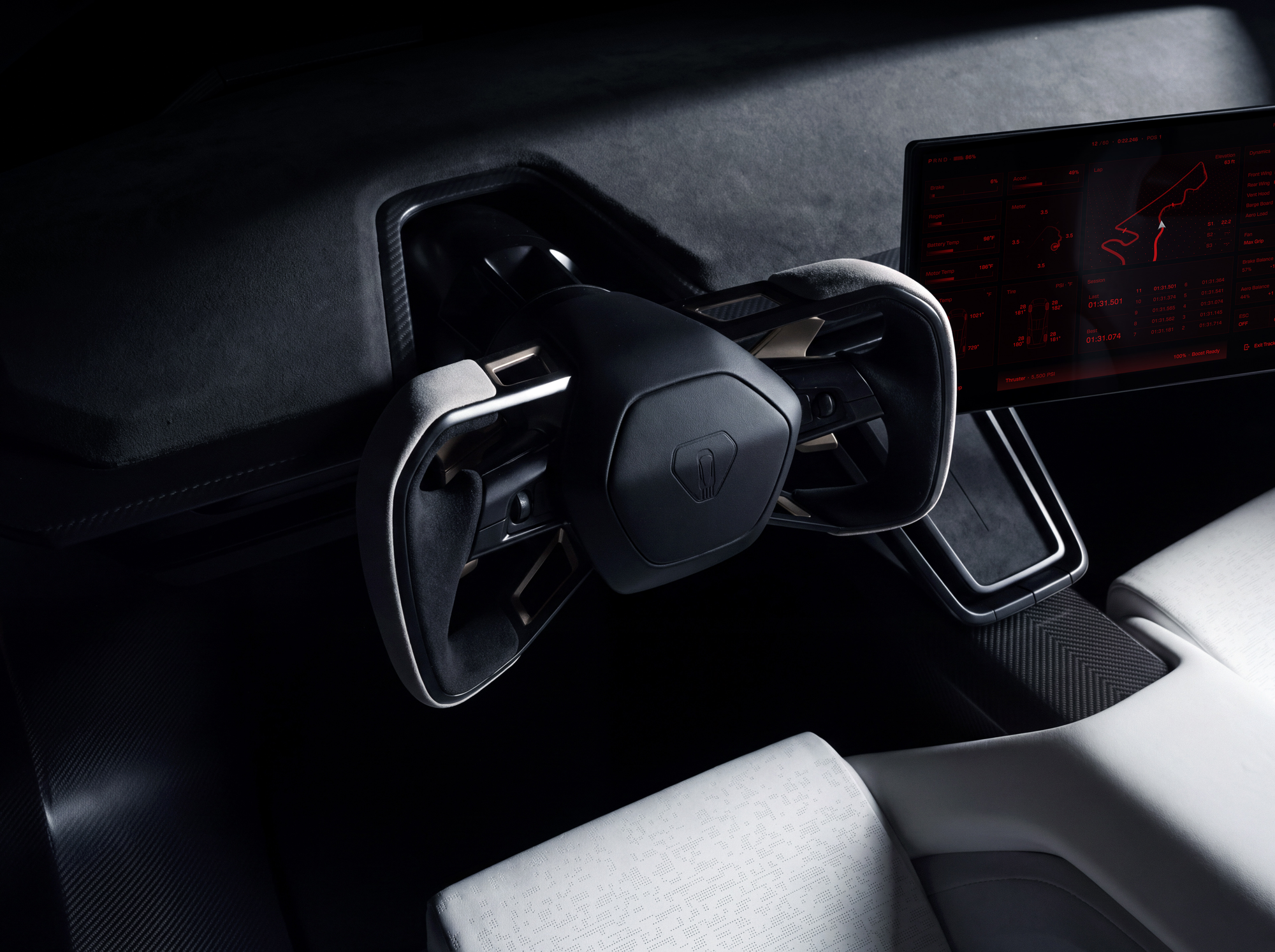
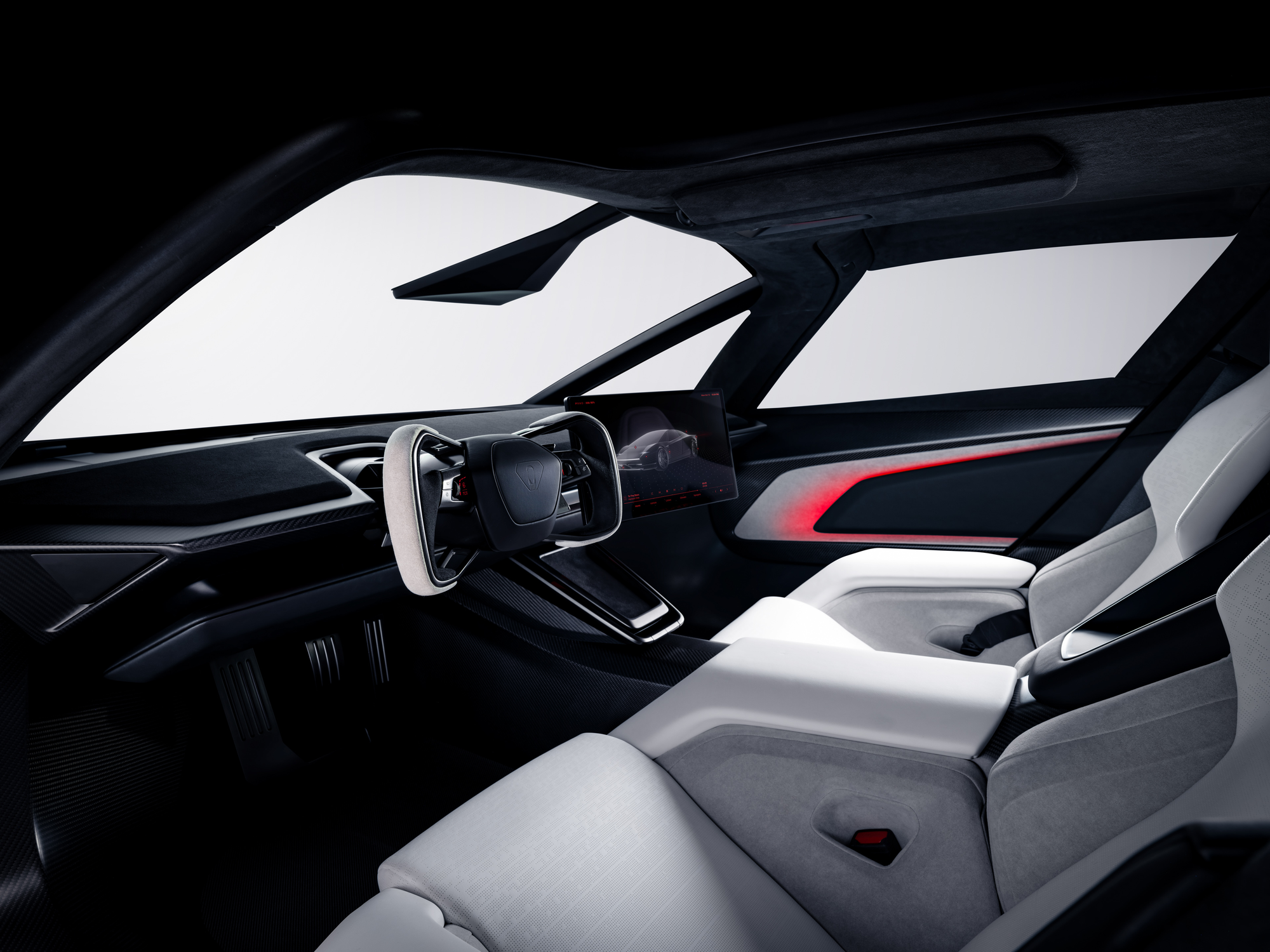
Roadster Interior
Much of the propulsion and suction hardware is integrated into the rear diffuser area, allowing Tesla to incorporate the car's flight and high-downforce systems without compromising its streamlined exterior.
Musk said the Roadster will eventually become the only manually driven vehicle in Tesla's lineup, positioning it as a dedicated performance car as the company continues its transition toward autonomous transportation. The flight demonstrations themselves used autonomous control to perform the maneuvers without a human driver.
The redesigned Roadster represents a substantial departure from the prototype Tesla first introduced in 2017.
That earlier version was advertised with a 1.9-second 0–60 mph time, a top speed exceeding 250 mph, and up to 620 miles of driving range. It also featured seating for four passengers and a removable glass roof.
The latest design instead prioritizes a lighter two-seat configuration, aerospace-derived materials, active downforce, and compressed-air propulsion, expanding its capabilities beyond the original electric supercar concept.
Tesla Opens Roadster Reservations With Three Configurations
Tesla has opened Roadster reservations for two configurations, Performance and Thrust, while offering a third, flight-capable Rocket version exclusively by invitation.
The three configurations offer different combinations of the Roadster's aerodynamic, suction, and propulsion technologies, with acceleration capabilities ranging from under 1.6 seconds to less than 0.59 seconds.
Performance is the standard road-ready configuration, featuring two seats, active aerodynamics, and a multi-mode suction system designed to maximize downforce and cornering performance. Tesla lists a 0–60 mph acceleration time of under 1.6 seconds.
Reservations require a fully refundable $5,000 initial payment, followed by an additional $45,000 within 10 days, bringing the total reservation commitment to $50,000.
Thrust adds rear-mounted cold-gas acceleration thrusters to the Performance configuration, enabling 0–60 mph acceleration in under 0.9 seconds. It retains the two-seat layout and is being offered as a limited release.
The Thrust reservation requires a fully refundable $5,000 initial payment, followed by another $245,000 within 10 days, for a total reservation commitment of $250,000.
Rocket, the most extreme version, features a single-seat layout and a full flight system. Cold-gas thrusters positioned around the vehicle provide forward and upward acceleration, as well as rotational control for aerial maneuvers.
Tesla lists a 0–60 mph time of under 0.59 seconds for Rocket (notably faster than the live demo), along with a top speed exceeding 230 mph. The company also lists a driving range of more than 300 miles for the Roadster.
The Rocket configuration is invite-only and is not approved for public road use.
The $50,000 and $250,000 reservation commitments are separate from confirmed final vehicle prices. Tesla plans to begin Roadster production in 2028.