

Table of Contents
Tesla is producing several hundred Optimus humanoid robots a week as it begins scaling a new production line at its Fremont factory in California, according to reporting from The Information.
The increase pushes Optimus, Tesla's humanoid robot program, into a more serious manufacturing phase after years of prototypes, demonstrations, and internal testing. Most robots being built are still being used inside the company for testing, data collection, and limited factory tasks rather than external customer deployments.
The reported ramp is taking place after Tesla stopped producing the Model S and Model X at Fremont in May and reassigned space, workers, and engineers to the humanoid program. Managers are reportedly aiming for a continuous automated line capable of producing more than 1,000 robots per week by the end of 2026. The Fremont Optimus line is being built toward an eventual planned capacity of one million robots annually.
Fremont Becomes a Test Case for Optimus Manufacturing
The Fremont shift gives Tesla a dedicated base for learning how to build humanoid robots at higher volume. That is a different challenge from proving the robot can walk, manipulate objects, or perform individual tasks in demonstrations.
Humanoid production requires Tesla to coordinate mechanical assembly, custom actuators, electronics, sensors, battery systems, hands, forearms, software loading, calibration, and quality control across a product that is still evolving. The current output suggests Tesla has moved beyond one-off prototype assembly, but not yet into the fully automated.
A larger internal fleet gives Tesla physical units to test inside factories, collect training data, identify hardware failure points, and refine assembly procedures. It also gives suppliers earlier exposure to the volume and quality expectations that would be required if Tesla eventually moves from internal use to broader commercial deployment.
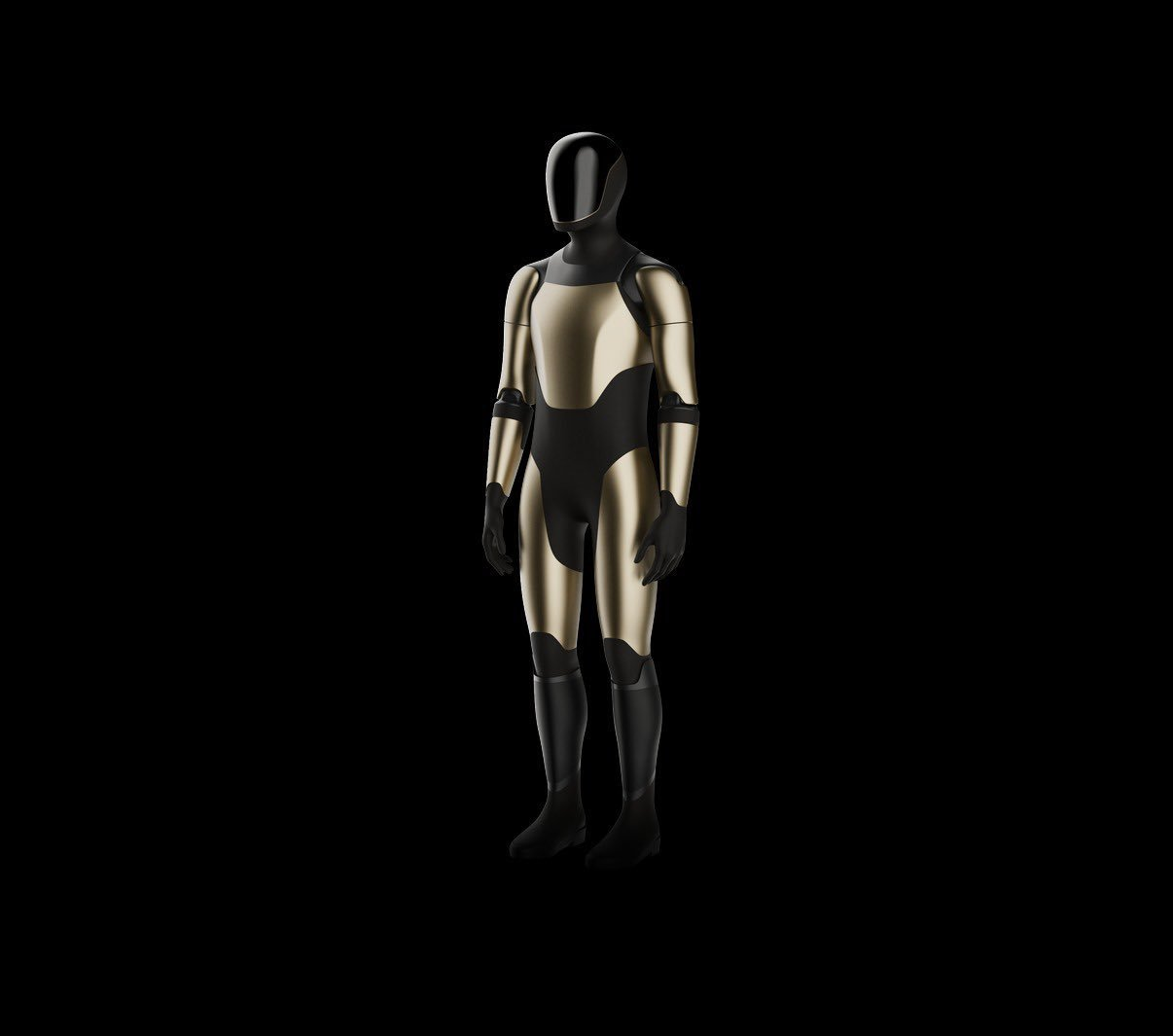
Optimus V3 renders recently surfaced from Tesla's Android app APK, a sign of continued design iteration around the next version of the robot.
Hands, Forearms, and Suppliers Remain Production Constraints
The production ramp is not fully automated. The Information reported that the hands and forearms on V3 robots contain more than 100 screws and other small parts that workers currently assemble by hand.
Robotic hands are among the most demanding parts of a humanoid system. They need to be compact, durable, precise, and strong enough to perform useful manipulation without becoming too expensive or fragile to manufacture at scale. For factory work, hands also have to survive repeated use around tools, parts, bins, shelves, and fixtures that were not originally designed for humanoid robots.
These issues are common when a company moves from prototype hardware into repeatable manufacturing. Small tolerance problems that are manageable in low-volume builds can become more serious when hundreds of units move through a line each week. The challenge is amplified for Optimus because of the number of moving parts and the need for hardware quality to support software learning, safety, and useful factory work.