
Table of Contents
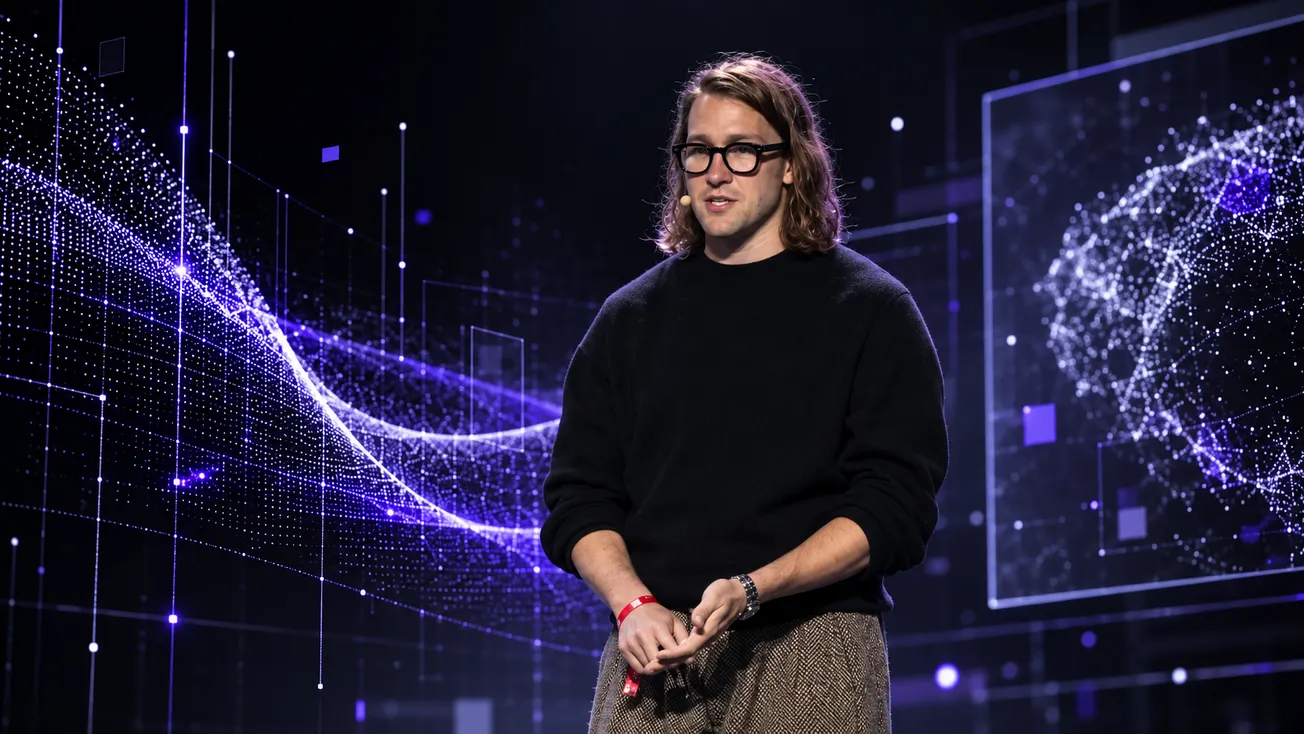
Macrocosmos announced the iota SDK and Liquid Compute today at Exploit Summit in Montreal, introducing a more commercial product framing for IOTA, the company's decentralized training stack on Bittensor Subnet 9.
In its announcement post, Macrocosmos described Liquid Compute as its "disaggregated compute platform" that turns "the long tail of global compute into capacity you can actually train on." The iota SDK, it said, "powers any training workload across it, as if it were one cluster."
Co-founder Steffen Cruz (@macrocrux) noted that Macrocosmos had "distilled 2 years of R&D into a powerful set of communication primitives" so that "anyone can train models using globally distributed, heterogeneous and unreliable compute with just a few lines changed from pure PyTorch," and that the company believes this "fundamentally disrupts the economics of AI training."
The company said it will "go to market in the coming weeks, putting the power to train in far more hands," and will share more of what it showed on stage over the next few days.
Early access registration is live on the IOTA SDK page.
How IOTA Turns Spare Compute Into a PyTorch-Ready Training Cluster
Macrocosmos is built around the problem of compute supply already existing, but it being hard to access, pay for, and coordinate efficiently. IOTA's role, therefore, is to make that compute usable for training without requiring every customer to assemble a distributed-systems team.
The SDK is the main interface for that goal. According to Macrocosmos, developers will be able to define a model, dataset, and training objective, connect to IOTA, and run the workload across disaggregated, variable compute. The platform handles the coordination, execution, and recovery layer below the workload. Moreover, the SDK can be thought of as a "Drop-in for PyTorch," meaning training on interruptible, fragmented compute is meant to feel like running against a centralized cluster without a full rewrite.
How the IOTA SDK Handles Disaggregated Training
IOTA is designed to manage the mechanics that usually make distributed training difficult across uneven infrastructure.
Those mechanics include orchestration, monitoring, fault tolerance, recovery, progression, and reporting. In practice, that means IOTA is meant to decide what runs where, monitor machines for slowdowns or failures, reissue work when a machine drops out, and move a run forward once enough machines in a stage have completed their part rather than waiting indefinitely on the slowest participant.
The system also checks results for correctness, preserves progress during failures, and reports how a run performed, how it converged, and what it cost. The SDK is meant to give developers control over workload configuration while abstracting away the coordination layer needed to run across mixed compute. In that light, Macrocosmos wants IOTA to become a way to add distributed training capacity to existing workflows and research tooling without forcing users to rebuild their stack around a new system.
Why Liquid Compute Matters for Bittensor
If IOTA can make spare or underused compute behave like reliable training capacity, it would address one of the largest bottlenecks in the AI development stack.
In a conference note, tylerdurdeth, an xtensor co-founder, said the IOTA SDK and Liquid Compute could let users operate a decentralized data center and train models with up to 10 trillion parameters at up to three times lower cost than centralized labs. He also described the target market as worth billions of dollars.
For now, training large AI models remains one of the most capital-intensive parts of the AI stack. Access to GPUs, reliable scheduling, fault-tolerant infrastructure, and efficient utilization all shape which teams can afford to train at scale.
Taking the problem head-on is a huge mountain to scale, one we look forward to seeing the Macrocosmos team summit in the future.