
Table of Contents
Meta used Connect 2026 to expand Muse, the personal AI agent it introduced earlier this month, into a broader consumer AI system spanning voice, video, computer control, email, shopping, work apps, AI glasses, and a forthcoming pocket device.
The agent can now talk in real time, appear as a live avatar, use a Mac with permission, receive its own email address, connect to more third-party services, and eventually run through a dedicated device called Muse Charm.
Muse topped App Store charts and was downloaded more than ChatGPT on mobile during its first 12 days.
"We believe that Muse will make you money."
Muse Moves From Chat to Voice and Video
Meta's biggest software update is Muse Realtime Voice, a new mode for longer conversations while the agent keeps working in the background. Users can also customize how Muse sounds by describing the voice they want.
Meta Superintelligence Labs also introduced Muse Realtime Avatar, an embodiment system that turns Muse Realtime Voice into a live video character. The technology can animate a photographic portrait with subtle facial expressions or a full-body illustration with gestures and posture changes, while keeping the character's appearance and mannerisms consistent across a conversation.
The avatar system uses the same speech-token stream as Muse Realtime Voice, which helps synchronize voice, lip motion, and expression. Meta said raters preferred Muse Realtime Avatar over Runway Characters and HeyGen LiveAvatar across visual quality, synchronization, character consistency, and mannerisms in short live calls. The system streams portrait video at about 870 milliseconds of end-of-turn latency, and watermarks generated video with Meta Video Seal.
Muse remains limited to users aged 18 and up.
Meta Brings Muse to AI Glasses
Muse is also coming to Meta's AI glasses in the coming months. Users will activate the agent by saying its name.
The glasses integration uses context from the wearer's field of view; Muse will be able to respond to what a person is looking at, such as a product on a shelf, a flyer, or a school-supply list, without requiring the user to describe the scene verbally. Meta's examples include guided workouts, meal logging, nutrition lookups, buying products in view, booking appointments, checking flight prices, and identifying a missing part while the user's hands are occupied. The company did not say which glasses will receive Muse first or give a specific release date.
The glasses rollout is a roadmap signal rather than an immediate product. If personal agents become ambient software, wearables give them a way to see the same physical context as the user.
Email, Mac Control, Muse Charm, and New Connectors Expand Muse's Utility
Meta is also giving each Muse agent its own email address, a more conventional channel for both task completion and inbound messages from other people.
On desktop, Muse for Mac can now use the computer with permission, so the agent can operate across apps instead of staying inside a dedicated chat window. Computer use determines whether agents can complete work in the same software environments people already use.
Muse launched with dozens of partners and access to the Shopify catalog. At Connect, Meta added retail connectors for Walmart, Best Buy, American Eagle Outfitters, DICK'S Sporting Goods, Fanatics, Gap, Michael Kors, Sephora, Ulta, and Wayfair, along with Shop Pay and PayPal. Expedia is listed as coming soon.
On the work side, Meta called out connectors for Instacart, Notion, Granola, GitHub, and Box. These connectors let Muse handle both consumer shopping tasks and productivity workflows, with enough external service access to complete tasks.
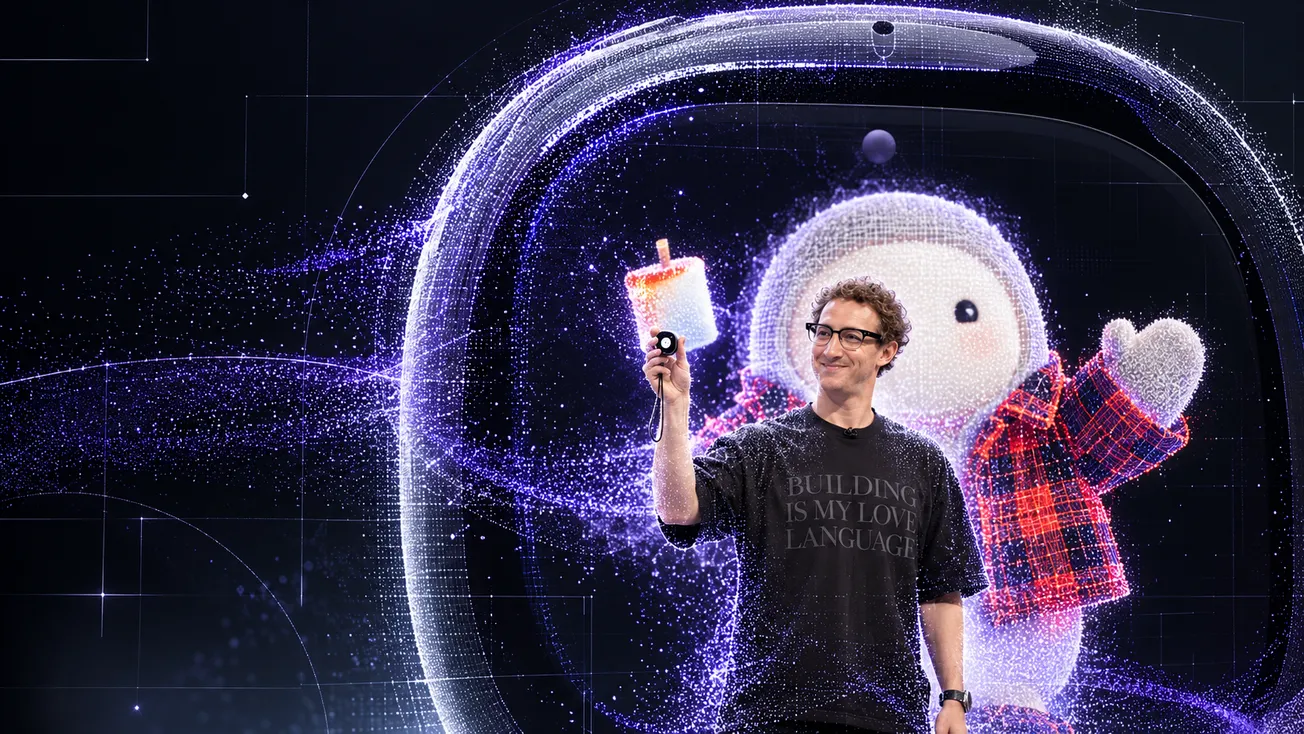
Meta also unveiled Muse Charm, a pocket-sized device designed to give the company’s Muse AI agent a dedicated piece of hardware outside of phones, computers, and smart glasses.
Meta Charm
Roughly small enough to fit on a keychain, Charm features a compact display that shows Muse’s animated avatar and packages Meta’s real-time voice and avatar stack into a standalone device. Users can tap a fingerprint sensor in the corner to immediately start speaking with Muse, removing the need to unlock a phone, open an app, or put on a pair of AI glasses.
The idea is to make Muse more persistent and immediately accessible throughout the day. Zuckerberg described Charm as the fastest way to interact with Muse when a user is not wearing Meta’s glasses, including both talking to the agent and showing it what is happening around them.
Zuckerberg said the company is working to have it ready to ship in time for the holidays in December. Meta says more information about the device will be shared later this year.