

Table of Contents
Odyssey has introduced Odyssey-3, a foundation world model that operates across physical and virtual systems, including robot arms, humanoids, cars, drones, AI training environments, and video games.
Odyssey-3 is their most capable world model to date and an early step toward what it calls "general-purpose physical intelligence." Rather than training a separate system from scratch for each robot, vehicle, or simulated environment, Odyssey is trying to build a shared model of how the world behaves and then adapt that model to specific control tasks with relatively small amounts of additional data.
The model is an autoregressive diffusion transformer trained to simulate a wide range of scenarios from visual observations. Pretraining gives Odyssey-3 a learned understanding of physics, dynamics, cause and effect, human behavior, and spatial structure that can then be applied through task-specific control layers.
Today we’re unveiling Odyssey-3, a big step forward for foundation world models.
— Odyssey (@odysseyml) September 15, 2026
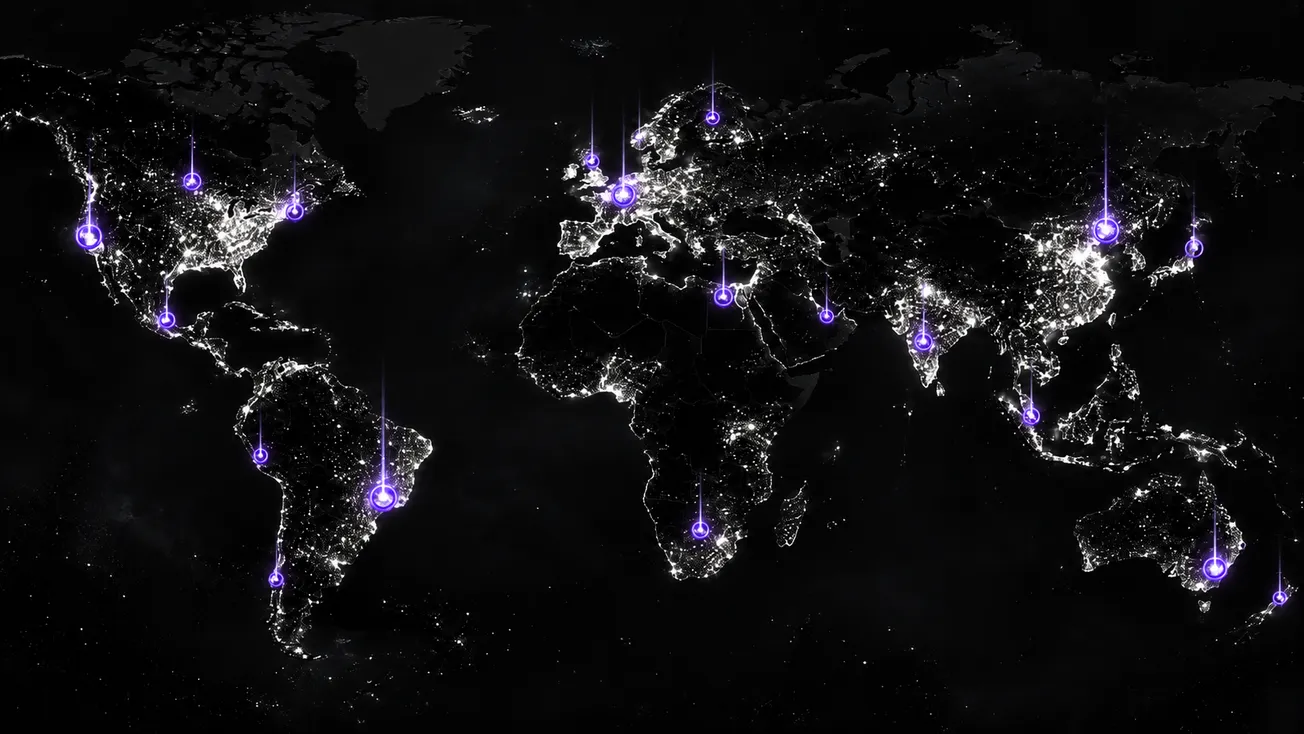
It can control robots, power humanoids, drive cars (on the roads of India!), train AIs, pilot drones, and even play video games.
We can’t wait to see what intelligent systems it enables. pic.twitter.com/iNBWkPTfOO
Odyssey-3 Targets a General World Model for Physical Agents
World models are AI systems that learn representations of how environments change over time. In robotics and autonomous systems, an agent needs more than image recognition to act effectively. It has to understand how objects move, how actions affect the environment, and how to recover when a plan fails.
Odyssey’s central argument is that many current robotic systems rely too heavily on narrow demonstrations for specific tasks. If a robot needs thousands of examples to learn one motion or manipulation sequence, deployment becomes slow, expensive, and brittle. A broader world model could reduce that burden by giving the robot a pretrained base of physical knowledge before it sees task-specific examples.
Odyssey-3 applies that idea through action decoders, which are learned components trained on observations and actions from a particular system. Those decoders translate the model’s internal representations into the control outputs required by a robot arm, humanoid, car, drone, or game agent.
This approach allows Odyssey-3 to control physical systems with only a few hours, or tens of hours, of experiential data depending on the task. Those claims are still early and come from Odyssey’s own demonstrations, but they point to the core technical pitch that one foundation model can be a reusable base for many kinds of embodied AI.
Robot Arms, Humanoids, and Closed-Loop Driving
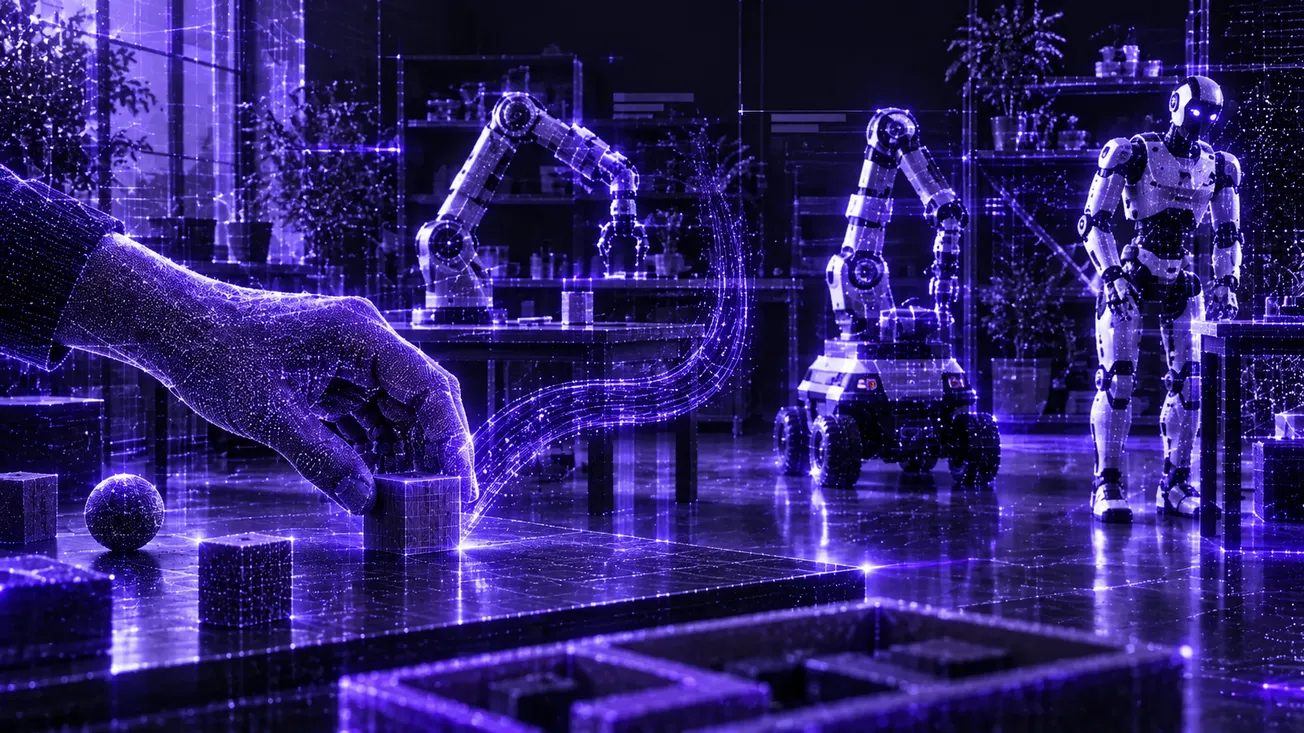
Odyssey published examples of Odyssey-3 controlling robot arms after training on tens of hours of demonstrations. The model showed recovery behaviors that were not present in the demonstrations, including reorienting a gripper after a missed grasp and retrieving an object dropped in an unusual position.
Physical environments rarely match training data exactly. A robot working in a home, warehouse, factory, or lab has to handle misaligned objects, imperfect grasps, lighting changes, and unexpected object positions. If Odyssey-3’s pretrained world understanding helps policies recover from those failures, it could reduce the need to collect examples of every edge case.
Language Models Can Work to Achieve Goals Source: https://odyssey.systems/introducing-odyssey-3
Odyssey also announced a collaboration with Poke & Wiggle, a robotics data and benchmarking company, to evaluate the model across different robot bodies, viewpoints, and control schemes. Transfer across hardware is one of the hardest parts of general-purpose robotics. A policy that works on one arm, camera angle, or workspace can break when the embodiment changes.
Odyssey-3 is also a foundation model for Flexion, a robotics company focused on general-purpose robot intelligence. Flexion used Odyssey-3 as a base model for humanoid control policies trained with tens of hours of humanoid teleoperation data. Those policies generalized better than tested vision-language-action baselines under environmental changes such as lighting shifts.
For autonomous driving, Odyssey trained a driving policy using 20 hours of simulated data while keeping the pretrained world model frozen. The resulting system generated real-time waypoints for closed-loop driving on streets in India. In Odyssey’s comparison, policies trained entirely in simulation traveled about 77% as far between safety-driver interventions as policies trained on real driving footage.
Simulation-only driving has not matched real-world training, but the result suggests a pretrained world model may help simulated experience transfer further than it otherwise would.
A Model for Drones, Games, and AI Training Worlds
Odyssey-3 is not limited to ground robots. Odyssey has trained a drone navigation policy using tens of hours of simulated flight data, with the policy generating flight waypoints from camera observations, motion state, and a navigation prompt. Odyssey also reported qualitative evidence that the frozen backbone already produced plausible aerial-navigation predictions before task-specific policy training.
In video games, Odyssey trained policies on gameplay recordings paired with keyboard and mouse inputs. It also produced extended gameplay sessions in Grand Theft Auto V and early transfer examples from GTA-trained policies to Red Dead Redemption 2 and Sleeping Dogs without additional policy training on those games.
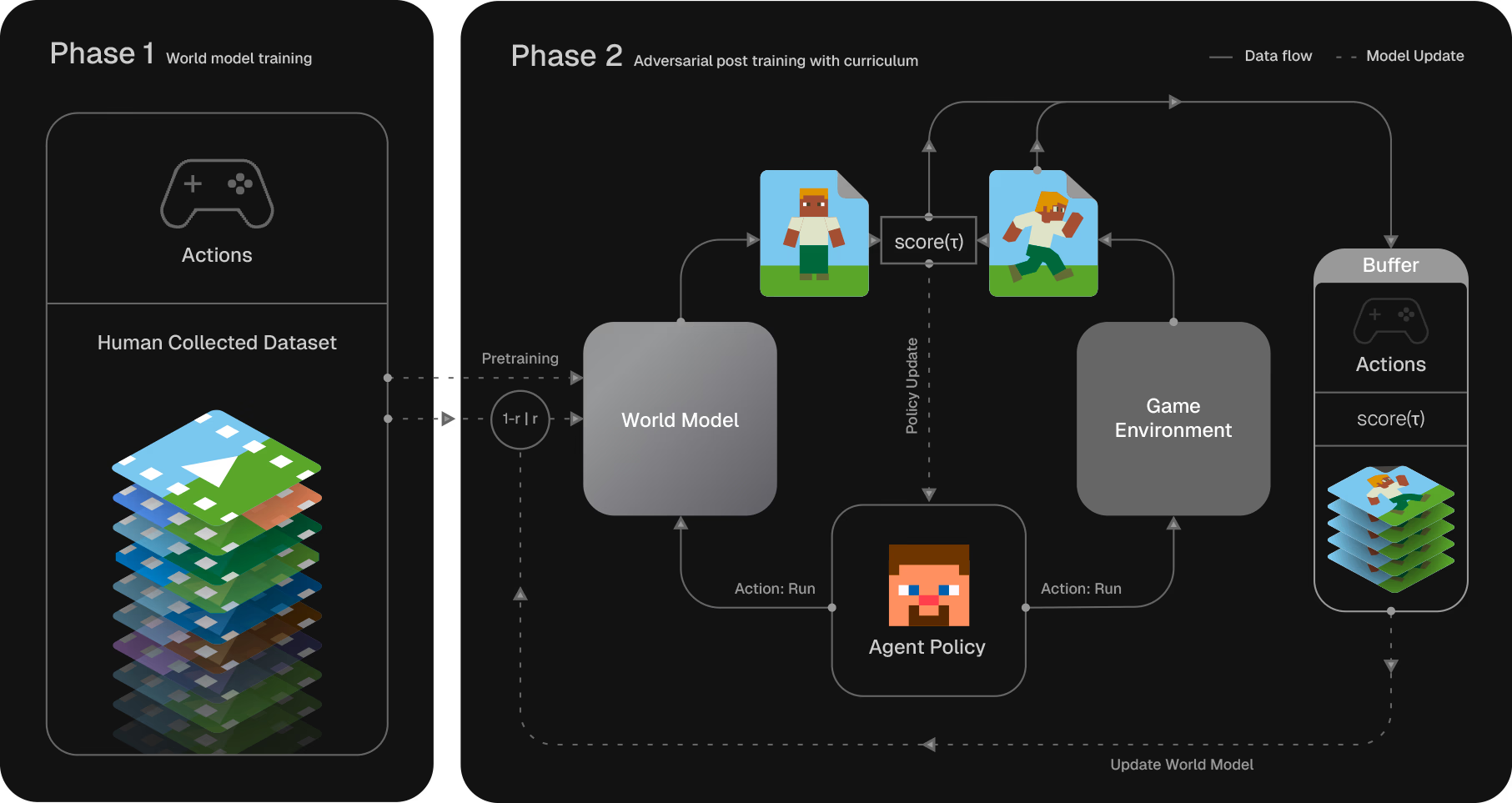
The gaming work has research value beyond a consumer demo. Games provide controllable environments where agents can move, fail, retry, and generate large amounts of interactive experience for world-model research. Odyssey connects this to its broader work on AI training environments, including PROWL, its reinforcement-learning-driven framework where agents explore generated worlds to find failures that can improve the world model.
That creates a recursive training loop: agents use generated worlds to learn, while their behavior exposes weaknesses in the environments that trained them. If reliable, that loop could help world models produce increasingly useful training experiences for future AI systems.
Odyssey-3 and the Push Toward Physical AI
Odyssey-3 arrives as robotics companies, autonomous vehicle researchers, and AI labs are converging on the same problem: how to move from narrow task automation to agents that understand and act in messy, changing environments.
Large language models benefited from internet-scale text pretraining before being adapted to specific tasks. Odyssey is arguing that physical intelligence needs a comparable foundation layer, but one grounded in the dynamics of the world rather than language alone. In that framing, robots and simulated agents should not need to learn every skill from scratch; they should draw on a general model of space, motion, objects, and cause and effect.
Odyssey is careful to present Odyssey-3 as an early glimpse rather than a finished general robot brain. The demonstrations remain company-reported, and broad claims about transfer, reliability, and physical autonomy will need continued benchmarking across hardware, environments, and safety-critical domains.
Still, the work reflects a clear direction for embodied AI. Odyssey is trying to make the world model itself the reusable intelligence layer, with robot arms, humanoids, vehicles, drones, games, and training simulations becoming different interfaces to the same learned understanding of reality.
Odyssey plans to release Odyssey-3 publicly in the coming weeks. If the model performs outside curated demonstrations, it could become an important test of whether foundation world models can make physical AI less dependent on narrow, task-specific data.