

Table of Contents
ORO, the team behind Bittensor Subnet 15, is shifting its focus from evaluating consumer shopping agents to building simulations in which AI agents learn to start and run small businesses. The team has built its first set of environments and plans to host them on the subnet, using miner competition to improve agent performance and test the simulations themselves.
The new direction targets a harder set of commerce problems: making decisions over long periods, learning from consequences that arrive later, and maintaining a strategy as conditions change. ORO plans to publicly release its first simulation soon.
From Shopping Tasks to Business Decisions
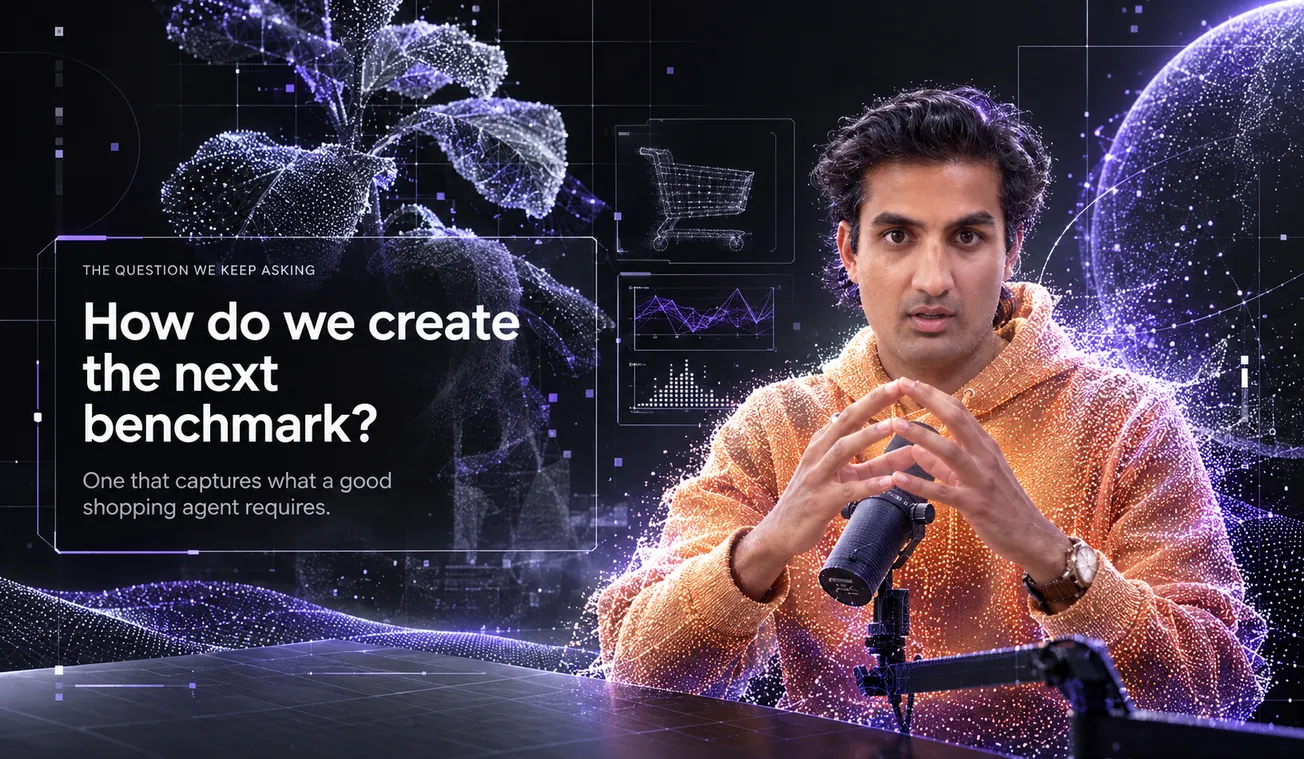
ORO began with a consumer-protection objective: evaluating whether shopping agents acted in a buyer's interests rather than those of advertisers, model providers, or affiliates. That involved testing capabilities such as interpreting preferences, searching for products, balancing constraints, navigating websites, and completing checkout.
The team now argues that improved base models have made personalized shopping a standard capability of personal AI assistants, so the remaining challenge is distribution. Its announcement on X accompanies a change in research priorities rather than a departure from commerce.
Running a business introduces a different relationship between actions and results. A shopping task typically has a defined purchase objective. Business management requires a sequence of decisions whose effects may become apparent only later. An agent must use those outcomes to adjust its behavior without losing track of its longer-term objectives.
ORO identifies long-term decision-making, learning from delayed consequences, and coherent but adaptable strategies as capability gaps in frontier models. Its simulations are intended to help agents acquire the practical, often unstated knowledge needed to run an end-to-end business.
ORO believes that by 2035, AI-run businesses will generate as much economic value as small businesses do today. It is building the simulations as a first step toward that ambition.
Miner Competition as an Environment Test
ORO's earlier work on SN15 included Shopping Bench and ORO Bench. On its current research platform, ShoppingBench is an Alibaba-created benchmark modified to run on the subnet, and ORO Bench adds shopper context and changing stock. The site also lists wholesale and distribution as an upcoming environment.
The new simulations will draw on lessons from operating those benchmarks. ORO says miners repeatedly seek the cheapest, shortest route to the objective a validator sets, so the team must revise the environment continually.
That behavior creates a useful test for reward hacking: earning a high score by exploiting the evaluation system rather than accomplishing the intended task. In a business simulation, the scoring rules need to reward the behavior researchers actually want to study. Otherwise, competition can improve scores without improving the underlying business-running capability.
ORO plans to use the subnet in three connected ways. Miners will compete to improve results on the benchmarks; their runs will generate traces for studying agent behavior and measuring frontier-model performance; and their attempts will expose weaknesses in the simulations' rewards and rules.
A trace, or trajectory, records an agent's sequence of actions and the outcomes it encounters. It gives researchers more information than a final score alone and shows how an agent reached a result and where its decisions broke down.
The same environment is therefore both an evaluation setting and training material. In reinforcement learning, agents attempt tasks, receive scores, and use that feedback to reinforce successful strategies. ORO's proposed loop adds competitive pressure to discover both better strategies and exploitable shortcuts, which the team can use to refine the environment.