
Table of Contents
Running enterprise-grade compute at home comes with a heavy price tag.
Running eight NVIDIA H200s, for example, means owning roughly a quarter-million dollars of silicon depreciating on your desk. And that's the problem that the recently announced Targon Tower Pro offering is meant to solve.
With it, the same Tower runs your private workloads when you need them, then hands its idle GPU cycles over to Targon and pays you in TAO for the hours you’re not using. Reservations opened June 2, 2026, with the entry build starting at $57,500.
In this article, we'll break down what the Targon Tower Pro is, how its confidential-compute architecture works, and why Manifold believes owning GPUs may be more attractive than renting them from the cloud.
 Bart Hillerich
What Is Targon?
Targon is Subnet 4 on Bittensor, the confidential compute marketplace operated by Manifold Labs, backed by a $10.5M Series A led by OSS Capital. The network allows users to rent and monetize GPU infrastructure through hardware-enforced confidential computing, using technologies such as Intel TDX and NVIDIA Confidential Computing to keep workloads encrypted even while they are actively running. Targon has become one of the leading efforts to bring enterprise-grade trusted execution environments into decentralized AI infrastructure, enabling sensitive model training, inference, and data processing on third-party hardware without exposing the underlying data or model weights to machine operators.
Notably, Targon co-authored a technical whitepaper with Intel detailing a framework for running encrypted AI workloads across decentralized, untrusted infrastructure. The paper introduces an architecture that combines Intel TDX, NVIDIA confidential GPUs, remote attestation, and encrypted virtual machines to create verifiable confidential-compute environments across the network.
 Bart Hillerich
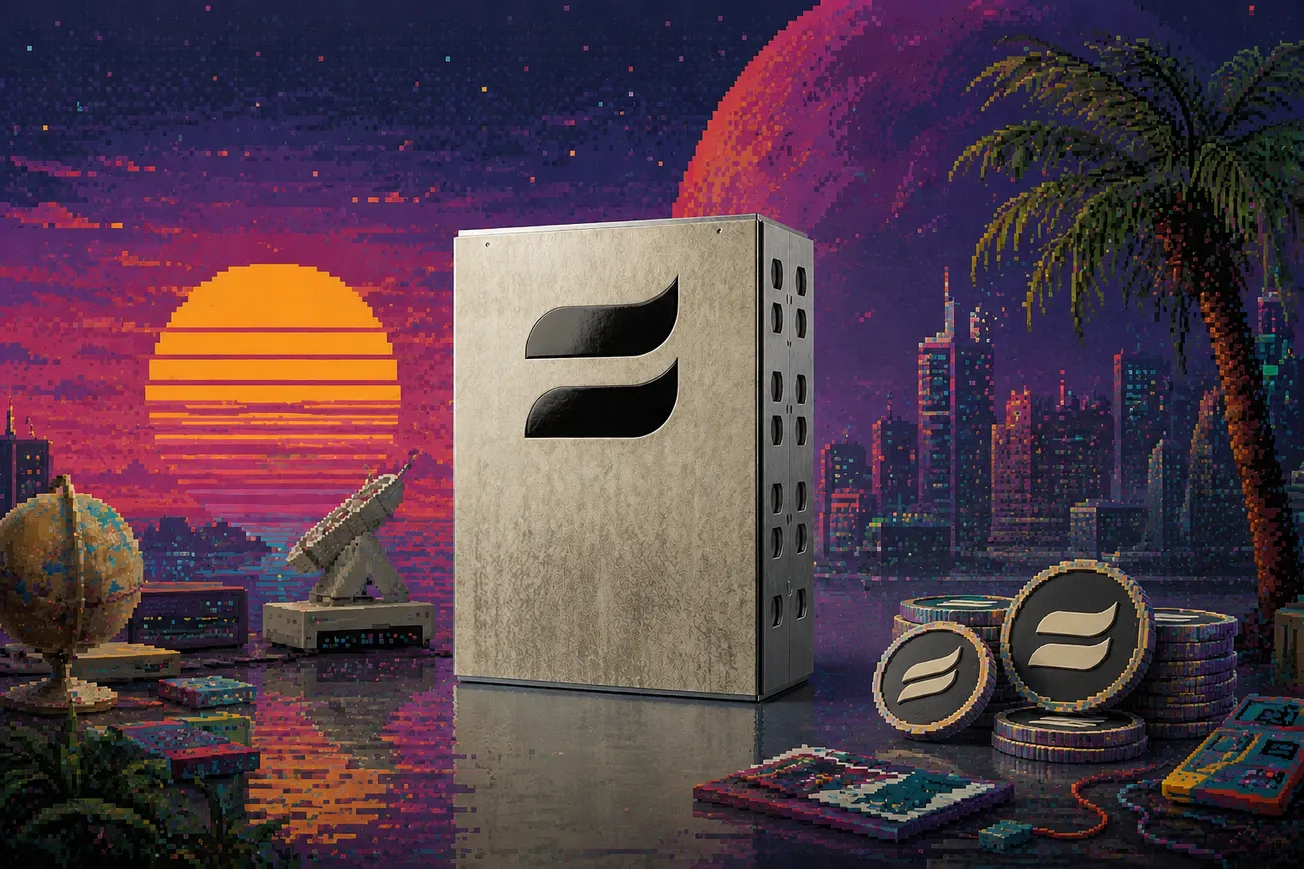
The Tower Pro is Targon's first physical hardware product, and the first consumer workstation in the Bittensor ecosystem hardwired into a subnet’s earning network. Until now, Targon’s compute supply came from data-center operators contributing H200s into a remote marketplace.
The Tower Pro pushes the architecture into your at-home workspace.
What’s In The Box
Each Tower Pro pairs eight NVIDIA GPUs with a single Intel TDX-capable processor inside a workstation Tower.
Four configurations are open for reservation, scaling from enthusiast silicon to the accelerators usually found inside hyperscaler racks.
| Model | GPUs | System RAM | CPU | Starting Price |
|---|---|---|---|---|
| Tower Pro 5090 | 8× NVIDIA RTX 5090 | 512GB | Intel TDX-capable CPU | $57,500 |
| Tower Pro RTX6000 | 8× NVIDIA RTX PRO 6000 Blackwell | 1TB | Intel TDX-capable CPU | Contact Targon |
| Tower Pro H100 | 8× NVIDIA H100 | 2TB | Intel TDX-capable CPU | Contact Targon |
| Tower Pro H200 | 8× NVIDIA H200 | 2TB | Intel TDX-capable CPU | Contact Targon |
Prices reflect server-component costs as of June 2026 and may change alongside the underlying hardware market.
How the Tower Pro Works Day to Day
The Tower Pro runs TargonOS, a hardened version of Linux built specifically for the Targon network. You access the machine from any computer via SSH, a secure command-line connection letting you send jobs directly to the eight GPUs without a monitor attached to the tower.
 Bart Hillerich
At the center of the system is the Targon Virtual Machine (TVM), the software layer that powers Targon's confidential compute environment. When you're running your own workloads, the TVM keeps data encrypted end-to-end, ensuring that no one, including Targon itself, can see what is being processed. When you switch to Earning Mode, the same infrastructure securely provisions encrypted virtual machines for renters. Their workloads remain isolated from yours, with each operating inside its own confidential environment and without access to the underlying host system.
Setup follows the same path as running any Targon miner: install TargonOS via a bootable image, configure BIOS for Intel TDX, and launch the TVM. From there, you connect via SSH and send jobs to your own GPUs the same way a developer connects to any cloud server.
Why Intel TDX Sits at the Center
Intel Trust Domain Extensions, the security feature built into 4th-generation Xeon Scalable processors, isolates each virtual machine inside encrypted memory and CPU state with hardware-attested remote verification. The workload runs encrypted from boot through shutdown, and a remote verifier confirms cryptographically what code is running before any sensitive data lands on the box.
Pairing Intel TDX-protected CPUs with NVIDIA's confidential computing GPUs extends those protections across the entire system. Sensitive workloads, whether financial records, proprietary datasets, medical information, or private model weights, remain encrypted throughout execution and are never exposed to the host operating system. Before a workload can run, the Manifold Attestation Agent verifies the system's integrity by measuring components such as the firmware, kernel, and boot chain against expected cryptographic values. Only then is an encryption key released through Intel's attestation infrastructure, allowing the virtual machine to start.
The result is that the same confidential-computing architecture described in Manifold's joint whitepaper with Intel now exists in a workstation form factor. For Tower Pro owners, that means private workloads can run with the same hardware-backed security guarantees used by large enterprises and cloud providers. And when the system transitions into Earning Mode, renters gain access to the same protections without any visibility into workloads that previously ran on the machine.
How Earning Mode Works
Earning Mode is the feature that allows Tower Pro owners to contribute idle compute capacity to the Targon network. When enabled, the tower makes its GPUs available to renters while preserving the same confidential computing guarantees used for personal workloads.
Jobs enter the network through Targon's Image Gateway, which provisions an encrypted Confidential Virtual Machine on available hardware. The renter never gains access to the host machine, and the hardware owner never sees the renter's data or workloads. Once a job is completed, compensation is paid in TAO.
The Tower Pro joins a network that already includes more than 1,500 H200 GPUs contributed by professional operators. By extending participation beyond traditional data centers, Targon aims to increase the geographic distribution of its compute supply while maintaining the same attestation and verification framework across the network. From the renter's perspective, a workload running on a Tower Pro follows the same confidential-computing model as one running on dedicated infrastructure elsewhere in the network.
Control remains with the owner. The machine can be used for personal workloads whenever needed, and Earning Mode can be enabled or disabled at any time. Targon's pitch is that, instead of leaving expensive hardware idle between workloads, owners can put unused compute capacity to work and earn TAO in return.
The Ownership Equation
For users with significant compute needs, the Tower Pro represents a different approach to accessing GPU infrastructure.
Consider an independent researcher or startup running workloads on eight H100s throughout the year. Lambda Labs currently lists H100 SXM instances at $2.99 per GPU-hour on demand. Running eight GPUs continuously at that rate would cost more than $209,000 annually, with all of that spend going toward rented infrastructure.
The Tower Pro H100 approaches the problem from the opposite direction. Instead of renting compute by the hour, users purchase the hardware outright and retain full control over how it is used. When the machine is not running their own workloads, they can enable Earning Mode and contribute unused capacity to the Targon network in exchange for TAO.
That shifts the calculation beyond a simple comparison of upfront hardware costs and cloud pricing. Traditional cloud GPU access is a rental relationship, where spending ends the moment the workload does. Tower Pro owners, by contrast, retain the underlying hardware and can potentially offset a portion of that investment by monetizing idle compute capacity.
Whether that tradeoff makes sense depends on utilization, workload requirements, and marketplace demand. But for users who expect to consume large amounts of GPU compute over time, the Tower Pro offers an alternative to the recurring-cost model that has traditionally defined access to advanced AI infrastructure.
Reservations are now open at targon.com.
Disclaimer: This article is for informational purposes only and does not constitute financial, investment, or trading advice. The information provided should not be interpreted as an endorsement of any digital asset, security, or investment strategy. Readers should conduct their own research and consult with a licensed financial professional before making any investment decisions. The publisher and its contributors are not responsible for any losses arising from reliance on the information presented.