


Table of Contents
Bittensor has fully activated Conviction, introducing an on-chain system through which long-term commitment can determine who owns a subnet.
The mechanism initially launched with support for locking subnet alpha. Its ownership enforcement component is now live, allowing control of an eligible subnet to pass to the hotkey with the highest conviction score.
 Bart Hillerich
Before Conviction, subnet ownership remained with the coldkey that registered the subnet. Community members could evaluate an owner’s commitment through reputation, public statements, development activity, and market behavior, but the protocol did not provide a native way to measure that commitment.
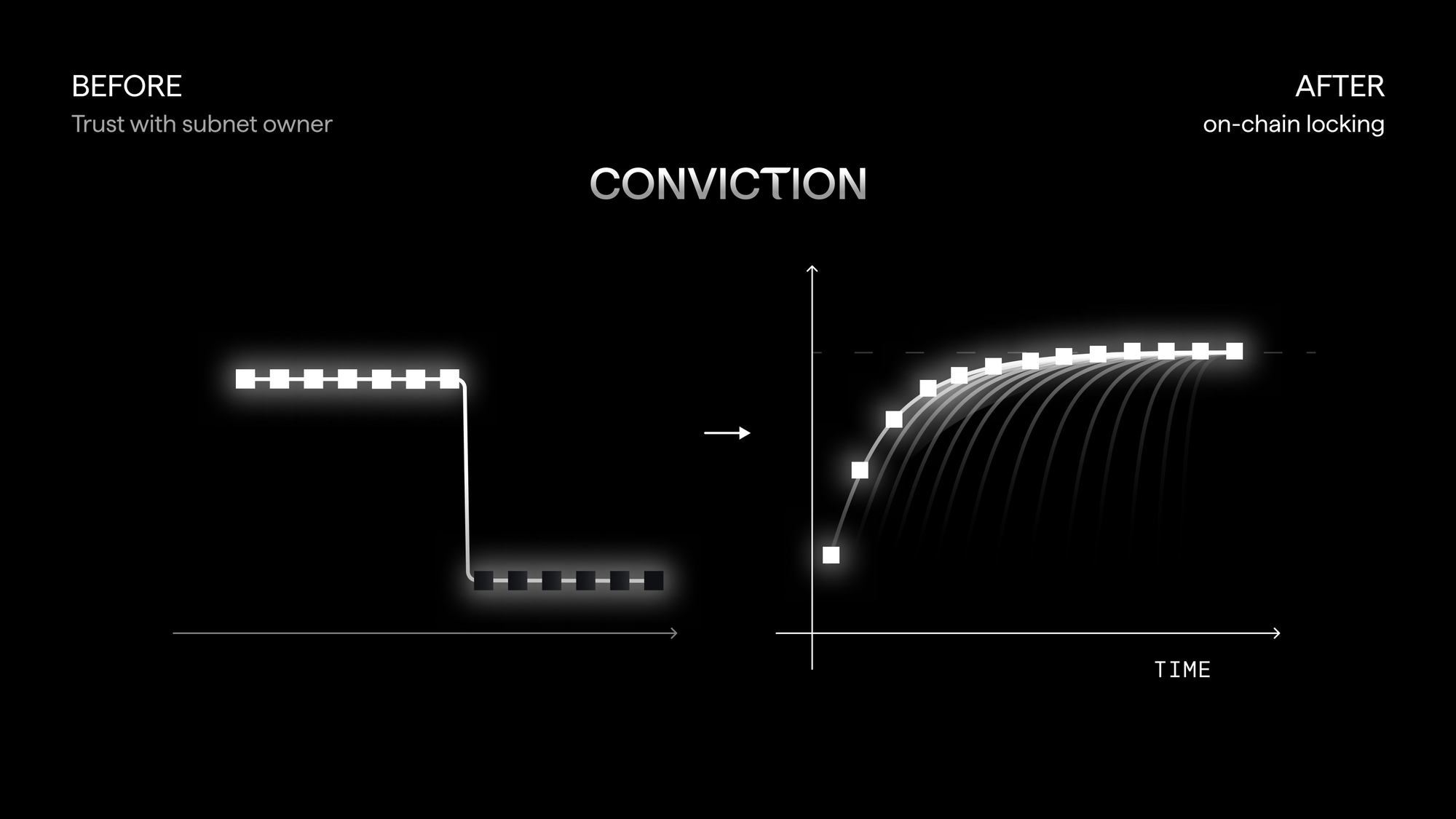
Conviction changes this by connecting subnet ownership to alpha that participants have committed over time.
In practice, participants earn conviction by locking a subnet’s alpha to a particular hotkey. The associated conviction score gradually increases, creating a public signal that stakers can use to evaluate subnet owners, potential challengers, and other major holders.
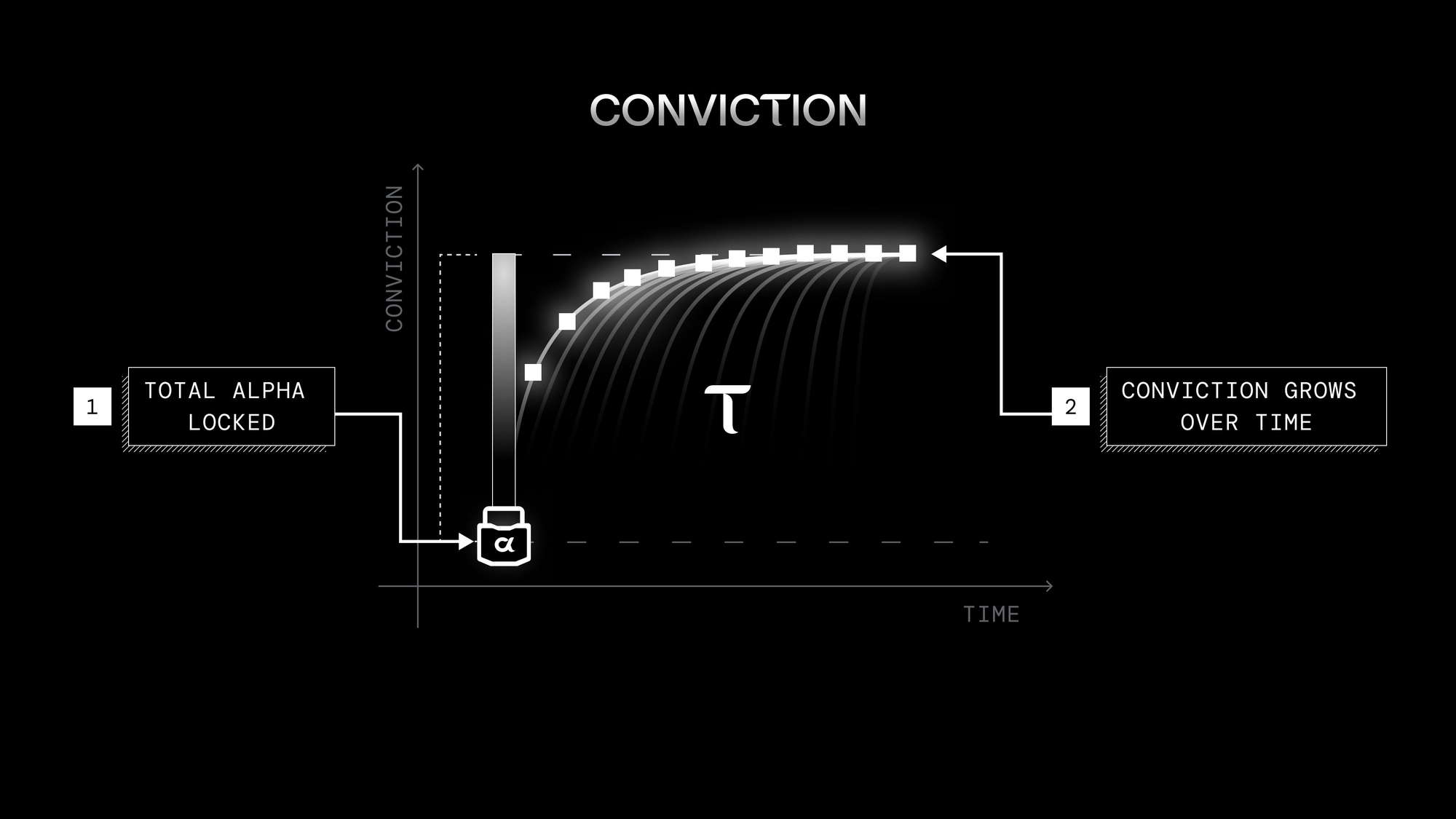
Locked alpha continues earning staking rewards. Participants can also choose between decaying locks, which gradually release the committed alpha, and perpetual locks, which keep the locked amount fixed and allow the conviction score to continue approaching the full amount committed. Subnet owners can further strengthen their conviction by enabling auto-lock for their share of subnet emissions. When activated, the owner’s emissions are continually added to the relevant lock, allowing the owner’s demonstrated commitment to grow alongside the subnet.
Changes to all of these positions are fully visible to the public on-chain.
The Introduction of Ownership Enforcement
Until now, those locks primarily served as an on-chain signal of commitment. With ownership enforcement now live, Conviction can also produce a direct governance outcome: a sufficiently committed challenger can replace the current subnet owner.
Conviction does not allow ownership of every subnet to be challenged immediately. Ownership enforcement only applies when two conditions are satisfied:
- The subnet is at least 365 days old.
- Aggregate conviction equals at least 10% of the alpha held by stakers.
Once both thresholds are met, the hotkey with the highest aggregate conviction becomes the subnet owner.
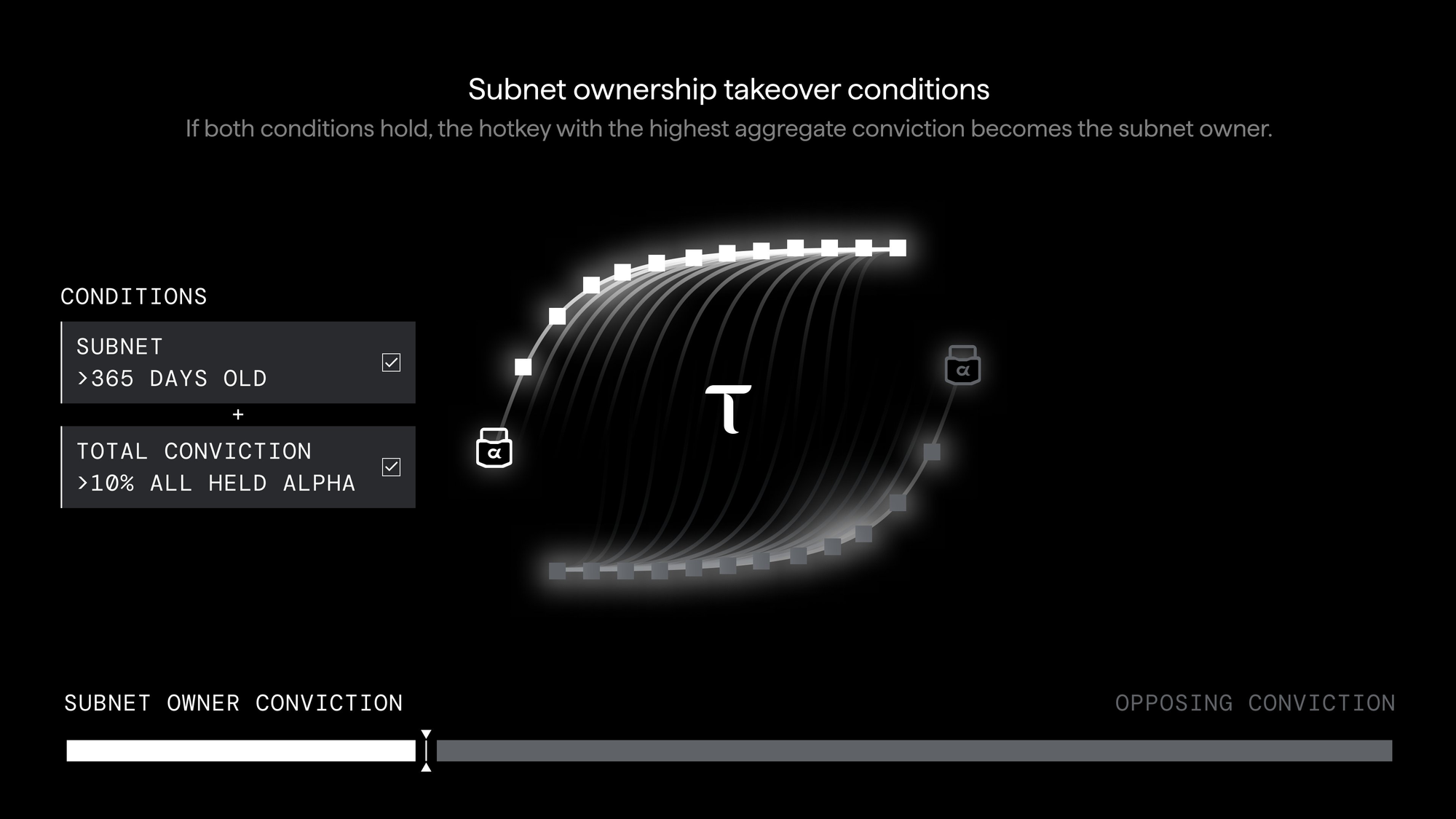
The requirements are intended to prevent ownership from changing based on short-term market activity. A challenger must acquire alpha, lock it, and allow conviction to build over time before it can replace the existing owner.
Subnet Ownership Must Now Be Earned Over Time
Conviction is a major step toward a more competitive and accountable Bittensor ecosystem, giving subnet investors a transparent, on-chain view of who is genuinely committed to a network’s long-term success.
With ownership enforcement now active, Conviction has moved beyond signaling to become an enforceable standard for subnet builders and owners. Long-term commitment now carries a direct governance consequence, making subnet ownership more contestable, transparent, and accountable.
Disclaimer: This article is for informational purposes only and does not constitute financial, investment, or trading advice. The information provided should not be interpreted as an endorsement of any digital asset, security, or investment strategy. Readers should conduct their own research and consult with a licensed financial professional before making any investment decisions. The publisher and its contributors are not responsible for any losses that may arise from reliance on the information presented.