

Table of Contents
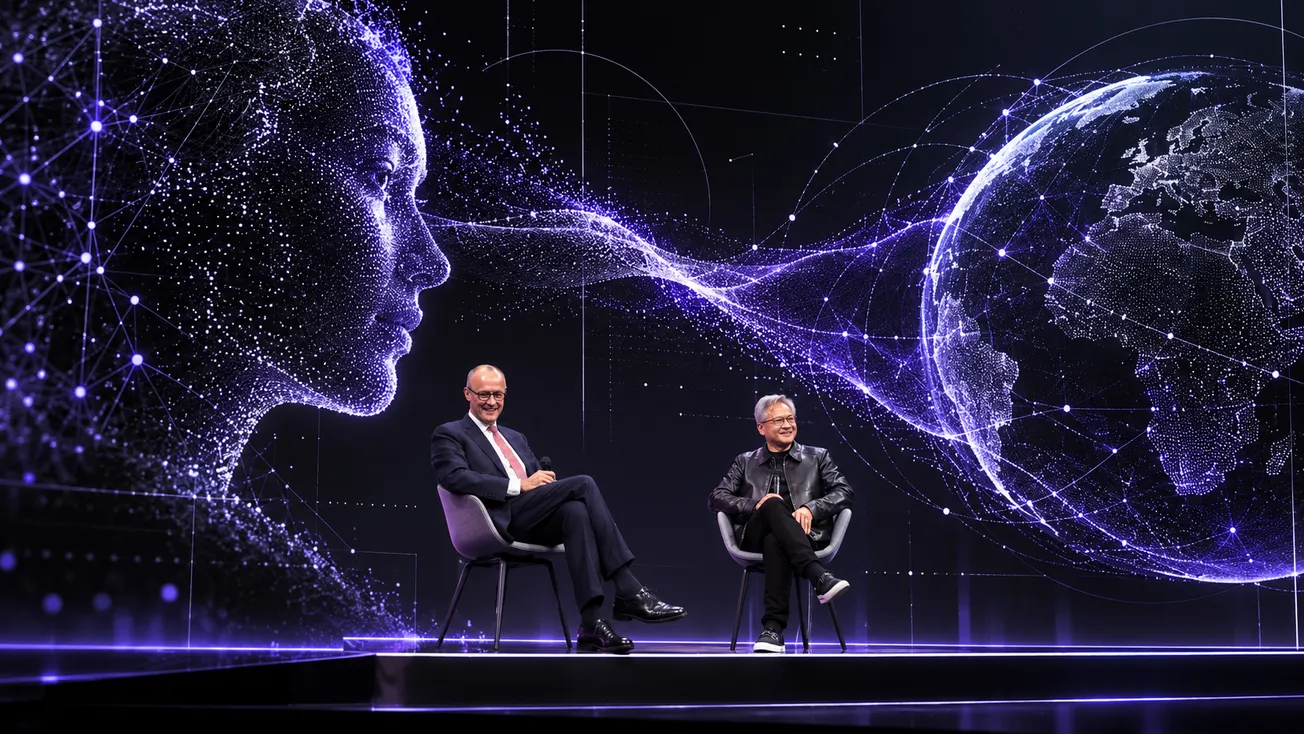
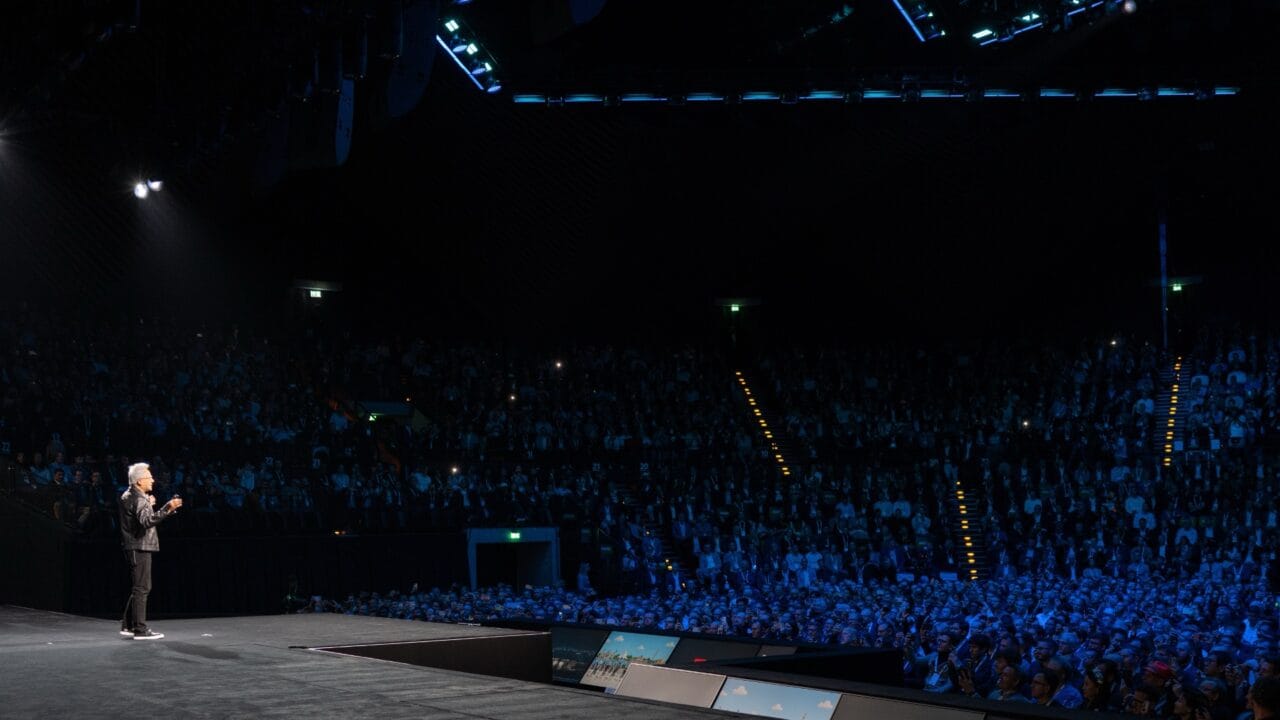
NVIDIA CEO Jensen Huang used the company’s GTC Berlin keynote to present Europe as a region that should build AI infrastructure, models, agents, and physical systems, not simply consume them. The two-hour presentation introduced the DSX POD reference design for modular Vera Rubin AI factories, the OpenShell Reference Architecture for governing autonomous agents, new enterprise and open-model tools, and several physical-AI platforms.
The keynote connected those announcements through a five-layer model of the AI economy: energy, computing, AI factories, models, and applications. Huang said NVIDIA has invested nearly $10 billion in Europe over the past year, alongside 14 startup investments and more than 12,000 partnerships, though those figures cover the company’s broader European activity rather than the keynote launches alone.
DSX POD Targets Faster AI Factory Deployment
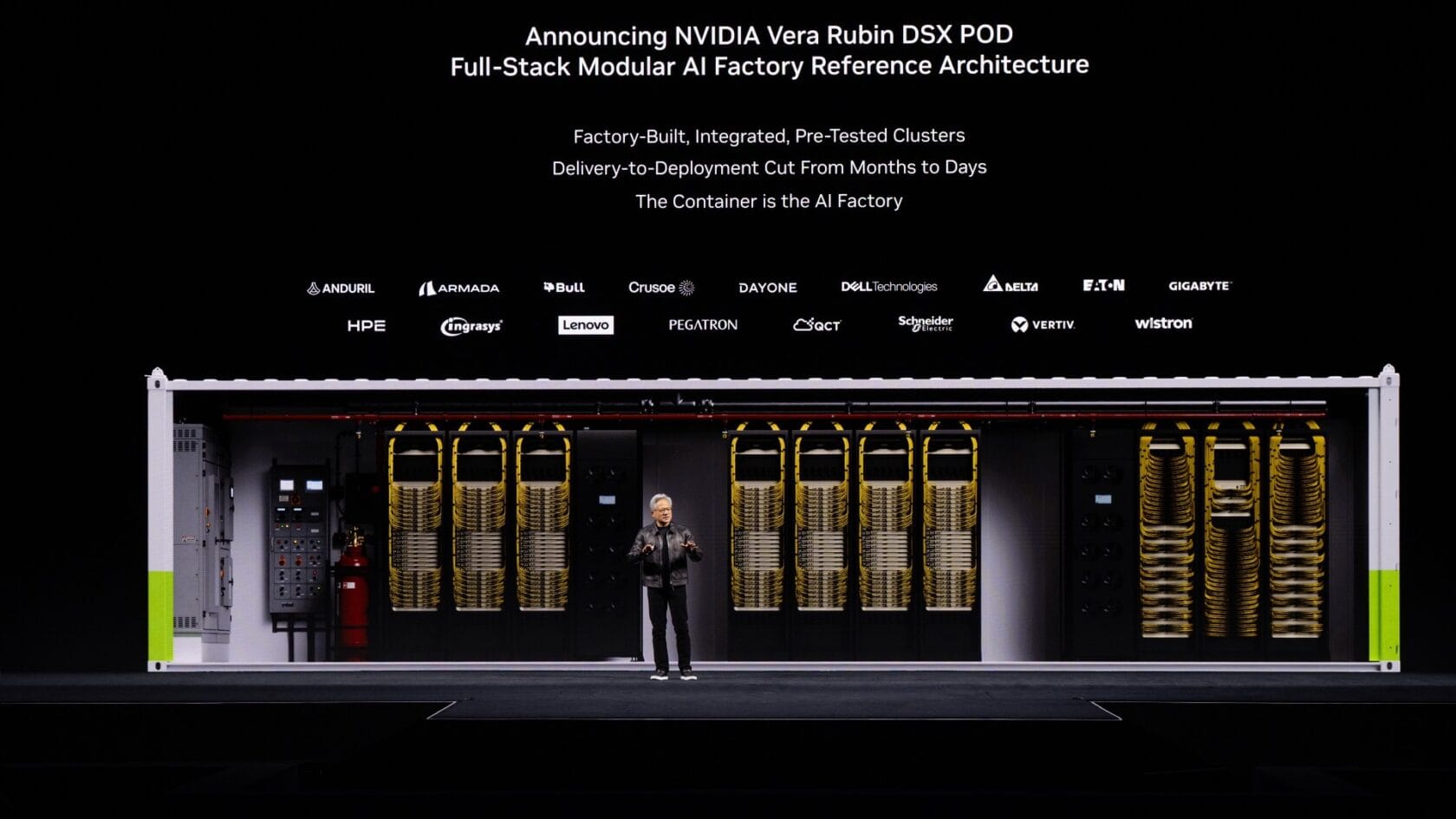
NVIDIA introduced DSX POD as a reference design for complete Vera Rubin AI factories assembled by infrastructure partners inside modular containers. The systems combine compute, networking, storage, power, cooling, cabling, controls, and validation before delivery, shifting more integration work away from the customer site.
NVIDIA says DSX POD can reduce onsite deployment from six months to as little as 14 days once site utilities are ready. The company is working with partners including Bull, Dell Technologies, HPE, Lenovo, Schneider Electric, Vertiv, and others to deliver modular AI factories worldwide in early 2027.
The related DSX platform also includes designs intended to reduce water use for cooling, lower power consumption for a given token output, and make AI factories more responsive to electricity-grid conditions. Those features reflect NVIDIA’s effort to treat the data center as a coordinated production system rather than a collection of independently deployed components.
Huang tied that production focus to economics. AI infrastructure generates economic value when it begins producing tokens, not when construction is complete, making the time between delivery and productive operation a commercial concern for operators building at gigawatt scale.
OpenShell Moves Agent Security Into the Infrastructure Layer
NVIDIA introduced the OpenShell Reference Architecture as a full-stack design for running and governing autonomous agents. It combines Vera Rubin systems for model workloads, Vera CPUs running the open-source OpenShell runtime, and BlueField-4 DPUs running NVIDIA Sentry for out-of-band monitoring.
The architecture treats an agent as more than a model. It includes the model, a harness that orchestrates work and memory, a sandbox, enterprise knowledge, and external tools. OpenShell applies policies to system calls, file access, and network connections, while a policy prover checks policy changes against a permission ceiling. Credentials remain outside the sandbox, limiting what a compromised agent can access.
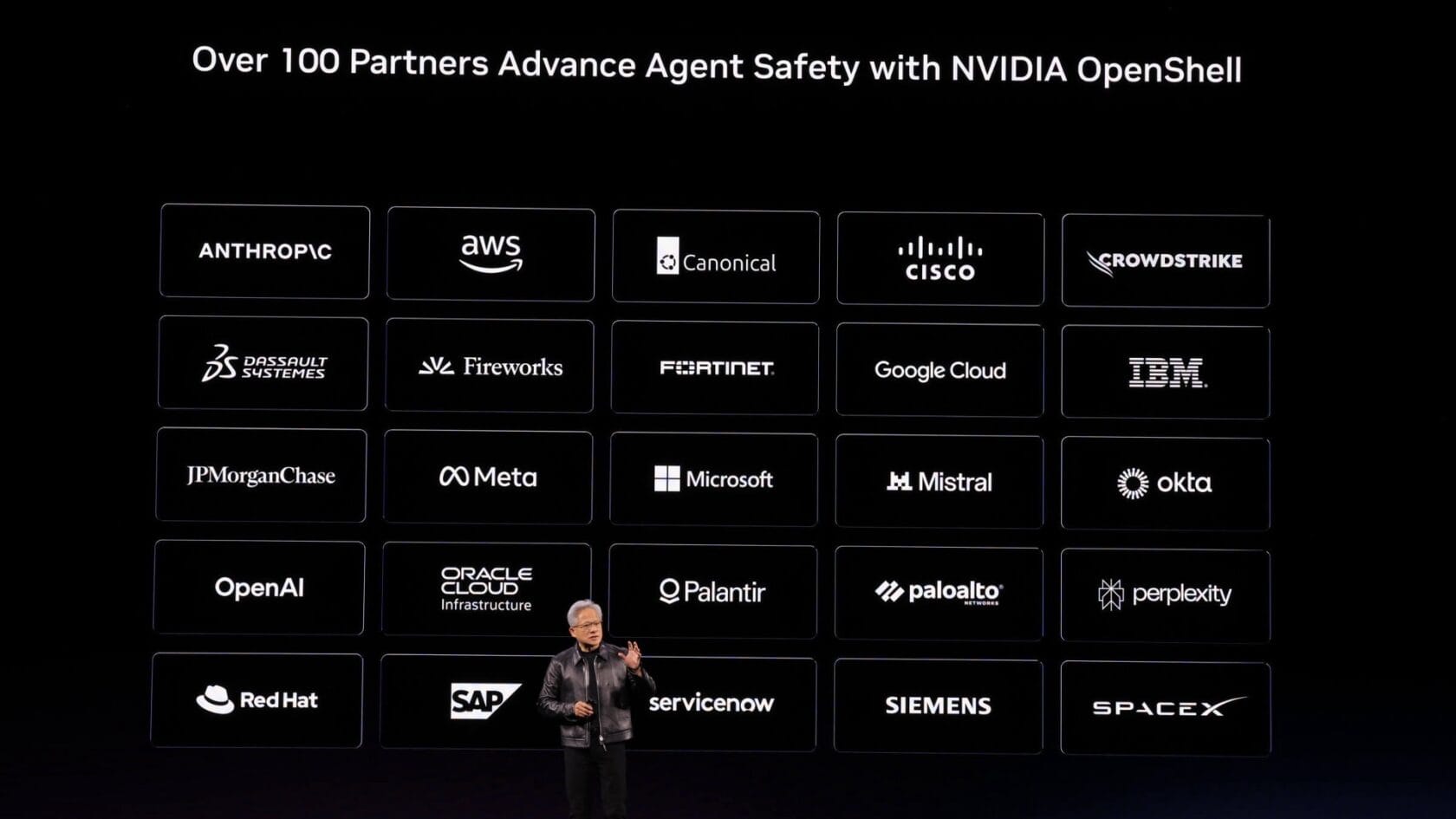
NVIDIA said more than 100 partners are advancing agent safety with OpenShell. The group includes model developers, cybersecurity companies, banks, and enterprise software providers. Anthropic separately said it is working with NVIDIA on OpenShell agents for self-hosted sandboxes in Claude Managed Agents.
The design places enforcement and observation outside the agent’s own execution environment. That separation is intended to let organizations give agents access to data and tools while retaining an independent control layer that can restrict or quarantine behavior.
Models, Enterprise Data, and Physical AI
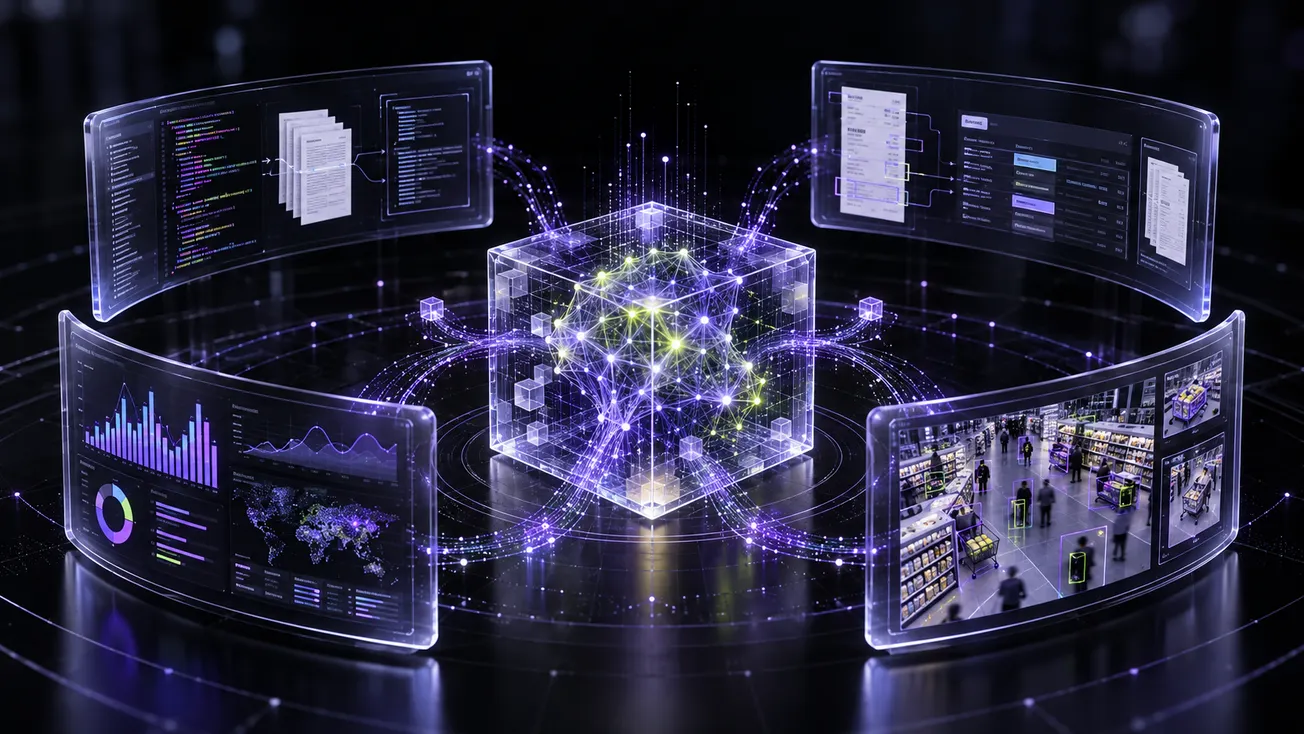
Huang presented NVIDIA’s open model families as part of the broader stack. They include Nemotron for language, Cosmos for world models, GR00T for humanoids, Alpamayo for autonomous driving, Ising for quantum-classical computing, and Earth-2 for physical simulation. The company also introduced the Agent Knowledge Foundation, which combines document parsing, embedding, retrieval, reranking, and the Kumo family of models for structured enterprise data.
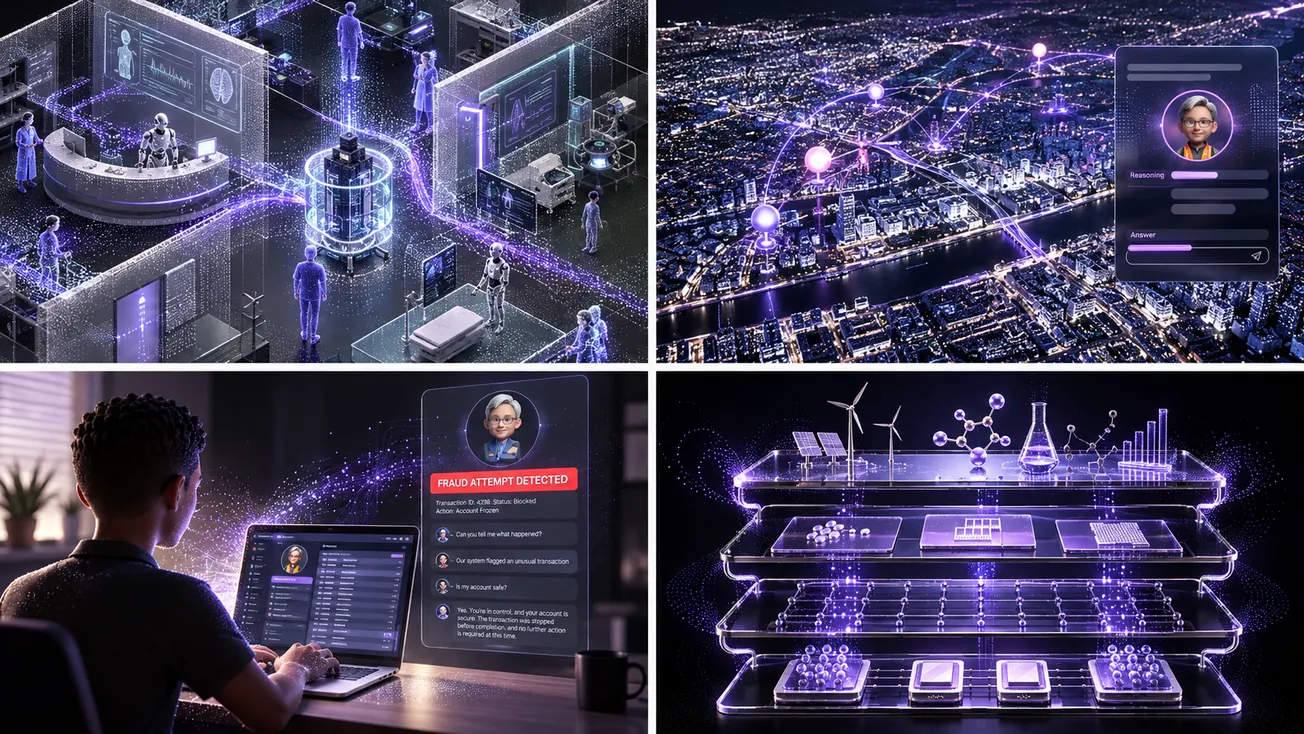
NVIDIA’s CUDA-X libraries were presented as the tools that allow agents to work with specialized simulators, engineering systems, and scientific software. Examples shown during the keynote included drug discovery, factory production planning, and vehicle design workflows connected to digital twins.
The physical-AI announcements extended across several industries. NVIDIA described AI-RAN work with Nokia and telecom operators, adaptive radiotherapy with Siemens Healthineers, and additional vehicle lines adopting the Hyperion autonomous-driving platform.
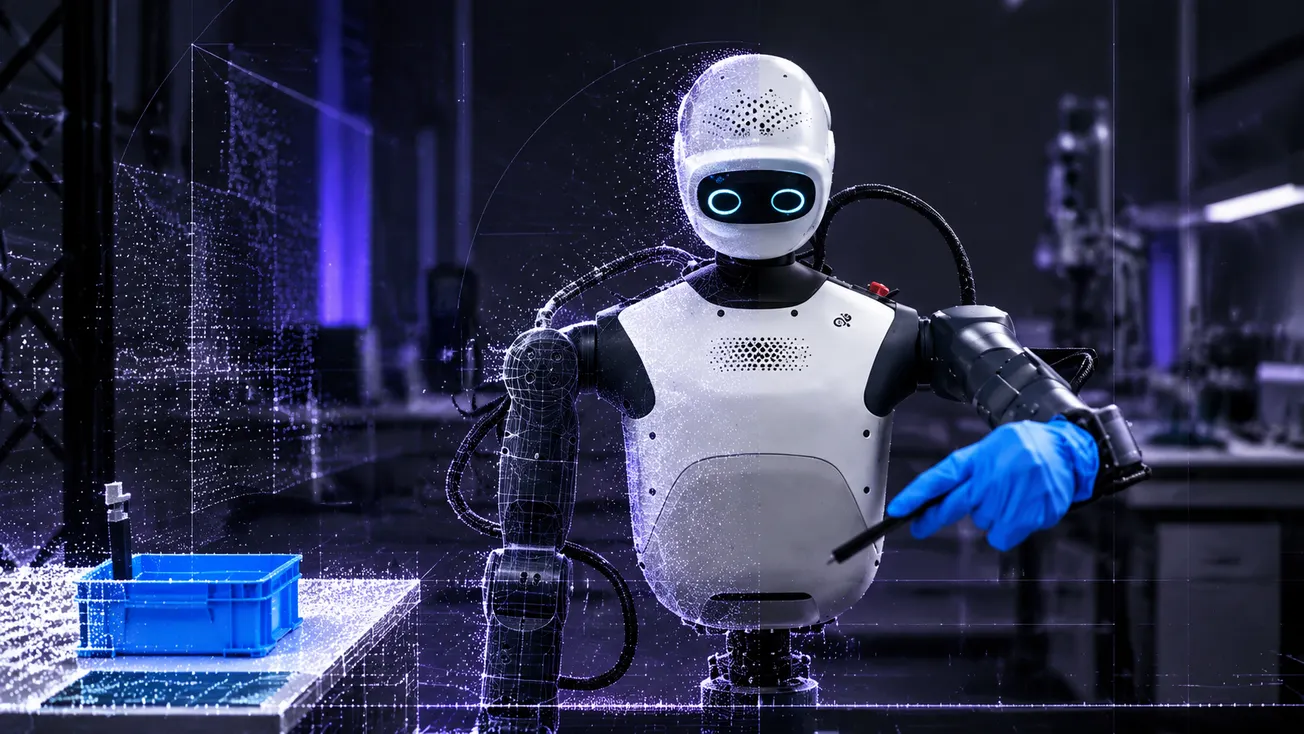
In robotics, Agile Robots introduced Agile ONE SN, a humanoid reference platform built on NVIDIA Isaac GR00T and powered by Jetson Thor. NVIDIA says the platform is intended to give developers an integrated system for creating, training, and validating humanoid capabilities, with availability planned for early 2027. The company also announced updates to the Isaac software and simulation stack.
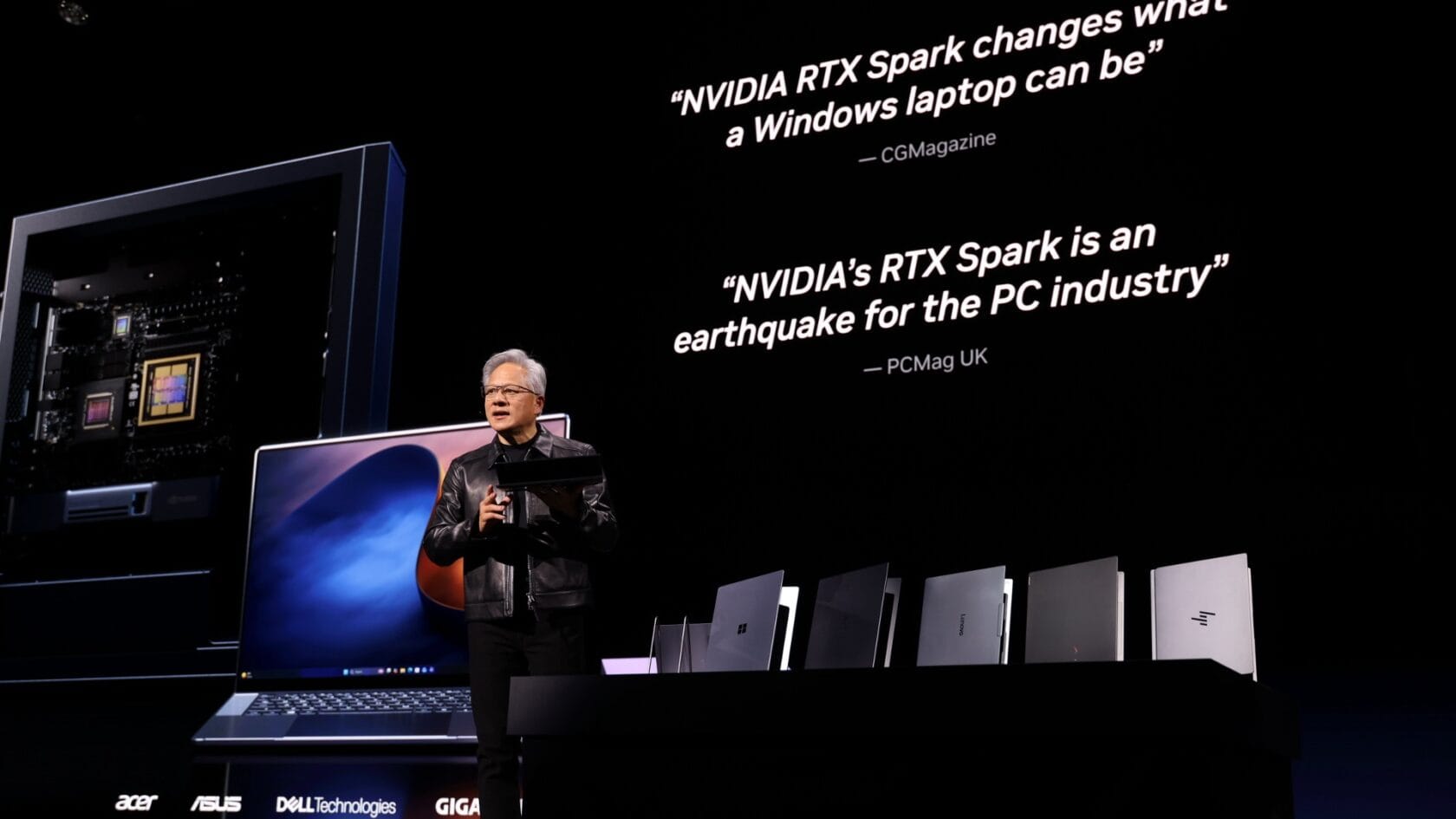
The keynote ended with a demonstration of NVIDIA’s RTX Spark personal AI computers. An agent used cloud-based training and simulation tools to develop behaviors for Hugging Face and Pollen Robotics’ Microduck robots, then evaluated the resulting policy on RTX Spark hardware. Four Microducks joined Huang on stage for a sequence of behaviors, including sitting, standing, and attempting a somersault.
The presentation briefly paused after Greenpeace protesters interrupted the keynote and questioned NVIDIA about environmental commitments and the use of its chips in Russian drones. Huang allowed the protester to speak before continuing with the scheduled program.
Huang returned to one argument across the announcements. Europe’s AI economy will require coordinated investment in energy, compute, software, models, and machines. DSX POD addresses the infrastructure layer, OpenShell addresses the control layer for agents, and the Isaac and Hyperion platforms extend the same full-stack approach into physical systems.