
Table of Contents
Key takeaways:
- Bittensor is a Substrate-based Layer 1 that coordinates AI markets through TAO, its native token.
- AI computation happens off-chain. The blockchain records weights, staking, registration, emissions, and settlement.
- Subnets are independent markets for specific AI tasks, and each subnet has miners, validators, and an owner.
- Yuma Consensus turns validator judgments into reward distributions and is designed to make collusion harder.
- Dynamic TAO adds a market layer, where subnet alpha tokens help determine how emissions move across the network.
Bittensor is easiest to misunderstand if you look at only one piece of it. It is a blockchain, but the AI does not run directly on-chain. It has miners, but they are not mining hashes like Bitcoin miners. It has staking, but subnet staking behaves more like a market allocation than a normal proof-of-stake yield product.
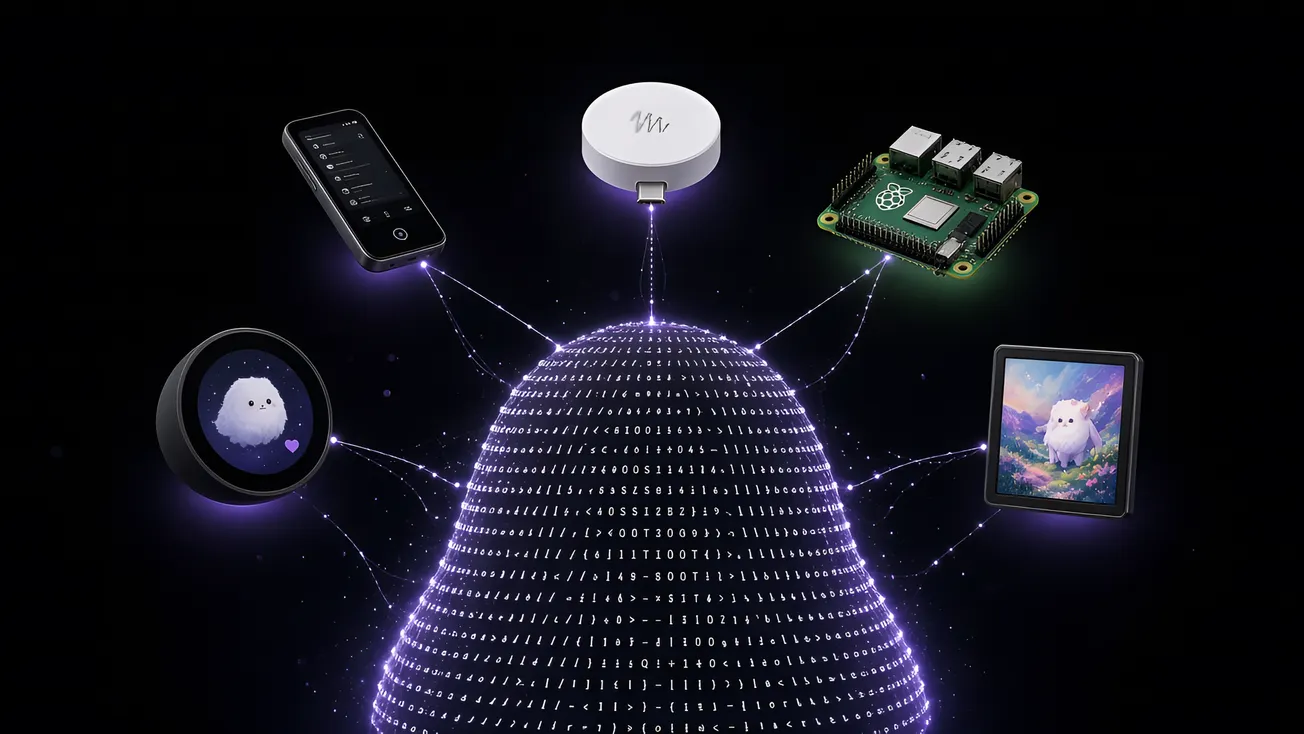
The architecture is best understood as a coordination system. Bittensor uses a blockchain to coordinate people and machines that produce AI work off-chain. The chain keeps track of who is registered, who is staking, how validators score miners, and how rewards should be paid.
This guide explains the high-level architecture of how this network works.
The Subnet Model
Subnets are the core organizing unit of Bittensor. Each subnet is an independent incentive market for a specific type of AI work.
One subnet might focus on model inference. Another might focus on GPU compute. Another might produce market forecasts, train models, scrape data, or generate 3D assets. While the details may vary, the structure is similar across the board: A subnet owner defines the task and incentive rules, miners then compete to produce useful outputs, and validators evaluate the work and submit scores. The protocol turns those scores into rewards.
"You can build your product cheaper, faster, and better... It costs you 1/10th of what it'd cost you to do it any other way."@markjeffrey & @const_reborn on why the world's top talent should build @opentensor subnets 👇 https://t.co/j4TKPTlMIz pic.twitter.com/8x4FR9rB0G
— Intelligence | TAO News, Insights, Stories (@taomedia_) June 23, 2026
That design lets Bittensor avoid one giant, generic AI market. Instead, it can support many smaller markets with different rules. A good scoring system for weather prediction, for example, will not look like a good scoring system for open-source model serving, so each subnet needs its own mechanism.
The tradeoff is complexity. Bittensor is not one product; it is a network of incentive markets, and each market is evaluated on its own terms.
The Three Main Bittensor Roles
Miners
Miners are the producers, running infrastructure, models, datasets, or software that performs the task defined by subnets. On a prediction subnet, miners submit forecasts. On an inference subnet, they serve model responses. On a compute subnet, they provide GPU resources.
Miners earn rewards when validators judge their work to be the winner of whatever problem is being solved in the competition. And the key here is that miner competition is continuous; a miner can be successful for a while and then lose share if another miner produces better output, lower latency, or stronger performance under the subnet's scoring system.
Validators
Validators are the evaluators. They query miners, score responses, and submit weights to the chain. Those weights influence how rewards are distributed.
A validator's job is not just to run uptime. It has to identify useful work. If validators can be fooled, the subnet will pay the wrong miners. If validators are accurate, miners have a reason to improve.
Validators are also economic actors. They earn a share of subnet emissions and compete to attract delegations from stakers who trust their judgment.
Subnet owners
Subnet owners are the builders of the market. They register the subnet, maintain the code, design the incentive mechanism, and try to grow the ecosystem around the subnet.
The standard emission split sends 18% to the subnet owner, 41% to validators, and 41% to miners. That owner share can fund development, but it also creates pressure. If an owner sells too much alpha into the market, the subnet's token price can weaken, and emissions can fall. For this reason, the Conviction upgrade was introduced to Bittensor:
 Bart Hillerich
The Blockchain Layer
Bittensor runs on its own Layer 1 blockchain built with Substrate, the same framework used by Polkadot. The chain is the settlement and coordination layer.
It handles:
- Account balances and transfers
- Miner and validator registration
- Stake and delegation
- Validator weight submissions
- Emission calculations
- Subnet creation and management
- TAO and alpha accounting under dTAO
The chain does not perform the AI work itself (that would be too slow and expensive). Miners and validators communicate off-chain, exchange tasks and outputs, and then record the relevant scoring information on-chain. This means the off-chain layer handles heavy computation while the on-chain layer handles incentives and settlement.
Yuma Consensus in plain English
Yuma Consensus is Bittensor's method for turning validator judgments into rewards. It comes from the original Bittensor whitepaper, which framed the network as a market where machine intelligence could rank other machine intelligence.
The problem Yuma Consensus solves is this:
If participants can score each other, why would they not collude? A group of miners and validators could try to rank each other highly and extract rewards.
Yuma Consensus tries to make that difficult by weighting judgments according to stake and agreement with the broader network. Validators with more stake have more influence, but that influence is not unlimited. The system also looks for consensus among well-staked validators and reduces the impact of isolated clusters.
There is also a bonding mechanism. Validators can build bonds in miners they rank highly. If a validator identifies a strong miner early and other validators later agree, the validator can benefit. That gives validators a reason to find genuine quality rather than copy everyone else or support weak miners.
The full math involves trust functions, weights, bonds, and stake-weighted rankings. The practical outcome is that miners that produce better work should earn more, validators that judge well should earn more, and collusive groups should have a harder time sustaining themselves against honest consensus.
How Emissions Work
TAO is emitted every block and distributed across the network. After the first TAO halving on December 14, 2025, daily issuance fell from about 7,200 TAO to about 3,600 TAO.
The emission process has two levels.
First, the network decides how much emission each subnet should receive. Under Dynamic TAO, that depends on market demand for each subnet's alpha token and, under the current flow-based model, on net staking flows.
Second, each subnet distributes rewards internally. The standard split is 41% to validators, 41% to miners, and 18% to the subnet owner.
| Component | What it does |
|---|---|
| TAO | Base asset for staking, rewards, registration, and subnet markets |
| Alpha token | Subnet-specific asset received when staking into a subnet |
| Miners | Produce AI work and compete for rewards |
| Validators | Evaluate miner work and submit weights |
| Subnet owner | Designs and maintains the subnet incentive mechanism |
| Yuma Consensus | Turns validator weights into reward distributions |
Dynamic TAO and Alpha Tokens
Dynamic TAO, or dTAO, changed how Bittensor allocates emissions across subnets. Before dTAO, root validators had more direct influence over subnet weights. After dTAO, every subnet received its own alpha token and TAO/alpha pool.
 Tristan Hillerich
When a holder stakes TAO into a subnet, the holder receives that subnet's alpha token. If the subnet attracts more stake, its alpha token can rise against TAO. If capital leaves, it can fall. The subnet's market position then affects how much emission it receives.
This turns Bittensor into a live capital allocation system. Stakers decide which subnets deserve support, and their decisions have economic consequences. The model does not guarantee good decisions. It does, however, make the process more open and harder to control from one committee.
Each alpha token has a 21 million cap, mirroring TAO's own supply limit. Alpha rewards are paid to miners, validators, and owners, which means every subnet has its own inflation and sell-pressure profile.
How Bittensor Staking Works
On many proof-of-stake networks, staking means locking the base asset and earning more of that same asset. On Bittensor, it works quite differently.
When you stake into a subnet, you are effectively swapping TAO for that subnet’s alpha token through the subnet pool. Your rewards accrue in alpha, and the value of your position depends not just on emissions, but on the alpha token’s price relative to TAO when you eventually exit. If the subnet gains confidence and demand for its alpha rises, you may be able to redeem for more TAO than you started with. If confidence falls, liquidity weakens, or sell pressure builds, you may exit with less.
That makes subnet staking less like a passive yield product and more like an active investment in a specific AI economy. Stakers are not only underwriting network security; they are taking exposure to the success of an individual subnet. In practice, that means evaluating the subnet’s product, team, validator support, liquidity profile, token behavior, and competitive position. It's like permissionless venture investing!
This is also what made Root staking historically different. Root stakers still had indirect exposure to subnet performance, because root validators allocated capital across subnet alpha positions. But stakers themselves remained in a TAO-denominated product: subnet dividends were automatically sold back into TAO, and stakers earned TAO rather than holding baskets of alpha. In other words, subnet staking asks users to take direct exposure to a single subnet market, while root staking abstracted that complexity away and packaged subnet exposure into a simpler TAO yield product.
As of May, 2026, the Root staking structure is up for change with the Root Reborn proposal:
 Bart Hillerich
How Subnets Compete
Subnets compete for a finite daily emission budget. Strong subnets attract stake, raise their alpha value, and receive more emissions, while weak subnets lose stake and emissions.
That creates a natural selection process, though it can be noisy like any typical market. Over time, the hope is that subnets with real product demand, good teams, and strong incentive mechanisms retain value, while weaker subnets fade, like any free-flowing market.
The healthiest subnet teams usually do four things well. They define a task that can be measured, they make it hard for miners to game the scoring system, they communicate with stakers, and they find demand outside Bittensor. External revenue matters because it reduces dependence on emissions alone.
Frequently Asked Questions
What is Bittensor in simple terms?
Bittensor is a decentralized network where AI producers compete for rewards, validators judge their work, and TAO coordinates the economy around that activity.
Does AI run on the Bittensor blockchain?
No. The AI computation happens off-chain. The blockchain records registration, staking, weights, emissions, and settlement.
What is a subnet?
A subnet is a specialized AI market inside Bittensor. Each subnet has its own miners, validators, owner, incentive mechanism, and alpha token.
What is Yuma Consensus?
Yuma Consensus is the mechanism that turns validator scores into reward distributions. It uses stake-weighted agreement and bonding to reward useful work and make collusion harder.
What is Dynamic TAO?
Dynamic TAO is the market-based emission system that gives each subnet an alpha token and lets TAO holders stake into the subnets they believe deserve more capital.
Is staking on Bittensor risky?
Yes. Subnet staking carries alpha-token price risk. You can earn rewards and still lose TAO-denominated value if the subnet's alpha token falls against TAO.
Why does Bittensor need a blockchain?
The blockchain provides neutral settlement, staking, rewards, and coordination. It lets independent AI participants compete and get paid without relying on one company to run the market.