

Table of Contents
Meta has launched Muse for Small Business, expanding its personal AI agent with new skills and connectors that help small-business owners manage daily operations like advertising, sales, social media, finance, creative work, and customer communication.
Muse for Small Business launch video
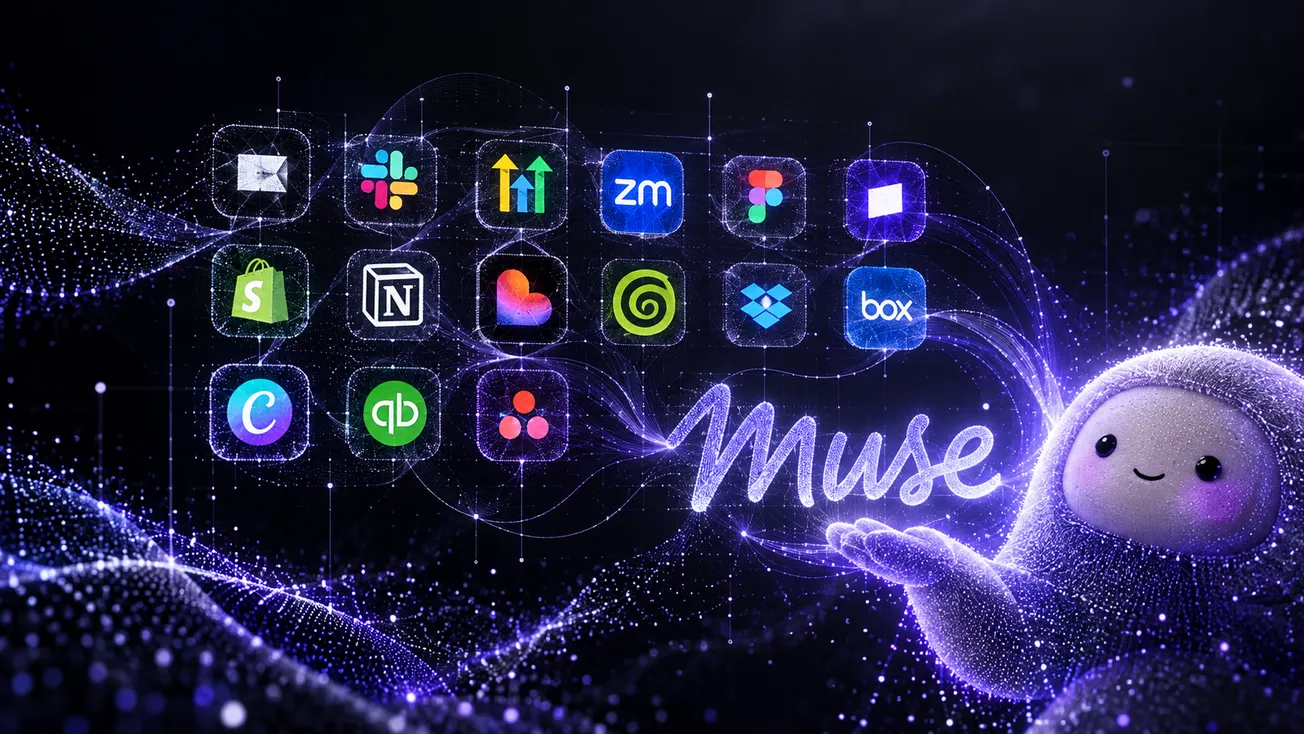
The update makes Muse a more business-aware assistant for companies that already use Meta’s apps and common back-office tools. Owners can give Muse a goal, such as finding new customers or preparing a campaign, then connect services including Shopify, QuickBooks, Canva, Slack, Stripe, Notion, Asana, Box, Dropbox, Figma, Klaviyo, Zoom, and Facebook and Instagram business accounts.
Meta said Muse can use those connections to understand what a business sells, how its brand sounds, what customers ask, and which tools the owner already relies on. The release follows yesterday’s arrival of Meta Enterprise Platform, an offering tailored to larger organizations.
 Bart Hillerich
Muse Working Towards Bigger Goals for Businesses
Muse launched earlier in September as a personal AI agent available in the U.S. and Canada. The small-business release gives the product a more concrete use case, moving work through the systems owners already use instead of asking them to manage another standalone AI workspace.
The company’s pitch is goal-based. Instead of prompting Muse for one isolated answer at a time, a business owner can ask it to work toward a broader outcome, such as building a growth plan, finding expenses that look unusual, improving an ad campaign, or identifying urgent items across email, calendar, and news.
Small businesses often run on disconnected software. A storefront may sit in Shopify, books in QuickBooks, payments in Stripe, creative assets in Canva, communications in Slack, and customer acquisition on Facebook, Instagram, and Meta ads. Muse for Small Business sits across those systems and turns connected context into tasks, drafts, suggestions, and analysis.
Meta framed the release around time pressure rather than software replacement. “Small businesses have been growing on our apps for nearly two decades,” the company said. “They told us they’re short on hours, not ideas. So we built Muse for Small Business to help get work done with the tools they already use.”
How the Connectors Work
Muse can connect directly to Instagram professional analytics, Facebook Pages, and Meta ad accounts, which gives it business-specific context inside Meta’s apps (and an edge over other agentic competitors). It can also connect to third-party services that businesses use for project management, design, ecommerce, accounting, marketing, file storage, meetings, and communication.
Meta’s announced connector list includes Asana, Box, Canva, Dropbox, Figma, Granola, HighLevel, Intuit QuickBooks, Klaviyo, Lovable, Notion, Shopify, Slack, Stripe, and Zoom, alongside Facebook and Instagram business accounts. The full list appears in Muse app settings, and Meta said more connectors are coming.
Canva co-founder and chief product officer Cameron Adams said the value of agent tools increases when they can use existing business context, including templates and brand materials. “The real magic happens when it’s fully connected to your existing work, your context and your brand,” Adams said in Meta’s announcement.
For unsupported services, Muse will also support custom connectors. Interested partners can apply through muse.ai/platform.
What Small Businesses Can Ask Muse to Do
Meta shared several example workflows for the release. A business owner can ask Muse to analyze the year’s sales, campaigns, and social activity to build a growth plan for the next year. Another prompt asks Muse to review email, calendar, news, and other inputs to identify what needs attention and take work off the owner’s plate.
The product can also analyze what is or is not working in ads and content, then draft a campaign for the following week based on performance and trends. Another example focuses on finance, asking Muse to review monthly business performance and flag expenses that look unusual.
The theme here is Muse doing more than generating copy in a chat; businesses can deploy it with confidence that it’ll combine operational context, business data, creative assets, communications, and approval workflows. It can also surface ideas, flag emails that need a response, and write first drafts.
Tom Mulholland, owner of Mulholland Grocery in Malvern, Iowa, said in Meta’s announcement that he works about 65 hours a week and needs to free up time for revenue-producing work. “I’m very good at what I do, but that doesn’t mean I’m good at all of the different roles a small business owner has to play, and Muse is taking over a few of them,” Mulholland said.