


What Is Yuma Consensus? How Bittensor Turns Scores Into Rewards
Learn what Yuma Consensus is, how Bittensor turns validator scores into miner rewards, and why stake-weighted clipping matters for TAO emissions.
Learn what Yuma Consensus is, how Bittensor turns validator scores into miner rewards, and why stake-weighted clipping matters for TAO emissions.

Grok Bot vs Hermes Agent compared on pricing, models, automation, memory, hosting, security and ease of use. Find the best AI agent platform for your workflow.

The real differences emerge in what each network sells, how it coordinates supply, and whether demand comes from customers or token incentives.
A guide to how Bittensor subnets compete for TAO emissions under Dynamic TAO.
A plain-English guide to how new subnets get created on Bittensor, covering registration, lock costs, slot competition, and what goes live on-chain.
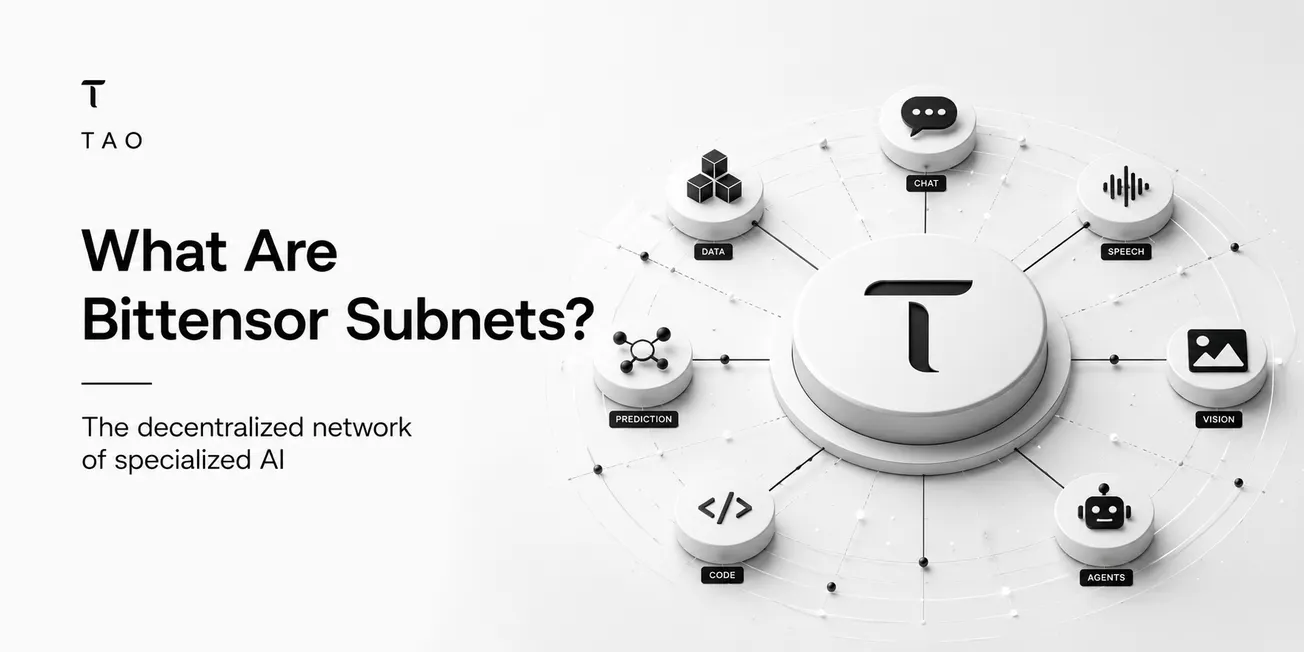
Bittensor subnets are specialized markets where the network's AI gets built, each with its own token and underlying product or solution.
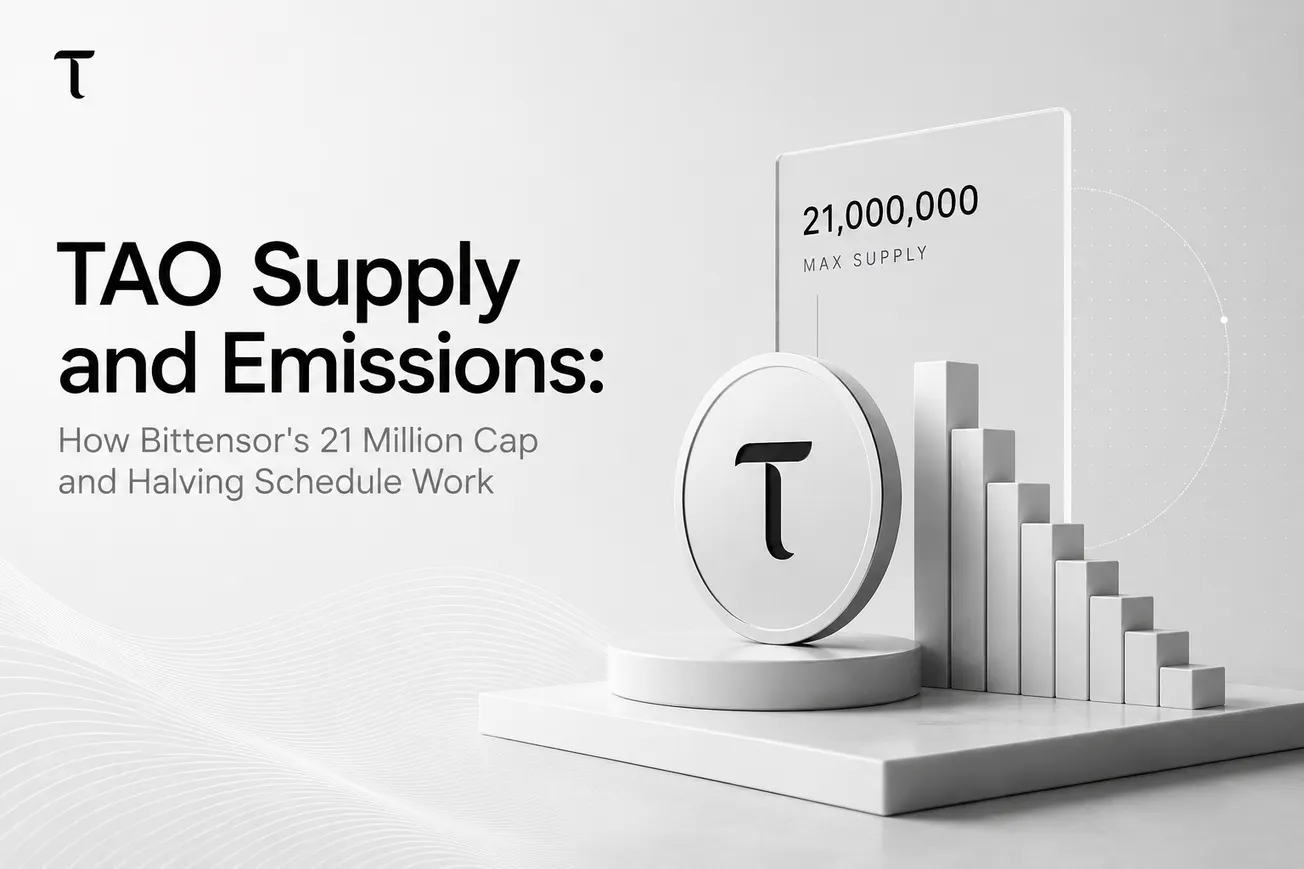
How Bittensor issues TAO under a fixed 21 million cap, why halvings trigger on supply milestones rather than the calendar, and where supply stands now.
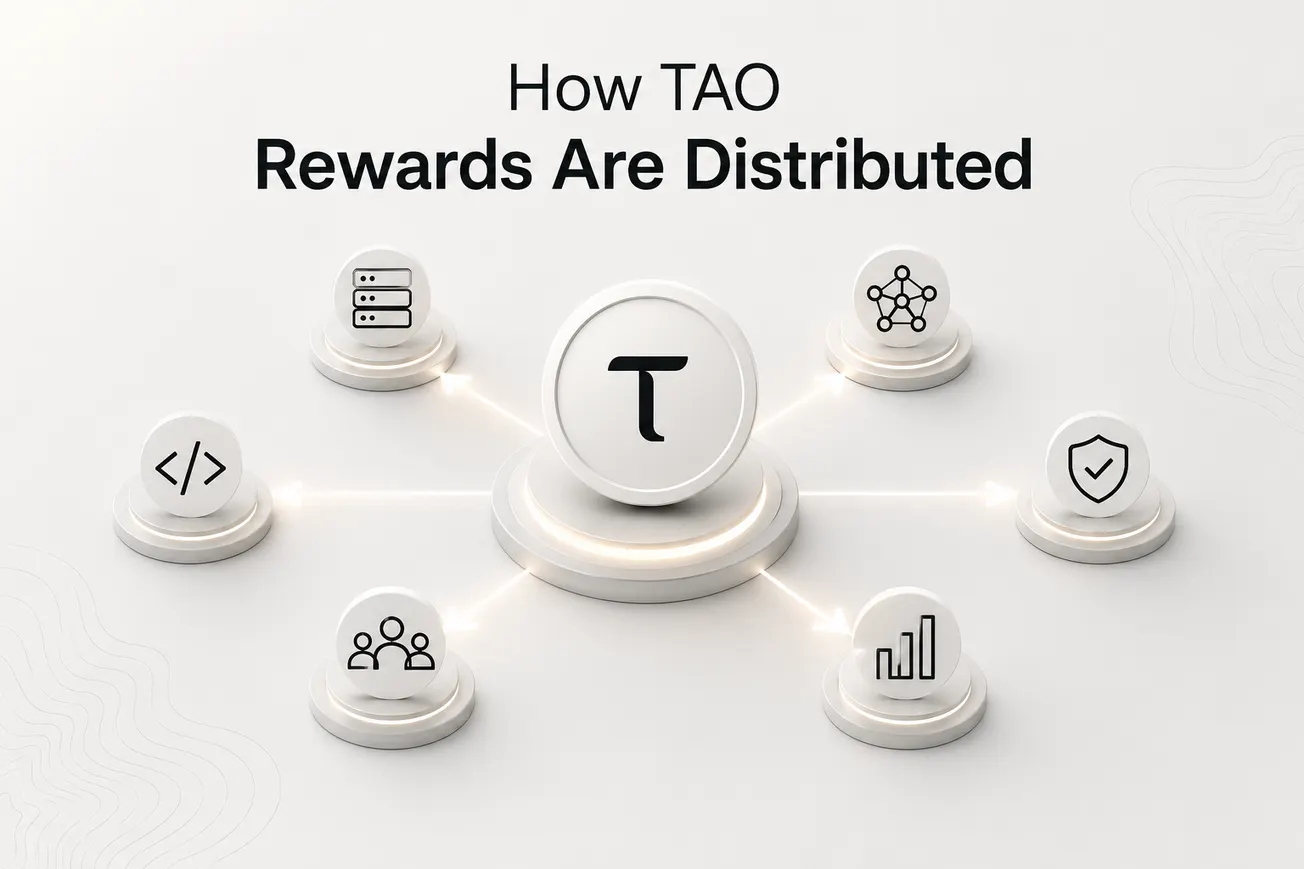
How TAO rewards flow through Bittensor: block emissions, the two-track split into subnets and alpha, and the 41/41/18 payout to miners, validators, and owners.
How TAO tokenomics work, explained simply: a fixed 21 million cap, Bitcoin-style halvings, token recycling, and why most of the supply stays staked.

TAO is disinflationary, not deflationary. Its supply keeps rising toward the 21 million cap even as inflation falls with every halving.
How Bittensor stacks up against centralized AI efforts, and why decentralized AI wins long-term.
Learn how TAO is minted on Bittensor, including block rewards, emissions, halvings, Dynamic TAO, subnet rewards, validators, miners, and the 21 million supply cap.

What is OKX AI? Learn how the autonomous AI agent marketplace works, including users, agent providers, escrow, evaluators, and its planned integration with Bittensor subnets.

How TAO and Bitcoin compare on inflation, halvings, scarcity, and the extra complexity of Bittensor’s alpha-token economy.

A beginner-friendly guide to Bittensor, TAO, subnets, Dynamic TAO, and how the network is building an open marketplace for artificial intelligence.

A guide to Bittensor’s architecture, covering subnets, miners, validators, Yuma Consensus, Dynamic TAO, alpha tokens, and why subnet staking works differently from traditional proof-of-stake.