

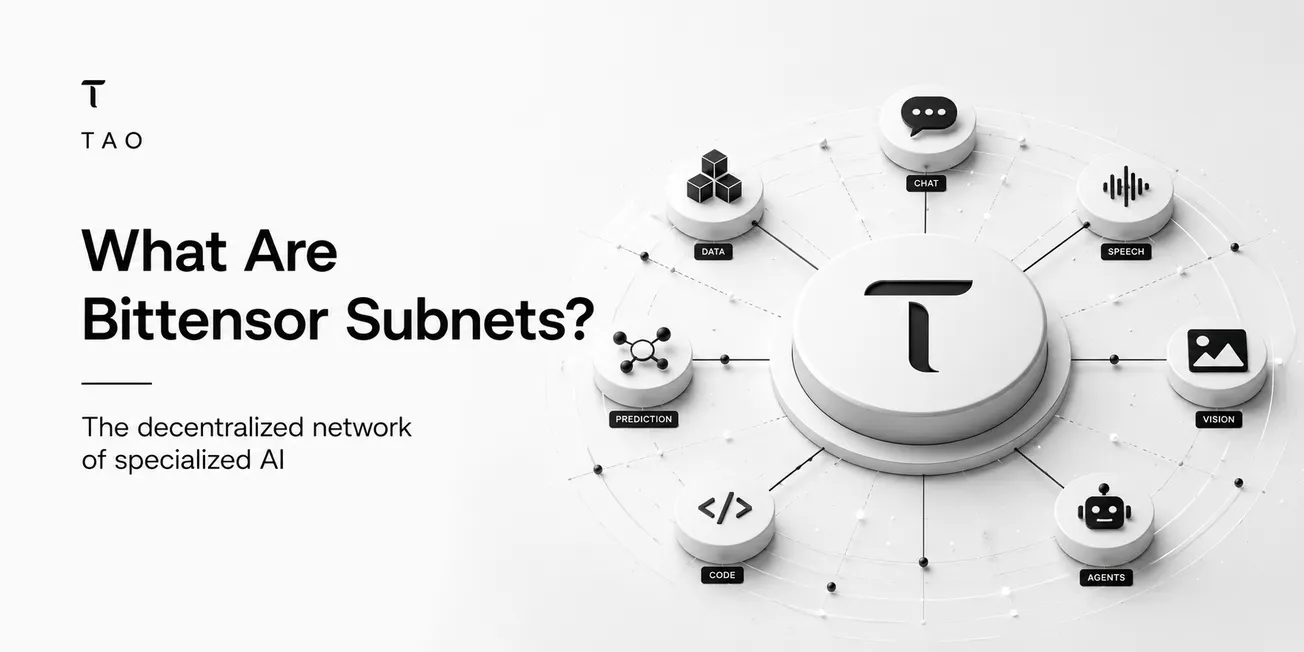
What Are Bittensor Subnets?
Bittensor subnets are specialized markets where the network's AI gets built, each with its own token and underlying product or solution.
Bittensor subnets are specialized markets where the network's AI gets built, each with its own token and underlying product or solution.
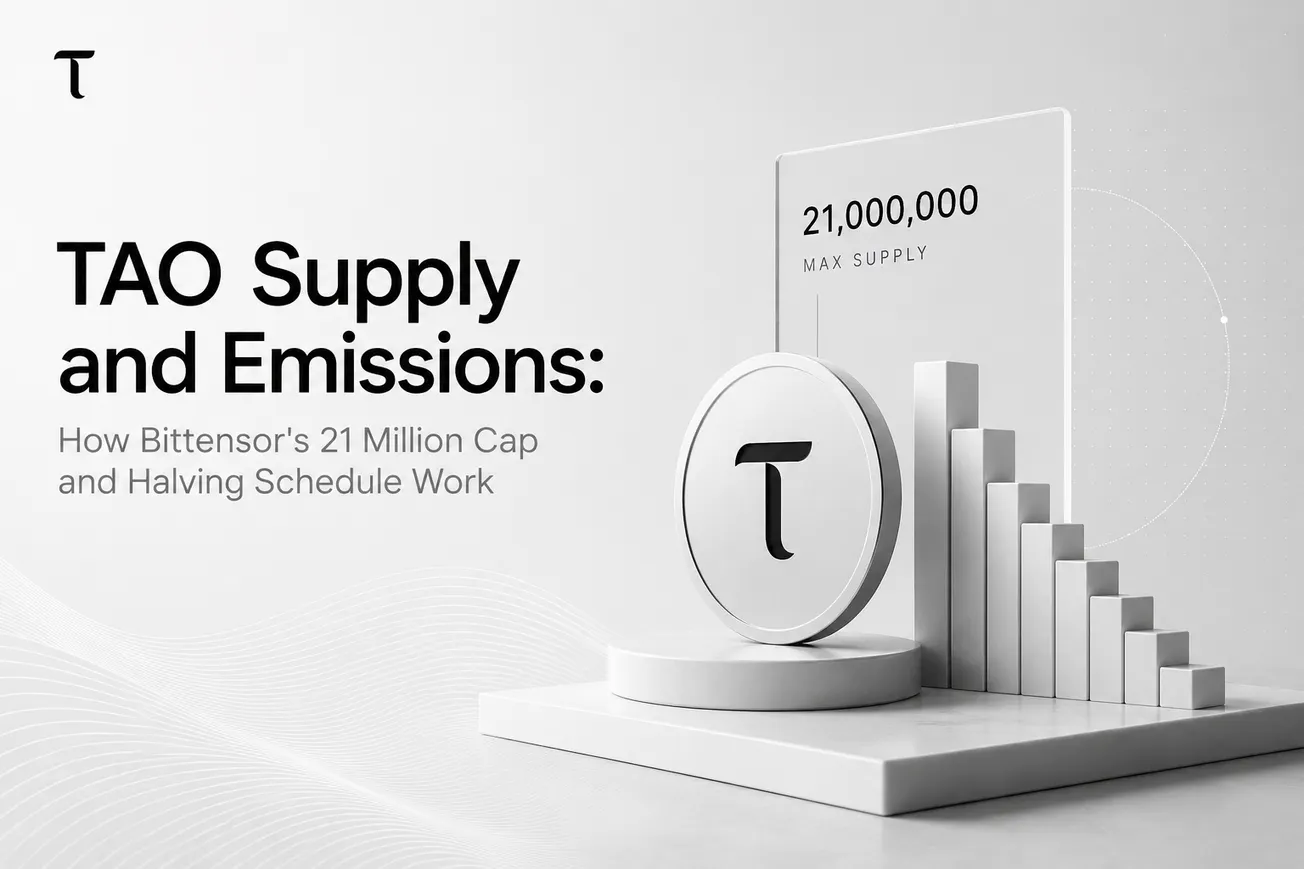
How Bittensor issues TAO under a fixed 21 million cap, why halvings trigger on supply milestones rather than the calendar, and where supply stands now.

Every AI product closed labs sell already has a working open source version on Bittensor. Here's the subnet-by-subnet mapping and where the value lands.
How Bittensor stacks up against centralized AI efforts, and why decentralized AI wins long-term.

The upgrade gives subnets an opt-in way to keep miner capital at stake while adding Polkadot Vault signing, key lineage and new stake-management tools.
Bittensor’s Conviction mechanism can now transfer subnet ownership to the hotkey with the strongest proven long-term commitment.

Centralized AI is our common enemy, our version of tyranny from afar. Bittensor is where we fight.

What is OKX AI? Learn how the autonomous AI agent marketplace works, including users, agent providers, escrow, evaluators, and its planned integration with Bittensor subnets.
OKX has launched OKX AI, a new onchain marketplace for autonomous agents that will integrate Bittensor subnet APIs, bringing decentralized AI services directly into the platform.

A beginner-friendly guide to Bittensor, TAO, subnets, Dynamic TAO, and how the network is building an open marketplace for artificial intelligence.

Bittensor's v3.4.6-421 replaces TaoFlow's gameable flow-based emission formula with price-based emissions and a miner-burn penalty that cuts subnets routing rewards to owners.

A guide to Bittensor’s architecture, covering subnets, miners, validators, Yuma Consensus, Dynamic TAO, alpha tokens, and why subnet staking works differently from traditional proof-of-stake.

Bittensor will now review subnet emission eligibility every week, removing inactive networks and restoring active teams on a case-by-case basis.

Const says the network is not yet decentralized like Bitcoin, but argues that rapid iteration, validator reform, and further economic upgrades are necessary before the protocol can fully ossify.

The Bittensor co-founder says critics misunderstand key elements of Root Reborn, defending the proposal's economics while disputing concerns around validator incentives, custody risk, and regulation.

Frank Schuil, CEO of Nordic crypto exchange Safello, says the proposal may increase complexity for investors and weaken TAO's role as a broad ecosystem exposure vehicle.